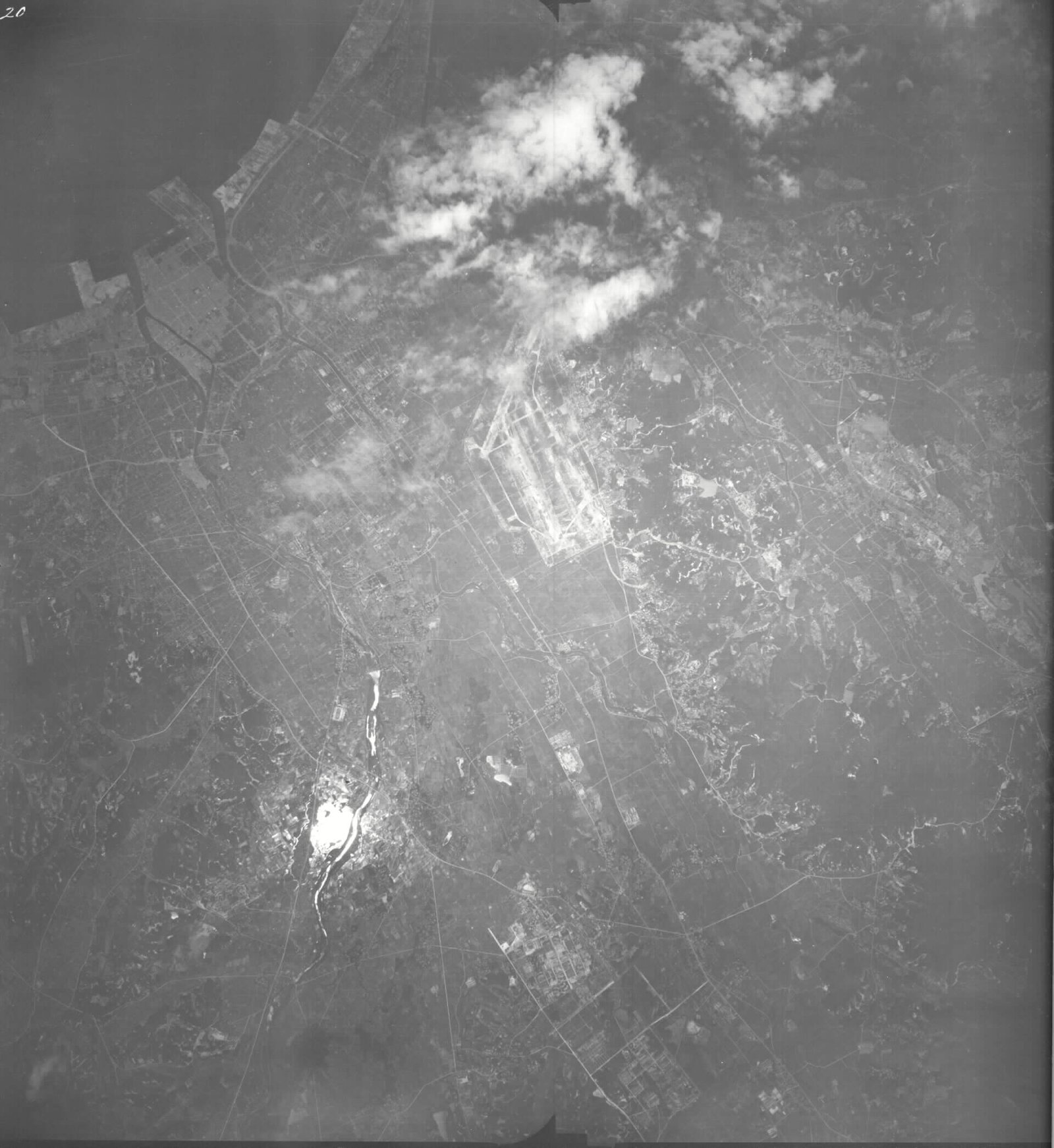
Photo Intell. Rep. No. 10, Nov. 7, 1944.
Fukuoka/Itazuke A/F – 33-35 N., 130-27 E.
Map. Ref. – AMS L722, Sheet 19, Kyushu, 1:50,000
Fukuoka City Plan, 1:24,000.
Runways: NNW/SSE paved app 175×4050 (NNW end adjoining NNE/SSW runway is incomplete), NNE/SSW under construction app 175×3900 (probably be longer when completed), 60′ paved taxiway parallels NNW/SSE runway and is connected by taxiways to both ends of runway.
VAC 2-680. Nov. 30, 1945
Major Construction Missions. Airdromes.
A suitable site has been selected by the 5th Air Force at MUSHIRODA (ITAZUKE). Initial construction plans in accordance with the GHQ Construction Policy have been submitted for approval. Preliminary work has been started and complete plans are being prepared to be submitted to SIXTH Army. The work required consists of rehabilitation and additions to Japanese facilities already existing.
Moments captured from old Zuke, stories frozen in time.
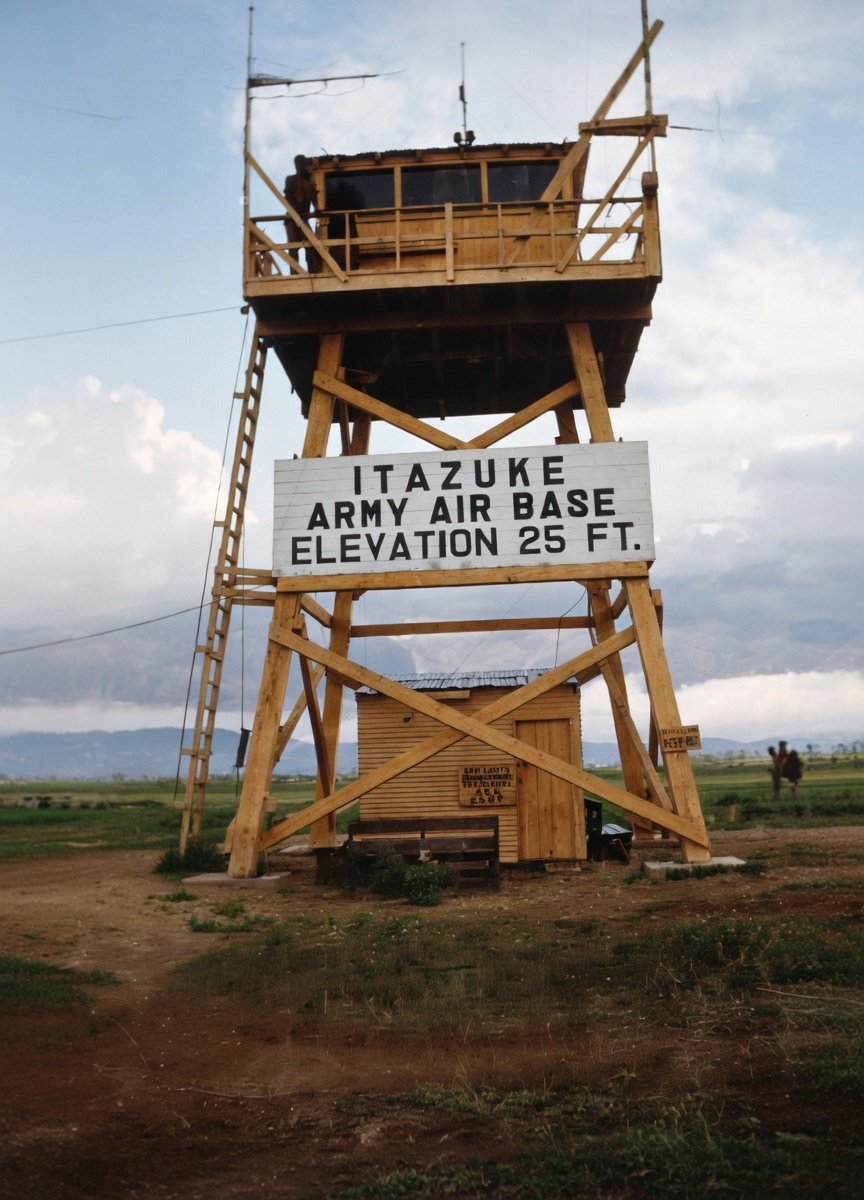
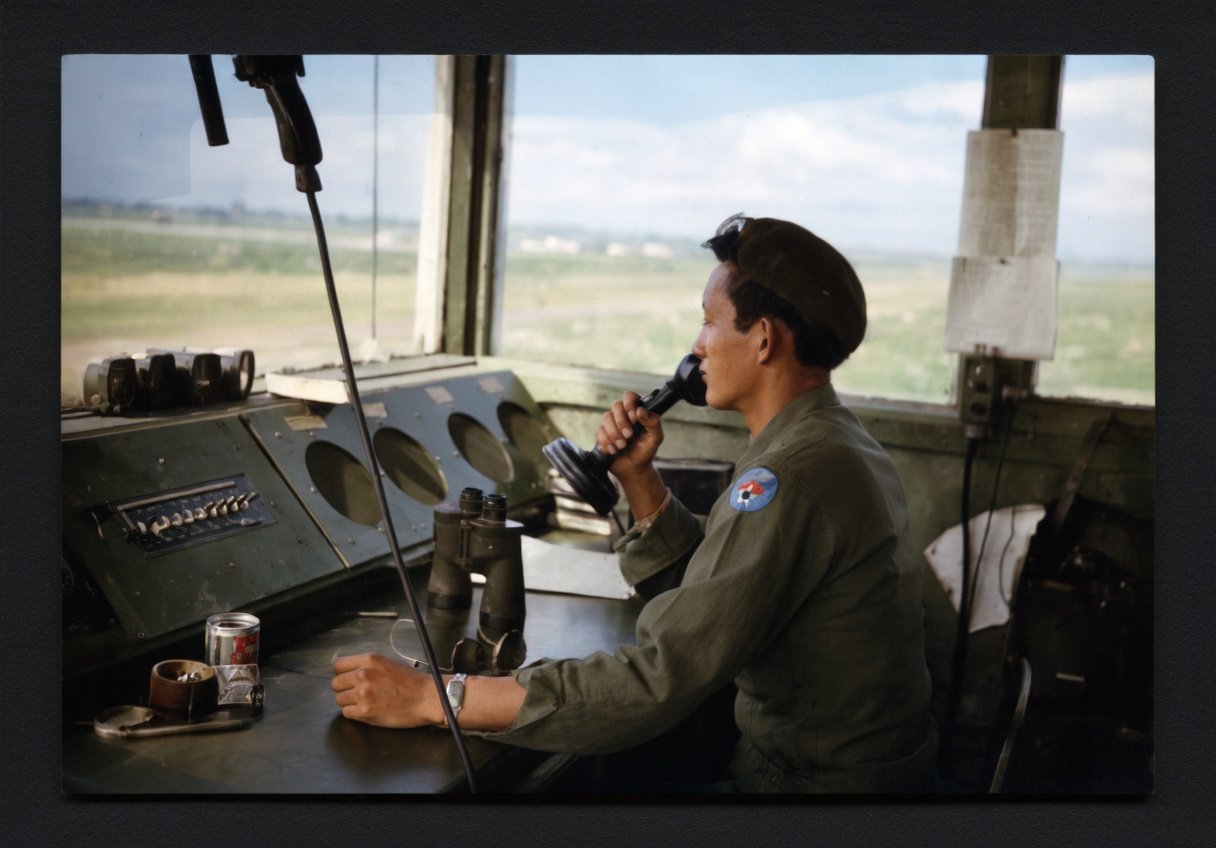
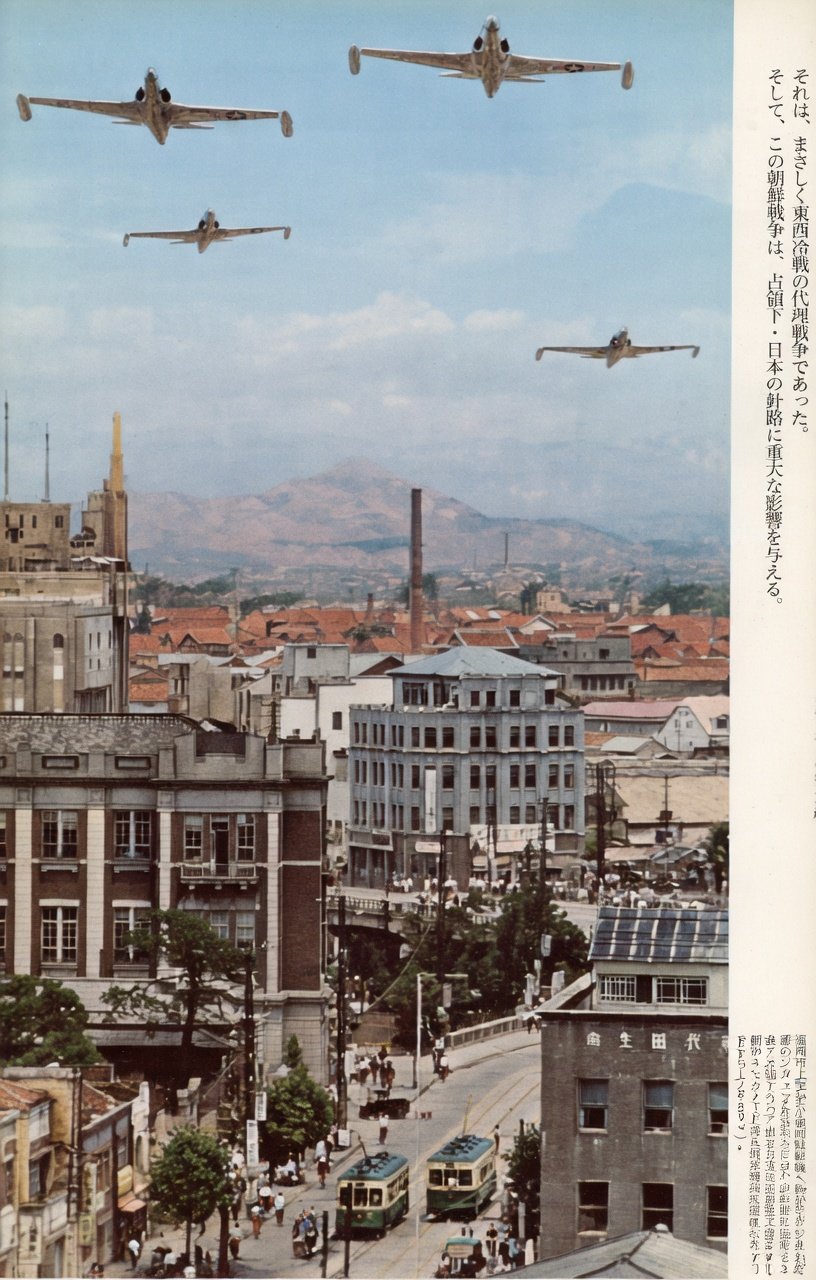
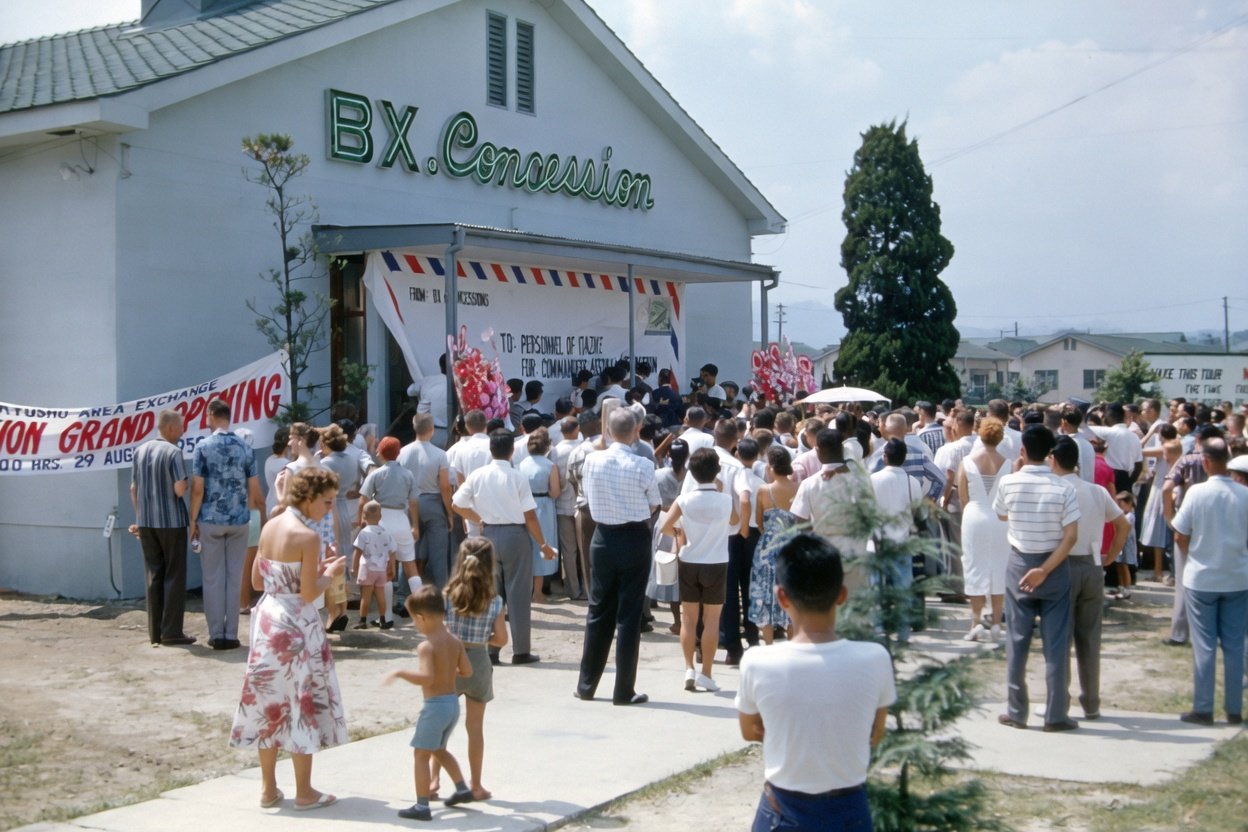
Here is a very interesting interview of one of the first Americans into Fukuoka right at the end of WWII:
Bob Turner, Aug. – Nov. 1945
Date: 8/4/1999, 2:23 AM
My Father-in-law, Bob Turner, is visiting from out of state. He was one of the first Marines on Japanese soil immediately after the war and was in charge of liberating the prisoners of war. He has a very clear mind on the experiences. If you email a list of questions, I would be glad to send you his reply. He was in Sasebo. I know he will be happy to help. — Mickey Turner
———-
Here are some questions for Bob.* What unit were you with?
He was with the 5th Marines, 3rd Battalion, Headquarters, company head of intelligence section, 28th Marines.* Do you have reunions with other Marines from the same unit?
No, he does not have reunions with other Marines from the same unit. He was on the island of Hawaii when the bomb was dropped and shortly thereafter he boarded ship for Sasebo as occupations troops. Sasebo at the time had been completely bombed out with the exception of the post office, hospital and maybe one church. They marched us up the main street and wherever there was a business the safe stood out like a tombstone. We marched to the Japanese naval academy a couple west of Sasebo and that became our headquarters.* From when to when were you over here?
The bomb was dropped in 1945 and soon after we were sent to Japan and I was discharged in late Nov. 1945.* Did you ever enter Ashiya, Kokura or Fukuoka?
I was in Fukuoka. It appeared completely bombed out. I was also in Ashiya, and Kokura.* In Fukuoka, did you arrive by train in Kashii? I have seen b&w photos of the Marines marching into town.
As I recall, we arrived by truck in Fukuoka and I was not stationed in either of these places, we just passed through and observed the devastation. I believe we arrived aboard trucks at each place.* What POW camps did you go to? Do you remember their place names or camp #’s (like Camp #17)? I’m in contact with some former POWs who were at some of these camps.
I was only in 2 camps in Moji. I don’t remember the #’s. The day after we arrived in Sasebo, I was ordered up to Moji on the northern tip of Kyushu to arrange billeting arrangements for a regiment. I was given a jeep driver and aerial photo with the post office in Moji circled. I forget the length of time it took to drive up to Moji, but the Japanese military headquarters knew we were arriving as they were notified by telegraph. Upon arriving in Moji we located the post office very easily and I entered the building to see what was going to happen next. A young lady was the only occupant I could see in a very large room behind a counter. Every time I took a step forward she took a step backward and she was very frightened. She kept pointing to her right frantically and I turned to see what she was pointing at and there was a sign on the door saying “welcome Marines, enter”. I knocked on the door and a Japanese vice admiral in full dress uniform opened the door and bowed and welcomed me in. He introduced himself and speaking better English than me. I later found that he was educated in the US. There were approximately 20 high level Japanese officers in the room from admiral on down. The vice-admiral introduced each one and they stood up as each name was called and bowed and sat down. The vice-admiral suggested that I appear at Japanese headquarters the following morning at 8am and offered a right hand drive British vehicle if we desired such. I told him I would confer with my driver and get back to him. He supplied us with a couple rounds with sake and cautioned me against purchasing any native wine, that he would willingly supply me but we did not take him up on his offer. They directed us to where they planned for us to headquarter until more detailed arrangements were made and we ended up in a country club golf course building. (Further info is available if desired.)There were 2 camps in Moji, one was a prisoner of war camp that was indicative of the misery and suffering that must have taken place for those interned there. I saved a Japanese or prisoner arm band (not sure which and can’t read the writing). There was also a Chinese labor battalion prison camp in Moji and my jeep driver and myself found ourselves inside that camp with our interpreter books relating to a group of very happy Chinamen. We visited one of their homes which consisted of one room about 12 x12 and 5 feet high. With at least of 2 feet of smoke from their cooking units, they were preparing unknown to us the finest meal they could produce which was barbecued sow belly in 1 inch square chunks. We occasionally took a sip of Japanese beer from a bottle passed around by 12 men and continued attempting to carry on a conversation using our interpreter books. When the sow belly was done, they stuck a chopstick in each piece and offered one to me with lots of smiles and offered one to my jeep driver. He looked at me and I nodded, indicating eat it, and it was dirty. I chewed mine for at least 10 minutes until I was finally able to swallow it. They immediately offered me a second piece but I indicated that I had enough.
* Do you have any pictures from that time you were in Japan?
We were not allowed to have cameras to take pictures at any time.* What were the POW camps like when you saw them? Were the POWs mostly Americans, or Dutch, Australian, British?
The only camp I entered that had prisoners was the Chinese camp, all the other POWs had just been transferred out of there by the Japanese, assuming by MacArthur’s orders released. By the way, the Chinese were enticed to come to Japan to work at fabulous wages and when they arrived were put in forced labor camps and treated as prisoners. The Chinese requested that they be allowed to fly their national flag as somehow they had large flag and a flag pole in the center of the compound. I was in charge and felt that the war was over and they were free, so I gave them permission to fly their flag. The rest of the Marine regiment arrived the following morning just in time to become involved in a dispute between the Japanese, the Chinese and two Marines. The colonel in charge through interpreters learned that I had given the order for them to raise the flag. He ordered me to have the Chinese lower the flag and it was very difficult for me to do.* What was the reaction of the POW camp commanders and guards?
They were gone.* Have you ever been back to Japan since? If no, do you want to return?
No, I don’t think I want to return, there are too many other places I would rather visit. The one person I would like to see was a Japanese millionaire, and his name was Mr. Inoya. He was a 3rd owner of the Yamashita Steam Ship Company of Japan. He became my interpreter. I was in charge of patrolling the red light district in Sasebo to make sure no marines got in.* What was the toughest thing to do when you got here?
The toughest thing was witnessing the firebombing and the devastation and seeing the safes standing like tombstones.* Do you remember any trouble between the US Forces and Japanese nationals? I’ve seen some reports of looting by the Forces, and other minor crimes. Wonder if you saw anything.
There was trouble the second day in Sasebo when my interpreter, jeep driver and myself went to see that MacArthur’s orders were carried out at the Japanese army headquarters and compound in the area. As we approached the front door to the building we could hear all kinds of yelling and commands and people were running all around and we opened the door and stepped inside into a very large room. With a large desk on the far side and a full lieutenant general standing and yelling orders, place was like a madhouse. I noticed he was wearing a pistol which was absolutely against MacArthur’s orders. To me he looked exactly like Benito Mussolini, bald head and all. I told my interpreter to tell him to slowly unbuckle his belt I already had my hand on my .45 and was sure I was going to have to use it. Our eyes were fixed on each others and finally he slowly unbuckled his belt and let his pistol fall to the desk. I told my driver to pick up the pistol and no further problems were encountered as we inspected the whole compound. We saw nothing in the way of looting. We gave clothing, food and cigarettes to those who had special need of them. There was nothing to loot by the US Forces.* What was the biggest benefit of the Marines and other Forces coming into Japan? Like medical help, food, communications restoration, etc.
The biggest benefit was the assurance that the Japanese felt people felt when the war was over. They were a destitute people and probably had lost about every possession that they had when their homes were burned out by napalm.* Attached is a photo from a book at the library here showing the 235th Marine Div.(?), 1st Battalion, marching through Fukuoka on Sept. 30, 1945, according to the caption.
This can’t be the 235th Marine Div., as there wasn’t one. It may be the 23rd Marines in the 5th Marine Div. The 5th Div. took over that whole area.* Did the girls run away into the hills like some books say? Did you see many women along the streets?
The only girl I can remember seeing was the one in the post office in Moji and every step forward I took, she took one back. She was pointing to a sign on the door, “welcome Marines”. There was also the staff dinner that was given for those of us that were leaving, there was a women for each man and they sat on our right and that was all. In Sasebo, the only other women I saw were the ones in the “red light district” and they were motioning to us to come in. I was in charge of keeping the other Marines out. We saw no women on the streets when we marched in, or anyone one else for that matter.* Did any Japanese give you flowers or gifts to celebrate your arrival?
There were no flowers or gifts to celebrate our arrival. The vice admiral gave us Sake the morning after we landed.* What was the Occupation Forces main objective at first when they came into Kyushu? Secure the Japanese Army and Navy bases? Secure factories and major companies?
We just drove through Kyushu. The Occupation Forces were there to secure MacArthur’s orders to the letter. We secured all arms. The pile of arms that were recovered were about 30 feet high and had a diameter of 40 feet. There was a sentry patrolling them 24 hours a day. I have no idea what they did with them.* How old were you when you marched into Kyushu?
I was 26 when we marched into Sasebo and Moji.
P.S. The Japanese Naval Academy was spotlessly clean near Sasebo and apparently had not been bombed.
Bill Craig, 1946-1947
Date: Sun, 23 Aug 1998 17:15:00 -0400
I spent the winter of ’46 and part of the Spring of ’47 at Itazuke with the 8th Fighter Group. We were there waiting for the completion of Ashiya AB into a permanent facility. I have a few photos taken at that time of the tents we lived in and some of the operations buildings. Your query about the F-80C. As new aircraft come into the inventory, the first models start with the “A” series. As certain major modifications are made, the series go to “B”, then “C”, and onward. Major modifications might be a bigger engine, better electronics, inflight refueling, etc. I think the 80C was the last of the 80 models. The AF jumped into the F-84 and F-86. The P-51 and F-80 first flew in the Korea war out of Itazuke in the 8th Fighter Wing. They were replaced in maybe less than a year by the 84 and 86. Your question on the use of Ashiya. When at Ashiya until the summer of 1948, we flew P-51’s. I recall the runway being about 6,000 feet. When the 8th Wing was converted to F-80’s, the jets required a longer runway. Itazuke had one and that is where the 8th Wing moved. A troop carrier outfit was then stationed at Ashiya. It wasn’t a question of the China/North Korean threat. It was the length of the runway that dictated the move. Anyway, the distance between Ashiya and Itazuke was negligible. — Bill Craig
Harvey L. Martin, 1949-1950
Date: 5/17/2000, 4:14 AM
I arrived at Itazuke in December of 1949 as a radio mechanic and was assigned to the 36th Fighter Squadron, 8th Fighter Wing. Our aircraft were F-51s. I was there when in June the Korean war started. From then on we moved several times. I wish you success with your endeavor. I cant remember how long I was at Itazuke. I was there from Dec 1949 till the war started in June 1950. We operated from there for another two or three months before shipping out to Korea. The squadron was operating F-51s and providing close air support. We were probably in Korea for six months. We had moved north during the early part of the war to be as close to the action as possible and were in Pyongyang North Korea when the Chinese entered the war and we were forced out of Pyongyang. We were evacuated to Kimpo air base near Seoul where we operated for nearly three months before returning to Itazuke. The squadrons aircraft were being changed to F-80 jets and everyone had to be trained on the new equipment. From this point things are a bit fuzzy. At some point we returned to Korea and were operating from there when I was sent back (Nov 51) to the USA for discharge. I have some mental pictures of Fukuoka but it would be difficult to put on paper. It was quite different from today. Much smaller. I remember there was a trolley running through what was the main part of town. There was a club near the trolley line and it was operated for military personnel. I recall there was a park near there with a large Buddha and it might have been made of wood. Taxis were powered by charcoal or electric. — Harvey L. Martin
Earl Harris, 1949-1951, 1961-1964
Date: Sun, 13 Sep 1998 14:20:19 -0700
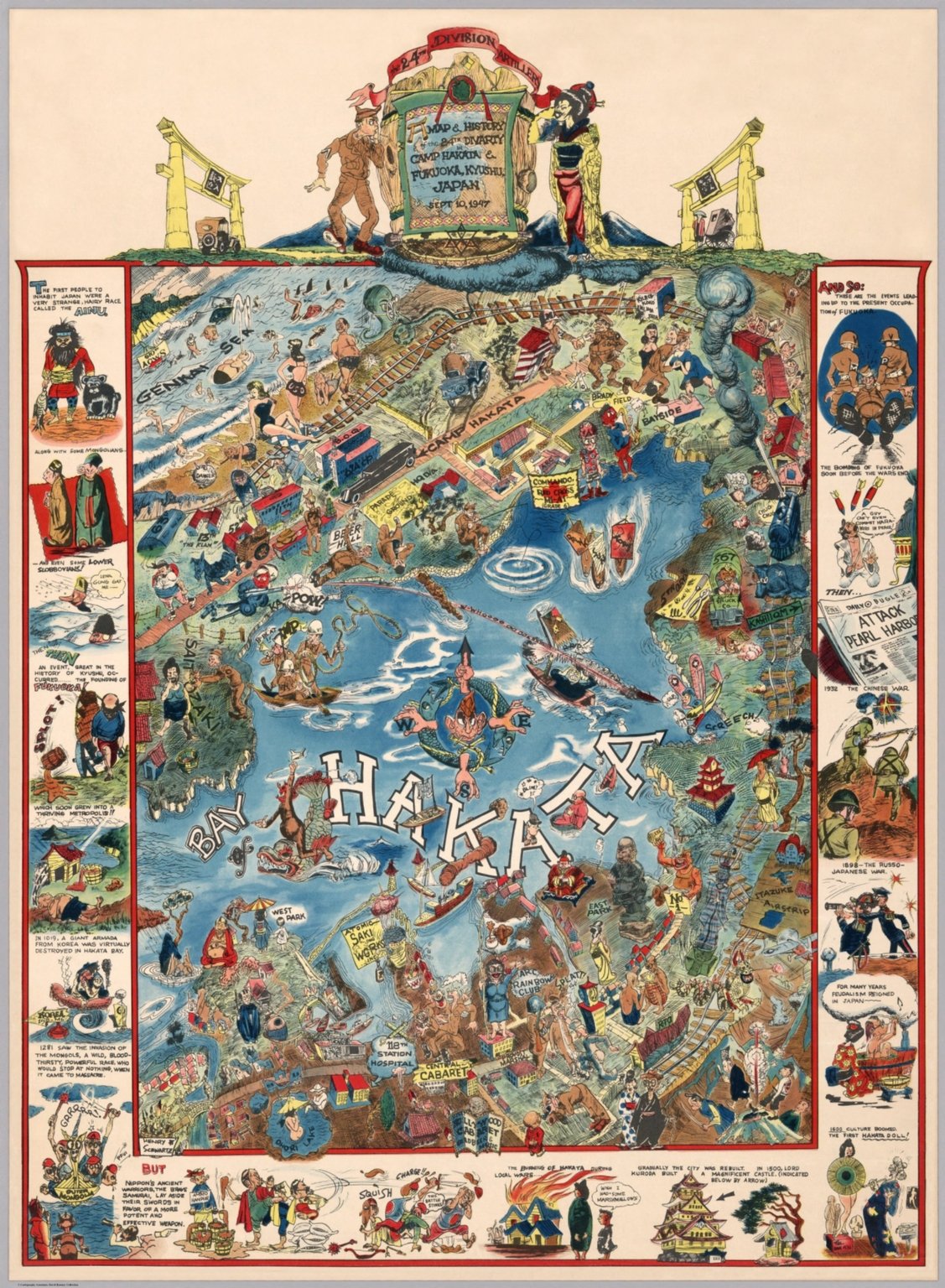
I was the Base Records Manager for Itazuke AB. The job involved retiring records and monitoring all the offices which maintained files and supervising the retirement of pertinent records. I was there from Oct 61 to June of 64 (that was when they started to close down the base). I really enjoyed my assignment there and would have stayed longer but as I said they closed down the base. One thing that happened when I was there was the assassination of President Kennedy. I was the Staff Duty NCO at the base headquarters when I got a call around 3 or 4 AM from one of our radar sites advising me that the president had been shot. At the time I had to alert the Officer of the Day and the acting Base Commander and other wheels. It was really a hectic night. Prior to being stationed at Itazuke I was at a Aircraft Control and Warning Squadron at Saitozaki from 1949 to 1951. I was supposed to rotate back to the states in November of 1950 but the Korean War started and we were all frozen for rotation for 1 year. I guess that’s where I decided to make the Air Force a career. Have never regretted it. As far as the base closings it all started in 1964 (the Annex, the base at the flightline, Brady AB and all the base housing). I don’t really know the actual closing date because there were still military there when I rotated in June of 1964. The AC&W Squadron I was in at Saitozaki had closed much earlier because it was deserted in 1961 when I arrived at Itazuke. We had radar sites all over, Moji, Shikanoshima, Kagoshima, one just outside Itazuke (I guess that was Mt. Seburi). The Army had a base at Camp Hakata which was between Brady and Saitozaki. The 24th Division Artillery was there when the Korean War broke out and they were some of the first units to go into Korea. We used to go to the Hakata Beach when we were there in the 60’s. I was amazed at the changes that had taken place in the Fukuoka Area when we visited in 1992. I did find the 2 off base houses we lived in Kasugbaru before we moved onto the Annex. — Earl Harris
Lynn Williams, 1950 – COLLECTION
Date: Tue, 27 Oct 1998 10:27:56 -0800
I was a member of VMF(N) 513 flying missions across the Straits into Korea during 1950. VMF(N) designates our squadron as a Marine night fighter/all weather squadron. We started flying out of Itazuke during July 1950 and continued flying from there until after the Inchon operation was fairly well secured. We then went to Seoul, on to Wonsan and Yonpo at Hamhung/Hungnam before getting kicked out of North Korea and starting over down South, but that is another story. We flew the F4U-5N aircraft on night and day missions out of Itazuke Air Base for a few months. Other aircraft flying missions to Korea from Itazuke at that time were F-80’s and B-26’s. Our Corsairs (F4U-5N’s) carried heavy loads of munitions and remained over Korea for up to 7 hours. The F-80’s carried a 5″ rocket on each wing tip and no tip tanks; therefore, their missions were very short. We enjoyed the hospitality of the Air Force. The F4U-5N had a large radar bulb on the right wing. Our tail markings were “WF” for VMF-(N) 513. Of course the planes were painted dark blue. I recall one strike on an airfield in Southern Kyushu. I think it might have been Kagoshima if my memory is correct. Is there or was there a Kagoshima Airfield down south? I was flying high cover as air defense while other Corsairs carried bombs and rockets. We looked for targets of opportunity after hitting the airfield. I can’t remember where other strikes were. Our targets of opportunity included some boats and warehouses and we looked for some trains but didn’t find any live ones. Our flights were along the East and West Coasts of Kyushu. All I had for ordnance was 20 mm cannon for strafing and we had to save some ammo in case we were attacked or if we saw enemy airplanes. There was nothing spectacular but the anti aircraft fire was pretty heavy in places, even at high altitude (35,000 ft or so). My squadron, VMF 311, downed three Japanese fighters on our way back to Okinawa but I didn’t see any. You know there is no such thing as a “former Marine”. Once a Marine, always a Marine. I retired in 1971 with 29 years. Much of my time was spent in Japan and Korea. I’ll give you a short run-down of my tours over there:
I was at Yontan Airfield, Okinawa during the war and then moved to Chimu Airfield, which is no longer recognizable as an airfield. We supported the ground troops, flew combat air patrol missions to protect against Japanese air raids and Kamikaze attacks on ships and made some strikes on Kyushu. The big bombs brought an end to the war. Our Marine Air Group (MAG 31) moved to Yokosuka where we had an airfield. We moved there about two days after the end of the war. I stayed at Yokosuka until about May of 1946. I was stationed at El Toro when the N. Koreans attacked the South. We were immediately (July 1950) put aboard an aircraft carrier and sent to Japan. We flew into Itami air base near Kobe/Osaka. Some of our squadrons operated from carriers but VMF(N) 513, being night fighters, flew out of Itazuke into the Pusan Perimeter and beyond. We left part of the Squadron back at Itami for administrative support and major maintenance (good liberty in Kyoto, Osaka and Kobe!). We moved to Kimpo Airfield, near Seoul after the Inchon Landing and then up to Wonsan and Yonpo airfields near Hamhung. After all troops were out of the Chosin Reservoir area, we went back to Itami for a week or two. Then we moved to a field near Pusan (K-9 I think). I came home in 1951. After several tours to the Mediterranean on aircraft carriers, I went back to Pohang Air Base. We closed the base at Pohang and eventually I was transferred to Iwakuni for about 7 months of my tour. The 1st Marine Air Wing moved from Pohang to Iwakuni in several stages. I was carrier based flying F8’s in 1961 or so. When we put into port we would often fly out of Atsugi for weeks at a time. We also spent some time in Iwakuni and Sasebo. Again, in 1966, I was over there. I spent some time at Kadena, Naha and Atsugi but spent most of the time in Viet Nam flying F4’s. In 1968-69 I often flew into the Tokyo area and Okinawa area as a member of a CincPac Airborne Command Post, flying KC-135’s.
In answer to your question about other Marine Air units over there. We have always had a sizable force in Japan and Okinawa since the war. I don’t think other Marine units operated out of Itazuke. I don’t know where the Marine ground troops were stationed right after the war, probably around Sasebo and also up near Fuji and Yokosuka. A large contingent of Marine air and ground forces went to China. I know the foregoing is more than you asked for. I thought I would mention some of the duty I had in Japan since I spent quite a lot of time there and enjoyed it. The period of time right after the war was most interesting and I made a lot of friends with the Japanese. The Air Force had a squadron of F-82 night fighters at Taegu and they may have been at Itazuke for awhile. We relieved them and I never heard any more about what happened to them. I don’t think any other Air Force all weather fighters were in Korea. The B-26‘s were flying night interdiction flights out of Itazuke while we were operating there. About the airplane – It was a great airplane and would still be a good plane for the limited war role. It was an air to air superiority fighter, a bomber and attack airplane. We had night fighter versions and photo versions of the F4U also. While flying out of Itazuke, we carried a heavier bomb load than the B-17’s carried on their raids into Germany. It was powered by a Pratt and Whitney R2800 engine and the later versions, like in the F4U-5N in the photo, had 2800 horse power and had a very high altitude capability. The large bulb on the wing housed the radome for APS-19 radar. This gave the night fighter an all weather and night capability to track down an enemy airplane and shoot it down without the pilot ever visually seeing it. I don’t have the picture to see what was under the wings but assume they were HVAR rockets. One photo was taken after a mission and had arming wires hanging from the racks. We carried all sorts of armament. Corsairs had either six .50 cal guns or four 20mm cannons. I flew all the various versions of the Corsair. In Korea, we carried rockets, small bombs and flares under the wings and bombs, napalm and extra fuel tanks on the three center stations and full internal cannon ammunition. The airplane was very rugged and could survive a lot of battle damage. They operated off carriers and land bases. We never had a two place model. That gives you a pretty good run-down on the Corsair. Feel free to ask more questions.
The Sabres were F86’s and the F80 was the Lockheed Shooting Star. The F80 is basically the same airplane as the T33 trainer but was single place and carried 6-.50 cal guns in the nose. The F86 also had 6-.50 cal guns in the nose. The F4U had either 6-.50 cal guns or 20mm cannons carried internally in the wings. Whether guns or cannons, you could raise a lot of dust and cause a lot of destruction. The 20 mm cannon, of that era, was slightly slower firing but carried a much more powerful punch. The .50’s had different kind of ammo but had no explosive projectiles, the 20mm had ammo including a high explosive-incendiary (HE-I) projectile. Each 20 mm HE-I projectile was like a small bomb and exploded on impact with much more destructive results. Usually, the armorers loaded a mix of different type ammo in the planes. The .50 cal belts might be loaded 1-ball, 1-armor piercing incendiary, 1-tracer-ball for instance or 1-1-1. The 20’s might be loaded with a similar mix. We in VMF 513 loaded our Corsairs with straight HE-I because of our night mission. That was a potent weapon for most any type of target and it was very impressive to see all of those small projectiles striking the surface, at night especially. It was like hundreds of small bombs exploding.— Lynn Williams, Col. USMC Ret.
Dale Walker, 1950-1952
Date: Tue, 18 Aug 98 08:29:04 -0600
About the only things I have of Itazuke are fond memories. I arrived there in 1950. Went to Korea in Sept, came back around Xmas, stayed a while and then went back to Korea. I was with the “HEADHUNTERS“, the 80th Fighter Bomber Squadron. There were only three squadrons there at that time. The 80th, the 35th, and the 36th. I was in the 80th Fighter Bomber Squadron from June 1950 to Feb. 1952. Would enjoy hearing from anyone. Just a little about Headhunters. We were at Itazuke Air Base, Fukuoka, Japan, when the war started. We flew missions out of there for a short time before going to Korea-K-l4 or Kimpo Air Base. Our Commanding Officer was one of the very first airmen killed in the War. He was Major Amos L. Sluder. I understand there is a Memorial Section in The Air Force Museum at Dayton,Ohio, honoring Major Sluder and the 80th Ftr Bmr Sq. JayBirdOne, or Colonel Reidel, is the head of the Headhunters and can give you the entire history. We have a Headhunters Organization which is really something. Try this URL: [old URL, now https://80fsheadhunters.org/]. It contains a really good article by Col. Harold Fischer, on Fukuoka and Itazuke Air Base. He wound up being a Double Ace of the Korean war and was also POW for three years. A truly remarkable individual. Don’t know whether this will be of much interest to you, but you wanted a few recollections.
When I got to Fukuoka, this old country boy from Missouri, 19 years old, thought he had arrived in a whole different world. It was eye popping to say the least. One of the first things that amazed me was the cars. Each one was 1936 model of one make or the other, and had a little stove in the trunk, with a chimney sticking out. They ran on charcoal fumes. I couldn’t believe it. Ran good too. Another was the open fish markets where you could buy dried fish. Not my favorite. LOL. The people were really friendly. Fukuoka at that time was a beautiful city. Bicycles and Rice Paddies come to mind, as being everywhere. A lot of Japanese Nationals were employed on the Base. We had waitresses in the mess hall to bring us our food. What a change that was. Needless to say, relationships developed in the Mess Hall. The men used to patrol the flight lines, but had to be discontinued when the pilots would see one pedaling along on his bicycle, they would open the throttle a bit and send them spinning from the blast. Had several crashes on the Base. No one seriously injured though. And what can I say about the ladies, well they were ladies all the way. Very much in demand. We were paid in scrip and one dollar was worth 360 yen. We made out pretty good. When we would get low on money, we would put 2 packs of cigarettes into each end of an empty carton, stuff the middle with paper, go to town and sell it on the Black Market for a 1000 yen. We aimed to stay clear of that place for a while. The Japanese loved American Cigarettes. Well, Wes, some of my stories you wouldn’t want to print, so will quit for now. Good luck with your project. Sounds really neat. — Dale Walker
Franklin, 1950-
Date: 4/2/2002, 11:17 PM
My first “ofuro” bath at the Futsukaichi onsen. I had just arrived in Japan, Jun 17, 1950 and at that time we were not allowed off the base overnight except once a month for a three day pass, we had bed checks and if you were not working, in the hospital or had a legal overnight pass you better be in bed. To make a long story short having attained the age of 18 and now in a foreign country, that I knew very little about found my self in Futsukaichi in a resort hotel that I had been directed to by other Airmen in my squadron, preparing to take my first Japanese bath, not knowing the proper procedure for taking a bath, here I am in the bath tub soaping up, the water was totally filled with soap and bubbles, and I am really enjoying it when in comes a couple of Japanese girls, not wearing anything more than I had on, they took one look at me started to giggle and left the area. Shortly after the left the manager came in and said that I apparently was very new to Japan and did not know the procedures for taking a bath there. He then very kindly explained the procedures to me. After he had finished I asked him how I could tell the difference between the men’s bath and the women’s bath? To my amazement he told me that all baths at that time were communal and as I recall the rest rooms were the same. I apologized for ruining the water as he told me that it would have to be filled with new water. I must say that as I remember he was very understanding and most helpful to me for the remainder of my stay. I did see the Temples and surrounding area which at that time, as well as now were very beautiful. I recall that during my stay there it was not very crowded. — Franklin
Russell Taliaferro, 1950-
Date: Mon, 14 Sep 1998 00:32:49
I flew combat missions in F-80s out of Itazuke, from about Aug 12, 1950 until a week or so after the Inchon landing. I have some clear memories of Itazuke and the oppressive hot and humid weather in Aug; also the frequent low clouds and fog which made recovery there often very interesting after a mission. As I recall it we only had a very rudimentary low frequency radio range for navigation and sharp hills close by. We would fly some long missions up to Pyongyang and beyond but mostly we were flying close support missions to help our ground units in their effort to stop the North Koreans from pushing the shrinking Pusan perimeter out of the peninsular. We had not developed the capability to carry mid wing pylons on our planes so we were limited to our 6 50-cal machine guns and 5-inch High Velocity Aircraft Rockets. ( I had never seen a 5-in HVAR until I arrived there; we just did not train in the US with them although they were used in WWII). The F-80 had just recently been introduced into the Pacific when the Korean war broke out and it was a very good airplane, reliable, rugged and able, in a few months, to carry 1,000-lb bombs or napalm on our new midwing pylons in addition to the two enlarged fuel tip tanks (265 gal ea?).
I remember that old Al Jolson, entertainer, put on a show one night in an Itazuke hanger (either Aug or Sept ’50). Also remember eating lunch one day at the officer’s club where Winston Churchill’s son, Randolph, was there as a war correspondent. No, I was not at Bob Hope‘s performance at Itazuke but was at one he put on at Taegu AB, Korea, about that time; it must have been the same tour with Marilyn Maxwell and Jerry Colonna and Les Brown’s band. The 8th Fighter Bomber Group was stationed there when the war broke out and they had the unusual experience of flying combat missions during the day and coming home to their families at night. I was a new arrival in Aug and assigned to the 49th FBG which had just been transferred from a base in northern Japan to get them closer to the war. It was a hectic time. A jeep full of pilots driving on the east perimeter of the base had the misfortune to be along side a newly erected tent when a 5-in HVAR war accidentally fired from an airplane the west ramp. It hit the tent pole, exploded and killed several. Talk about odds! These were dynamic times for me at age 27; an opportunity to help my country and to put to use the flying skills I had learned in 5 years of peacetime fighter operations.
The F-80 was manufactured in 3 successive models – the P-80A made in 1945-46, probably about 1-200, about 25 of them arrived in Giebelstat Air Base, Germany, where I first flew them; the P-80B was made about 1946- we had them at March AFB in 1947,48 and early 1949, before we converted to the F-86 Sabre. The F-80C was made about 1948, 49 and probably 1950, the largest number made by far. They carried the major portion of the early Korean War. The 8th Fighter-Bomber Group, the 49th FBG and the 51st FBG all eventually operated them there. They had not been in the Far East very long before the war started. They carried the 5″ HVAR rockets under the wing on short stubby retractable pylons; later a Lt Johnson (Rabbit) devised the much larger tip fuel tanks which made a big difference in our capability; he also devised the mid wing pylons which gave us the capability of carrying napalm tanks or 1000 lb bombs there. The airplane proved much stronger structurally than designed and its capability saved the Pusan Perimeter. The designer, the world renowned “Kelly” Johnson from Lockheed was amazed at the F-80C and its ability to carry all the “field” devised modifications over there. Yes the P(F)51 did play an early role in Korea because our fighter aircraft were in such short supply after thousands were destroyed after WWII just a very few years earlier. The P-47 Thunderbolt would have been ideal as a ground support fighter but they were few in number by 1950 and there was no supply nor support for them in the Far East. P-51s were still being used there then and world-wide there were plenty. They did indeed carry 5″ HVARs, napalm and 500lb bombs and 6 50cal machine guns. They were more vulnerable than the jets because of speed and liquid-cooled engines. — Russell Taliaferro
Carl, 1950-1951
Date: Wed, 19 Aug 1998 01:11:43 EDT
The 51st Fighter Group started flying combat missions from Itazuke in August of 1950 and then moved to Kimpo after the Inchon landing and back to Itazuke in December ’50 when the Chinese overran the Seoul area. Then moved to Tsuiki in about Feb. ’51. I finished my 100 combat missions and returned to the U.S. in May of ’51. The unit returned to Suwon sometime later(?) in ’51 when they transitioned to F-86s. — Carl
George Popp, 1950-1951
Date: Mon, 31 Aug 1998 10:53:38 -0400
I left Okinawa Sept 1950 with two squadrons of F-80 jets, the 16th and 25th. We were put up in a tent city along the runway at Itazuke. We operated our sorties until the start of the Inchon landing. The ground support personnel were put to sea with their equipment and went into Kimpo when the USMC secured the air field. I do recall during our short stay at Itazuke watching USMC flying Sergeants in reciprocal aircraft taking off for missions in Korea. When the Chinese chased our two squadrons out of Kimpo, we set up tent city at was reportedly a former Japanese Navy Base during WW II at Tsuiki. The place was a mess. Only a few buildings were left standing and they were hangers that were gutted and a concrete cell block used for prisoners. The runway had to be lengthened with perforated steel planking to facilitate our F-80 jets fighters.We continued our air attacks into Korea from this base. Due to the lack of skilled personnel in various areas, we used the local folks, both male and female. I had a crew of twenty skilled carpenters, one who was an interpreter. We designed and bundled together tent frames for our return to Korea. In May of 1951, I returned to Suwon, Korea and set up those tent frames and a Suppy building. I stayed there as the Supply Sgt. until Nov. 1951. As an added note, I want people to know that when you are assigned to other groups, you automatically are become the unwanted child. At times our living conditions were sub-human. Supplies were difficult to obtain, we were always last in line. Wes, I’m sorry to sound like sour grapes, but over the years of meeting and talking to other veterans, I find that my thoughts are valid. We originally used the F-80A, then switched to the F-80C. The first turbo jet was a P-80 in 1943, which led to the XP80, then the F-80, then to the F-80A. The F-80A had a max speed of 558 MPH @ sea level. The F-80B was modified for a world speed record. It set the record at 623.8 MPH. The F-80C was produced in 1948 & 1949 with all of the modifications. Lt. Russell Brown who was in my squadron (16th, 51st Fighter Wing) brought the first M-15 with his F-80C. As the war progressed the Sabre jet became the best plane against the M-15. — George Popp
Don Putnam, 1950 – COLLECTION
Date: Tue, 5 May 1998 07:56:57 -0400
Good Morning Wes, or if my memory is correct, Ohio gozi e mis! (spelling). In 1950 when the Korean War broke out, Itazuke AFB had been there since 1945 the end of WW-ll. Before the end of that war, Fukuoka was a target for the A-Bomb, but the mission was changed when it was learned that there was a POW camp near by, with many Americans both military and civilian [more on POW Camp #1 – Kokura was actually the original target]. At the start of the Korean War, many Reserve Units and National guard units were called up and activated. Some of these units were sent to Itazuke and tent city (Itazuke Strip) was established, thus not distributing the military and their families, wives and children at Base #1, who were fairly new in Japan, 2 years at the most. The 136th fighter Bomber Wing from Texas was one of the guard units was sent there, and I was a regular A/F and joined them, we later moved on to Taegue, Korea, known as K-2, closer to the front line of battle, but kept the strip operation for supplies-maintenance and repair. We flew F-84‘s. Many units begin their tour of duty at Itazuke and moved forward to all parts of South Korea. At the end of WW-ll our Gi’s built the 118th U.S. Army General Hospital in downtown Fukuoka. This served as a hospital for the wounded from Korea. There were many Japanese workers there and at the Strip. We lived in 12-man tents, each tent hired a “boy-san” to take care of it, do our laundry and what ever. They were well paid and taken good care of. The older Japanese and many young one’s hated Americans, and many Americans among us felt the same toward them. Fukuoka was still recovering from the bombings it took during WW-ll and there was evidence of it everywhere. In town the streets were always jammed with people, taxi’s and rickshaws. Small shops selling about everything. There was a movie theater and there were bars for the GI’s on most of the side streets. Prostitution was rampant. The shops had 3 prices: the lowest to the Japanese, next to the jo-sans who were living with GI’s, and the highest was to us Americans who were there for the Korean War. Yen was then 365 Yen to 1 American Dollar. I have located some 30 other guys who were in Korea during the war, many were at or went thru Itazuke
….. Today I was going over my “honey do” list I seen a note where Millie reminded me to get an old lamp down from the attic. That being one of the easiest task’s of things to do. I went up into that place where things out of the past live. Talk about Alice in Wonderland, box’s stacked neatly, drapery rod’s that are half my age, table lamps that are becoming fashionable again and are seen in decorating magazines, their shades in plastic bags. I had to laugh and wonder, are there any tin cans or cigar boxes with coins hidden somewhere up here. Then I spotted an old suitcase. I said to myself, I remember that! After wiping some dust off of it, I clicked open the two latches, the smell of mothballs still present, opening the top there was my old blue USAF garrison hat, with its platinum colored Eagle and black bill, the 25 mission crush was flat. Under that was my old Air Force Dress Jacket, blue dress shirt, tie and pants. Could it really be almost 50 years since I wore that uniform?
I sat there a few minutes thinking, wonder what size? will it fit me today? There inside the top collar is red thread, in Japanese symbol writing? Oh ‘ now I remember, its my name, I had my uniform cleaned when I was on R & R in Japan and the cleaners sawed it there. The the 5th Air Force shoulder patch still like new. as are the platinum colored buttons on the jacket. I removed the campaign ribbons, decorations and silver wings long ago. Today, I have them framed and displayed on the wall here in my “get away room”. When I entered the service it was still the U.S.Army Air Force. the dress uniform of the day was OD olive drab,with brass buttons and belt buckle. Khaki shirt & tie with brown shoes. We all wore the famous “Ike Jacket” that General Eisenhower designed for himself during WW-ll. I wish now I would have saved one of those as well. I imagine there are many other veterans who packed away their uniform, then forgetting all about it. I will say that looking at it brings back lots of memories.
When I see our service people today they look so young, I don’t recall many females in uniform, perhaps I was not in the right place’s. I do recall getting my butt chewed out by a female 2nd/LT at Chanutte Field at Rantoul Ill. I walked past her and failed to salute. I was embarrassed as my buddies stood by laughing. I had just finished 13 weeks of basic training in Texas ,was going to tech school at Chanutte. Green? you bet. She should have been a DI in the marines. I witnessed lots of changes in the next 6 years, I think the most noticeable was when integration took place. My growing up in the inner city of Detroit MI, race was not a problem, but for a very few it was. I had good duty stations, Williams Field, Chandler Arizona. The first Jet Fighter School, Kelly AFB San Antonio Tx. where I was a flight crew member on the XC-99 the worlds largest cargo plane. a double deck B-36. only one was made, I understand that today the old girl sits out in the boondocks at Kelly. From there I went on to Korea, 1951,/1952. I don’t know what will become of my uniform since I don’t have anyone who would be interested in it. Perhaps it has a future somewhere, but for now it is back in the attic. Oh! I almost forgot, I forgot to bring the lamp down and Millie just can’t seem to understand why! Have a great day, Keep in touch! Cheers! — Don Putnam
Clyde Willard, 1951 – COLLECTION
Date: Wed, 28 Oct 1998 20:41:44 -0600
I have a sort of Yearbook, printed for the 27th Fighter Escort Wing, recounting the experiences while in Japan, 1951. I believe Col. Rudell was Commanding Officer of the 523rd Sqdn. I do remember positively that General Curtis Lemay was Commanding over the 8th Air Force. He frequently visited us at Austin, Tex. and flew his aircraft, an F-84-G. No smoking was allowed in the cockpits because of fire hazard, but he ALWAYS had a cigar in his mouth. Can’t remember if it was lit or not! The F-84G (Thunderjet) was our fighting plane. For initial flight training, we had T-33‘s (these were 2-seater F-80’s). The only difference between them was a longer plane, due to a double cockpit. I can’t remember if we brought any of them over to Japan. The F-84G was a larger and faster plane than the F-80. It was also equipped for in-flight refueling, the F-80 was not. We came to Japan twice. The first time was in Oct. ’50 and went directly to Korea. We spent Nov, Dec 1950 and Jan 1951 at Taegu Korea. Then we transferred to Itazuke AFB for 6 months. Went back to Austin, Tex. and spent 1 year before coming back to Japan and were stationed in norther Japan, Misawa. Spent 3 months (winter naturally) and back to Texas. On our first trip, all of the planes were flown to Calif. and prepared for shipment via aircraft carriers. Because of possible salt-water spray damage, each aircraft had to be covered completely with that old time ‘gunk’. In case you don’t know what that was, it was a brownish petroleum wax that kept all moisture off. Originally the substance is a thick gooey mix. It is diluted with kerosene and sprayed on all areas. Then a paint brush was applied especially thick on all underparts. To remove, rags soaked in kerosene were used to rub it ALL off. Luckily I was assigned to Engineering Office and got out of that!
I believe that 3 aircraft carriers were used, one for each squadron (24 planes per sqdn). After loading the airplanes, we then piled on ourselves and had ourselves a nice two week trip through stormy weather. At one time, the weather was so bad, the anchor started beating against the hull and the captain had us ‘heave to’. We rode out the storm about 12 hours before continuing. Speaking of ‘heaving’, many of the land lubbers were seasick. Surprisingly enough, this was my first trip on the ocean and I rather enjoyed it! It did my heart good to see all those M/Sgt’s spending their time in sick bay! We arrived in Tokyo and spent about a week there, while the planes were readied for flight again. When they were ready, we flew to Taegu. November in Korea is not an experience that I enjoyed. Freezing all the time and confined to the base. Mountains all around. Little house-boys to help clean our combination wood-tent barracks. The would take our dirty clothes to their mothers and we would pay back in various way. Money, soap, candy and cigarettes. About anything would make a big grin on their faces! Meantime, while our pilots were flying their combat missions, Itazuke AFB was assigned to handle major repairs on damaged aircraft. Base Maintenance had this job. In Jan, ’51, we arrived to spend 6 more months in flying combat. I think that most of the flights were about 3 to 4 hours long. It was my job to transfer data from the pilot’s log and record flying time. We have periodic inspections, besides daily inspections. After 25 hours certain inspections were made: 100 hours required major inspections.
Chris sent you a picture of Hospital 10. I can’t recall where that was, but I imagine if it showed a tent, then it was in Korea. The buildings and housing conditions in Japan were considerably better than Korea. If tents were needed then it was to accommodate the extra personnel. I don’t remember Kasugabaru. I imagine that most of the publicity for the pilots and Fighter Wing was done by our own press. The 27th was stationed right there at Itazuke strip. In fact, I remember one day, one of our planes developed an electrical fire while starting to taxi to the runway. The pilot jumped out and started running like the dickens! The plane was loaded with ammo (no bombs) and the fire got so hot that the magnesium was burning. The fire trucks didn’t even try to put out the fire. They just circled it and watched. The town of Itazuke at that time had narrow streets and lots of gin rickshaws. Very few taxis. I enjoyed eating at some of the restaurants and with their eating implements. The saki I didn’t particularly like. The beer and “okidami” [Akadama] were excellent! I learned a smattering of Japanese while there, enough to be understood. Earlier I had a small amount of Spanish and was surprised at how so many of their words were similar!
That picture of Hospital 10 was taken at Itazuke. I don’t know where that picture of the flag being raised was. The shipment of a/c was made upon 3 aircraft carriers. The first was the USS Bairoka, leaving San Diego Naval Station, Nov 14, 1951. The second was USS Bataan, (that was the ship I was on) left on the 16th. The third ship was the USS Cape Esperance, leaving Nov 27th. The first jets arriving in Japan was on Nov 30 at Yokasuka. The planes were moved from Yokasuka to Kizurazu AFB, Japan to be readied for combat. The 27th was attached to the famed Fifth Air Force for operations. We were divided into 2 sections, the advanced echelon to operate from Korea, where the rear echelon maintenance program was operative. In late January, after nearly two months of operations, Fifth Air Force moved the Thunderjets from Taegu to Itazuke. This move was the result of the long range effectiveness of the versatile Thunderjets. Taegu was a small airstrip, and there were a number of fighter units stationed there. The F-80 Shooting Stars, the World War II F-51 Mustangs, and the aircraft of Allied United Nations. On the morning of Feb 1, operations began from Itazuke. My favorite Japanese song was “Ana Co cowhai, a con con musime” Naturally my spelling has deteriorated along with my brain almost 49 years has passed. Hope you can make it out. Akai buraouse (red blouse I think). Joto! Wacaru Nihong scotche! — Clyde Willard
Marshall J. Loftus, 1951
Date: Wed, 1 Apr 1998 08:48:21 -0700
I was billeted and flew out of the Strip – the name we gave the airfield (the headquarters and housing area we called the main base) – for only about five months in early 1951 and went to the main base and into Fukuoka only a few times. I spent most of my time flying and in Korea. The Itazuke group I mentioned holds reunions every two years – the 475th/8th Fighter Bomber Groups. The 8th bounced in and out of Itazuke after VJ Day. The 8th was based at Fukuoka (assume Itazuke, but it could have been Brady) on 22 November 1945, moved to Ashiya 20 May 1946, back to Itazuke in September 1946, to Ashiya on 13 April 1947 and back to Itazuke on 25 March 1949. The 475th moved from Korea to Itazuke in 28 August 1948 and then on 25 March 1949 moved to Ashiya swapping bases with the 8th. The swap was basically a paper transfer. Only the designations changed, the people of each unit pretty much stayed in placed. The swap was occasioned by the need to deactivate one of the two groups. It was decided to base the remaining group at Itazuke, but to retain the 8th designation because the heritage of the 8th was older. The 475th was then deactivated at Ashiya. I feel sure there was some personnel transfers between the groups, but basically the personnel of the retained 8th group were 475th people. The 475th/8th had their first (it was also billed as the last) reunion in 1988. But during the the reunion the attendees decided to have reunions every two years and they have. Although tabbed the 475th/8th the reunion group does include personnel assigned to the outlying Aircraft Control and Warning Group and Squadrons, the Air Divisions that were in Fukuoka for a short time and other other smaller units. There is no formal slate of officers or permanent reunion committee. People have just picked up the reins and volunteered to host the next reunion. Pete Wurts volunteered to host the 1998 reunion. Like me, he is not one of the old time 475th/8th people. Pete was assigned to the 8th at Itazuke as a F-80 pilot in early 1951 and moved with the 8th to Korea in June 1951.
—–
As I said in my earlier e-mails, I can only speak for the aircraft that were at Itazuke during my tour with the 8th Wing. I can’t confirm, but am not surprised the P-47 and P-38 were at Itazuke after VJ-Day. However never heard of the P-52. Numerical designations were assigned to aircraft when they were being designed. Some were built as prototypes, others never worked out and were never built. If the P-52 was built, it was never built in numbers and never saw service. What you may be referring to is the North American P-82 Twin Mustang which was at Itazuke before and during the Korean War. The P-82 was an all-weather fighter. It looked like two P-51s “bolted” together at the wings and elevators. The crew members were in separate cockpits, the pilot in the left fuselage and the radar operator in the right fuselage. The all weather version of the P-81 was the F and G model. Don’t know which model was a Itazuke, but they looked similar. As for the P and F prefixes. Before, during and after world war two, fighter aircraft were designated as pursuit. In fact the squadrons were called pursuit squadrons. During world war two – maybe even before world war two – the unit designations were changed to fighter. However, the aircraft continued to carry the P prefixes. In early 1948 the P prefix was changed to F for fighter to match the unit designations. All pursuit aircraft in the inventory were changed to F. Early aircraft like the P-36 and P-40 which were not active after the war will forever be known with their P designation. As for the suffix after the aircraft designation e.g. F-80C. All during their production life, newer versions of the same aircraft came off the assembly line. The original test aircraft carried an X prefix, e.g. XF-80 meaning experimental. The first series of aircraft off an assembly line carried the A suffix designation. Later productions. usually with different engines, fuel systems or fuselage and wing designs carried the B, C, etc. suffix. The 8th Fighter Wing was equipped with the F-80C.
In your 20 October e-mail listing of aircraft you show the F-84G at Itazuke. The first F-84 at Itazuke – December 1950 was the F-84E of the 27th Fighter Escort Wing. They were at Itazuke on temporary duty and when they returned to the United States they left their aircraft for the Texas Air National Guard 136th Fighter-Bomber Wing. You show the T-33 as being the same as the F-80. Yes and no. The T-33 was a stretch version of the F-80. Lockheed cut the aircraft behind the front cockpit and inserted a second cockpit behind. Both cockpits had flight and instrument controls and was used as a trainer to check-out new pilots. “Lil Dottie” was the name of the F-80C aircraft flown by Captain Roy W. Marsh of the 80th Fighter Bomber Squadron, January 1950 to December 1950. “Little Dottie” was the name of the aircraft flown by Captain William R. Yoakley. Jr. 80th Fighter Squadron, February 1951 to circa December 1951. Before the outset of the Korean War, the tail markings of the 8th Fighter-Bomber Group was a single horizontal colored stripe on the vertical stabilizer of the aircraft. Early in the war the tail markings were changed to three colored fan-style stripes on the vertical stabilizer. Each squadron had a different color, blue, I think, for the 35th, red, I think, for the 36th and yellow for the 80th. The 801 in the Itazuke Tower song is the tail number of a P-51 Mustang in the version I have.
During WWII both the 475th and 8th were designated Fighter Groups. Guess it was late 1948 or early 1949 when the Air Force stuck identifiers on to the fighter groups e.g. fighter-bomber, fighter-interceptor and fighter-escort. The 475th and 8th were both equipped with North American P-51D Mustangs during their early assignments to Itazuke. In late 1949 or early 1950, the 8th Fighter-Bomber Group converted to Lockheed F-80C Lightnings, the USAF’s first operational jet. Not long after the outbreak of the Korean War in late June 1950, two of the 8th squadrons, the 35th and 36th reverted back to P-51’s and the 80th squadron remained in F-80’s. After the Inchon invasion, the 8th and its 35th and 36th squadrons flew out of a number of Korean bases and the 80th squadron flew out of Kimpo. In late December 1950 the three fighter-squadrons regrouped at Itazuke and the two P-51 squadrons converted once again into F-80’s and flew from Itazuke until mid 1950 when the group moved to Kimpo.
The P-47 was built by Republic Aviation and was nicknamed the Thunderbolt. It was a very big single-seat, single-engine fighter with, I believe, a 2000 horsepower Pratt and Whitney radial engine. I know they flew out of Okinawa during the later stages of World War Two. Do not know when they were introduced into the Pacific Theater or how long they remained after the war. Don’t believe there were too many of them as they did not have the range of the Lockheed P-38 Lightning or North American P-51 Mustang. The last active P-47 fighter unit, that I am aware of, was the 86th Fighter Wing in Germany who converted to Republic F-84E Thunderjet aircraft in late 1950. Doubt if the P-47 or the B-24 were ever based at Itazuke. The Hellcat was the F6F, a Navy carrier aircraft built by Grumman Aviation. It had a radial engine and although similar to the P-47, was not as large. (The F6F had squared off wings and tail, whereas the P-47 had rounded wings and tail. The F6F wings were in the center of the fuselage and the P-47 was a low-winged aircraft.) A few Navy aircraft were based at Itazuke for a short time in 1951 – during the Korean War – but don’t know how long they stayed. Do not recall what type they were. Can’t say yea or nay on the P-38 being based there after WWII, but won’t doubt it. There was no P-52. What you probably mean is the P-82. The P-82F and G models were night fighters and there was a squadron of them at Itazuke during the Korean War. As for the designations P and F. P stands for Pursuit and F for fighter. Going back probably to World War I the fighter aircraft were designated Pursuit. All during World War II the fighter squadrons flew aircraft with a P-prefix, e.g. P-38, P-40, P-47, P-51. In early 1948 the P designation was changed to F for fighter. Hence the P-51 became the F-51. Same airplane with a different prefix identity. The letters after the numeric designation notes the model of the airframe. The first P-51 was the P-51A, the second P-51B and so on. Only a few models were built in some instances and never went into production. There was a P-51H, but I have never heard of a P-51E, F, or G. — Marshall J. Loftus
Donald J. Paul, 1951-1952
136th Bomb Wing
154th F/B Sqdn, 136th F/B wing
I was with the above Air Force unit from June 1951 thru May 1952. It was composed of Air Guard units from Arkansas and Texas. We were sent to Itazuke, Japan in late June and from there to K2, Taegu, Korea in mid Sept. ’51. We were equipped with F-84 E’s and flew mostly interdiction missions into North Korea. I was an A/1c in the armament section of the 154th. My tour was over in May of ’52 and I was rotated home and discharged in June of ’52. I would like to get in touch with anyone in this outfit just for old times sake. If you can send me any info I would appreciate it. Since the F84 was neither a good fighter nor much of a bomber I guess they made them into fighter/bombers. I know when our pilots had to fly high cover for the B29’s most of them were scared s..tless to have to face Mig15’s in the F84. Most of the pilots we went over with were older guys, retreads from WW2, who had wives and families which tended to make them a little less gung-ho. It was different when we started to get some younger replacement pilots. Next time I write I’ll tell you a story about a real miracle a couple of our pilots performed to save a fellow pilot. Here is the story: The Air War – Pitch-up. Thank you. — Donald J. Paul
Arlie W. Sanders, 1951
Date: Tue, 14 Oct 1997
Pilot Trainer
date in: 6/30/51 date out: 12/23/51
I was attached to the 27th Ftr Wg (523rd Squadron of the 27th Fighter Escort Wing from Itazuke Air Base) for 56 missions and transferred to the 49th as they were converting to the F-84E from F-80’s. I helped train pilots of the 49th at Itazuke, Japan then moved to K-2 at Taegu to finish my missions. I flew a total of 101 missions. The Squadron Co. was a Major Bud Elrod and Group Co. Col William L. Mitchell Jr. — Arlie W. Sanders
Jim Case, 1951-1952
Date: Sun, 22 Jun 1997
August 51-June 52
I am going through some old pictures to find the Tac Recon unit I was with at Kimpo AFB in Seoul. I was with the 136th Fighter Bomber Wing at Itazuke AFB, Japan from August of ’51 to June of ’52, when I was transferred PCS to Kimpo. The 136th was a Texas Air National Guard outfit from Dallas, Texas that was activated for the Korean War. Hated to leave it but I had no choice since my AFSC was needed at Kimpo. I do have some pictures as I was a photographer in the Air Force. I am still in touch with my boss of the photo lab (I was a photographer and not in public affairs). He was a 1st Lt. then but he became career air force and retired a full Colonel. His name is Bill Hutchins in Texas. He has oodles of pictures and slides also. — Jim Case
Jerry L. Brewer, 1951-1952 – COLLECTION
Date: Sun, 30 Nov 1997
Unit left in Japan: 238th AAA Gn Bn
I was drafted in March 1951 and sent to Camp Stewart Ga. to help bring a National Guard unit to oerational strength, The 238th AAA Gn Bn of New London Ct. We shipped out from Ft. Lawton Washington bound for Korea in the fall of 1951. While in Transit our orders were changed and we were dropped off at Yokohama, for no stated reason. Years later I learned this coincided with a command decision to bring only units to Korea that were fully mobile. We were equipped with 90mm M1A1 guns that were only semi-moble at best. Since all of the AAA units which reached Korea were equiped with 90mmMk2 guns, We were picked because of our state of readiness. I surmise that someone didn’t check the 238th out before the shipping order was written. After laying around Camp Zama for a few weeks we were sent south to Itazuke Air base near Fukuoka. The four Batterys set up a perimeter defense screen around the air base. I was in Battery B which was about seven miles from Itazuke right on the shore of Hakata Bay. We were operational during the entire war but obviously we were never in harms way. We were attached to the Air Force who fed and clothed us. We were surounded by numerous other rear echelon units. We were an exellent unit to be inspected when the brass had nothing else to do.
I seldom got to Itazuke AB more than once a month. I was in the 238th AAA Gn Bn. Our Battalion Headquarters and D Battery were stationed at Itazuke. A battery was stationed approximately five or six miles northwest of the base. B Battery (my unit) was stationed due west of the base about 6 or 7 miles between the road north to Kokura and the seawall at Hakata Bay, C Battery was near downtown Fukuoka southeast of Itazuke. They were located on top of a hill near the US Army 118th Station Hospital. That was our nearest medical care. If you look at a map of Hakata Bay you will note the arm of land that goes west from the mainland closing in the bay. At the tip of this peninsula was a US Army Hospital handling Korean war wounded. Nearly all the bases the Americans used were former Japanese naval bases. Brady Field was an US Airforce installation. It was the base of C-46 transports that flew supply air drops in Korea. Years later, I met a man who served there. He said they were all Air Force reserves from Kansas City. I was the only man he ever met who had been to Brady.
Back to Battery B, we were just south of where the Najima River hit Hakata Bay. Just north of the bridge was the Brady Field NCO Club. It was our salvation just a short walk to Hamburgers, French fries and American beer. all for less than a buck. About a mile or two north on the main highway from the Brady NCO Club was the supply base for the 187th Airborne RCT. We were living in tents without any facilities. The 187th loaned us one of the Latrines. We ran trucks back and forth every day between 4.30 and 6.00PM. The odd thing of all this was that Brady Field was five miles away from the their NCO Club. they must of had one hell of a drinking problem. In May 1952 the national guard had served their time and were sent home. I was a draftee as were most of the unit. We then became the 53rd AAA Gn Bn. Oh yes, we were armed with four 90 mm guns and four Quad Fifty anti aircraft weapons. I came into the 238th at Camp Stewart Georgia in March 51 and became an ammo handler on a 90. I made Corporal in March 52. I was next the Azimuth setter on the gun, then the Gunner and finally I was the gun commander by summer. I was the only Corporal who ever became a gun commander without being promoted to Sergeant. No, I wasn’t a problem child, there were not any promotions. I went home in January 1953. The 53rd remained in place until June 1955 then they were disbanded. I have met several ex flyboys here in the Dallas, Texas area who were at Itazuke when I was there.
Battery A — I distinctly remember the nearby lake. Two members of the battery drowned there. They were sailing while quite drunk. We went over to A Battery one Sunday when the Battery was off to Tsuiki Air Base for target practice. A large group of Japanese were wandering around their camp and making a lot of noise. So we went armed to the teeth. It turned out that it was a big neighborhood block party. The farmer that leased the land to the Americans had just been paid and the party was on him. It was the only time in the military we went looking for the enemy. We were told that the site that we had leased was owned by the telephone company. Perhaps, it still is. We lived in tents until early 1953 when the tents were replaced with long huts. We went through two Typhoons in those tents and half of the camp was blown down. Our live firing ranges were Tsuiki Air Base on the northeastern shore of Kyushu. It also was a Japanese Naval Air Station. While we were there it was a repair base for wounded F-86’s. We also did field artillery firing near Kurume. I remember going down there three times. During my tour of duty I returned to Hioshi (between Tokyo and Yokohama) to attend Gun Platoon Sergeants School. I graduated first in my class of 79 and was offered a job as an instructor as a sergeant but I turned it down. Not a good of decision.
Battery B of the 238th was buzzed by every fighter taking off from Itazuke. They came over at about 200 feet and popped on their afterburners when they crossed the Highway. That leads me to believe we were in a direct path from Itazuke. the main rail line to the north was east of us about one quarter of a mile. Across the highway from us was a bicycle racing track. Is that a Velladrome? They did bet on the races. On the seaward side of our camp was another railroad. I don’t ever remember seeing it used. I also can’t remember if it went across the river just north of us on a separate bridge or did it cross the highway? The main highway at that time was probably twenty foot wide asphalt paved two lanes. The dirt shoulders were at least each twenty feet wide. Lots of room for horse drawn cards and foot traffic. There is an item which may still stand that will locate us. North of the river and the Brady NCO Club but not as far as the 187th RCT Supply area was a coal fired Electric generating plant It had four huge chimneys which formed a big square. This plant was also west of the highway. We hauled cinders to our area to cover the rice paddy we were in. Also, at this time there was an old antique trolley line on the eastern side of the bicycle track. We road it to town where we could catch a Fukuoka street trolley. The natives thought it quite strange of us to ride their old streetcar.
The hospital out on the peninsula had a great beach. On the back of one of my photos, is a notation “Hakata Beach.” The beach did have a jellyfish problem. it was also a Japanese Seaplane base on the bay side. There was also a train track that ran out to the to the base out there. It also carried local passengers. One day A Btry 238th was firing at at a barge being towec towed for a target. They screwed up and put fuse plugs in the projectiles and ruined their aerodynamics. The rounds fell short and bracketed the little railroad station. The rounds did not explode and no one was hurt. Someone however, got canned.
For several months the Chinese did fly fighters direct from China at Fukuoka. It was early 1952 and it was always at night. We went to full a full alert. That meant each 90mm crew had to get fifty rounds of ammo out of the cartons and on the parapet of the gun. That was about two minutes worth of sustained fire. These intruders always turned back at about fifty miles. We of course were ready to fire. It sure ruined a good night’s sleep. Some of our alerts resulted from cargo planes coming back to Brady lost their radios and couldn”t tell us who they were. Oh yes, fighters were always launched from Itazuke.They were normally Lockheed F-94‘s.
My meetings with other veterans from Japan were by chance and we never kept in touch. Two years ago I was visiting a distant cousin in California and was surprised to learn he was at Itazuke for a while when I was there. He was a crew chief for B-26 bombers, they moved on to Korea. — Jerry L. Brewer
Nick Bakalis, 1951-1954 – COLLECTION
Date: Sat, 14 Nov 1998 09:13:00
I was at Itazuke, in the 6160th Wing Headquarters Squadron from Sept. 1951 until Feb. 1954. Jim Busby arrived there a little after me and stayed a little longer. We both served 30 months there. We both worked in the Squadron Orderly room. Jim went on to retire from the Air Force as a Sr. M/Sgt. I got out after four years.
Why don’t you write Col. Mol directly. I don’t know him, but you should have a copy of his book, because in it he talks about the places we used to hang out. There weren’t many, remember it was still only a few years after the war and Japan was in pretty bad shape. In his book h writes about the Central Cabaret, the Kokasai Hotel and the bridge in Fukuoka where all the street prostitutes used to hang out. (There were plenty – in retrospect there weren’t many ways for them to earn a living.) Among the pictures I sent you are shots of the places he mentions in his book. We were still occupying Japan, the police weren’t permitted to carry weapons. Imagine them trying to control a bunch of 20 year old kids full of Japanese Beer. The breweries (I remember Asahi) were new and a common problem was “green” beer which smelled like wood and would make you ill pretty quick. We, who were stationed at Itazuke – Base #1 spent a lot of time in the town right outside the Main Gate. We had to walk down the only street in town to catch the train into Fukuoka. Of course I don’t remember spelling, but we pronounced it Shilakibaru. The Military Police would often place this town off limits, which would present quite a problem for us. We were permitted to walk down the street to catch the train, but weren’t allowed to stop in any of the establishments where we were being enticed by attractive young ladies in the doorways. We often did enter and on more than one occasion had to beat a hasty retreat out the back when the MP’s raided the place. Remember, there was only one street, so out the back meant right into a rice paddy to excape… We had 35 people here in Sarasota this May. They were Itazuke 1951 – 1955. A new attendee this year was a most interesting Japanese national that now resides in the Philippines. He worked at the Itazuke Base Hospital as an interpreter during the period we were there. His name is Fred Onooka, and he was 14 and living in Hiroshima when the Bomb was dropped. He and his sister were working in a textile factory outside of town. He heard it and saw the cloud, etc. He lost his parents and many relatives and, of course his neighborhood, that day. It was interesting hearing what his reaction and attitude towards Americans was then. — Nick Bakalis
Ron Bland, 1953-1954
Date: 1/16/2001, 8:54 AM
This is Ron Bland answering your inquiry to Col. Hearon. I was at Itazuke AFB (just outside Fukuoka) from Jan 1953 to Dec 1954. Col Hearon was there a couple of months before me and stayed about 3 months longer because his wife was there with him. I would imagine that the facilities of Itazuke AFB are still there. There were two separate bases. The one nearest Fukuoka was where the air strip and the airplanes were. That is where we spent most of our time because we were Fighter Pilots. Our Barracks were at the Air strip. They had a good, long runway there — I’m sure it was over 6,000ft. The Itazuke Main Base was about 2 miles further from Fukuoka. That is where the big Brass lived and worked. There was another Air Base across the Bay from the Itazuke Air Strip. It was called Brady Field and it was on a kind of peninsula. I think it was used by Cargo Planes. The runway was very short. That is about all I know about US Bases in that area. Sorry I could not be of more help. — Ron Bland
Charlie, 1955-1957
2/1/2001, 3:59 AM
I do have pics and will send you copies or duplicates I have. A few of downtown Fukuoka and a lot on the mountain. Wow, you have brought back some old, but good memories. I knew a gal named Miyako and she worked in the BX selling “snake skin shoes”. This was when I was stationed at 43rd Air Division Headquarters (Shirakibaru ??). I was originally stationed at the 610th AC&W Squadron on Seburi, then transferred to the 43rd Headquarters. That will be from 1955 to 1957. — Charlie
Darrel Harris, 1955
Date: 1/20/2000, 12:40 PM
Thanks for the info e-mail. We accessed the web at the address you mentioned and enjoyed the pictures and all that was written. Very good web-site. I have been to many of the places in the pictures but they sure looked different at that time. I was on Operation Gyroscope when the 187th rotated to the States. That was the first time that the 187th colors were in the United States since the 2nd world war. That was in l955. The 187th was a regimental combat team from the 11th Airborne which is non-existant now. Thanks for the tour. It brings back a lot of old menories. Keep working at it. This is great. — Darrel and Peggy Harris
Randy McHenry, 1955-1958
Date: Tue, 22 Dec 1998 13:05:09 -0500 (EST)
I was stationed at the strip 8th Field Maint Sqd Aero Repair Sect. A&E mechanic F-86 D&E`s—F-100`s—-B-26`s and any thing else that flew and was on our base except F-84s at that time they were to restricted, had an area all their own, fenced in across the runway toward Fukuoka, sure miss that town lot of good times there, patio just out side the main gate itazuke hotel 555, pig alley, molin rogue not sure about the spelling on the last one. Plan on going back next year for a visit as we do have a house over there near what used to be the sports center close to the street car station. I also am married to beppin jo-san,we have been married 40 yrs. We live in Ohio but still have a house in Fukuoka not to far from where the sports center used to be. it was my in-laws before they passed away, now there is just my wife and sister in-law who lives with us here in Ohio ,just got back from 3mth. visit to Fukuoka. Have been to the shrine where you at Dizafue (maybe not spelled right) many times years ago 55-58. Sure was glad to hear from you brings back a lot of memories. First off I am from Akron Ohio,second Ihave lot of stories about Fukuoka 1955-1958, the bars in pig alley, also the 555 bar which we used to call the triple nickle, the Moulin Rogue, and another bar which was under the Moulin Rogue which I think was the Cherry Blossom or something like that, that was the first place I ever heard the song China Night. These were all down town Fukuoka plus a few more down town that I can’t remember. Close to the strip there was the Patio bar, which had a pot belly coal stove in the middle of the room for heat, young airman, stinko had to go to binjo, first thing he saw was the stove, went on stove stove, cracked, pop-a-san threw us all out, we all chipped in to buy him a new stove, true story, and the young airman was not me, last name was Parker, lost track of him years ago. Also there was the Itazuke Hotel on the road leading to the main gate at the strip plus 4 or 5 more before you got to the gate. Our house is less than a 5 minute walk from where the old sports center used to be, Imazumi-Machi. Didn’t mean to bend your ear so long but like I say, old memories. — Randy McHenry
Henry “Hank” Schutzbier, 1956-1959 – COLLECTION
Date: Mon, 17 Aug 1998 07:09:57 -0700
Since I spoke to you by email I have been in contact with John (Jay) Lehman who was here with me too, along with A/2c Bill Hoffmeyer, A/1c Tom Collins , S/Sgt George Cashman, Sgt. Vince DeRose and sometimes our Pgm Mgr Army MSgt Jerry Posey.
George (Cashman) was one of my proteges when he arrived in 58 or so. I was chief announcer at the time and he was first assigned to Hq. Sq 44th Air Div. We were losing a lot of people around then and George came by and so we kidnapped him from Hq. and made an announcer out of him. He was here when I left in Sep ’59. Wonder if he went up to FEN Tokyo at Camp Drake maybe. They were about to change the FEN designation as Army Elements assigned under Camp Drake Army Hq. at Asaka in Tokyo to USAF command from Fuchu AB. We were officially known here, as all the FEN stations, as US Army Element FEN Kyushu. Of course even as an Army Element we were joint services although initially with mostly Army here in Kyushu. We were Far East Network Kyushu, then Itazuke and then I hear back to Kyushu. We had transmitter relay sites at Sasebo and Ashiya. The Kokura and Tsuiki relays closed during the Korean war. When the 82nd Airborne maybe left Tsuiki (or the 101st, not sure but they were Airborne anyway). In any case they were deployed to Korea in June 1950. There was another site operating at Brady Field. That was out on Shikanoshima. It was used during Korea as an emergency strip for Itazuke’s aircraft that had trouble coming back from missions in Korea. Kokura was the very first FEN station opened while still in the old AN-399 vans (mobile communications vans). Then, eventually they moved into a department store in downtown Kokura until pushed out by the Japanese around 1949. Since they were building the “Base” part of Itazuke they ended up at the Itazuke Base S-Bar gate area. The “Strip“, of course, has always been the real Itazuke. Just didn’t have the room for all the motor pools, dependants quarters, Clubs and other facilities. During my time they had the F-101 fighter-bombers if I remember correctly, and a few F-86 fighters.
Hollywood dance hall and the Gessei Kai were probably to the original dance halls for the GI’s back then. Red Shoes in Nakazu was for the wealthy Japanese. I don’t even think they permitted gaijin there as was the case throughout Nakasu. Dumb jerks from Korea really screwed things up by trashing these smaller little akachochin izakaya’s. This was also true throughout Japan. They seemed to love to trash those flimsy little places that have the old charm. So everything was off limits by order of the local associations, (followed by the MP’s). There was another place I went to once I remember called Linda‘s. It was a sort of cafe type of atmosphere. Then a place called the Metropolitan. Or Metro as it was commonly called. There used to be a lot of fights that broke out in these places, all racially inspired. MP’s used to really like cracking heads.
I really don’t remember the dates of the two photos of the men at the microphone, but sometime in 1958 I believe. Right after a devastating typhoon that struck Kyushu and literally destroyed Isahaya and Shimabara. The dam broke and swept the town clear out into Omuta Bay causing a lot of casualties. That’s when PM Nobusuke Kishi came down to inspect and I had the privilege to meet him. The International Red Cross sent those two gentlemen to oversee a lot of International aid that was pouring into that area for relief. Since I was the “man-on-the-spot” for that crisis I handled all news for the disaster, and sent up to Tokyo FEN for relay throughout the Net. I don’t remember their names. — Henry “Hank” Schutzbier
An exchange Hank related:
Wednesday, December 03, 1997 at 10:56:11 (JST)
As an old FEN staffer from FEN Itazuke, I was saddened to learn of the name change, though logical. My years at FEN were from 1957 to 1959. My own Network shows were, Take 25 daily at 8:05AM, ‘Round About Midnight, Bands Of Japan and maybe a few more. Best years of my life. Was honored to have interviewed PM Nobusuke Kishi during the Asahaya disastrous floods in Kyushu,1958. Had more fun that should be legal to have as an airman in the Air Force. Best wishes to all the troops up in Camp Drake (if still the Hq.) who are “Serving American Forces Overseas, This Is…The Far East Network”. — Henry (Hank) SchutzbierDear A/2C Henry Schutzbier,
Thanks for visiting my web site and giving me a chance to reminisce about FEN in the past. Your story about FEN really let me recall those days when I was twelve years old and started listening to FEN. Yes, I remember listening to ‘Round About Midnight’. Thanks again for your nice comments. Best of luck from Saitama, Japan near Tokyo. Regards, Hiroshi Fujisawa (Web master)Hi Dai-san, thanks for your reply. Yes, those were great days. Glad you like Round About. You know, I still have one tape that survived the years of Round About Midnight show I did. Our format for that show was kind of a romantic, mood type of atmosphere. The music I used to choose was just that, romantic. Some were vocals,but probably most were instrumentals. My favorite was Take 25. I built that one from conception, production and aired it myself every weekday. The music was peppy and bouncy, to get the okusans up and about. Thanks for listening, as a 12-year-old. You were probably listening and doing your homework,right? Anyway,take care and I will certainly revisit your site on occassion to see if there is anything new you report. I forgot the SW frequencies of FEN, I remember there were several, around 7.xxxMhz, 9.xxxMhz and up at 15.xxxMhz. Would you know? (I still maintain my home in Fukuoka and will return for a couple months in January) Ja ne. As we say in Hakatta,….. kitsukena! — Henry (Hank) Schutzbier
Notice: The FEN (Far East Network) has changed its name to the AFN (American Forces Network) on Aug, 30. ’97. I really miss being able to hear its former name FEN (Far East Network) whenever I listened to, albeit it was some consolation for me to know that there were no changes in programming. 😎
Ron Herrick, 1956-1959 – COLLECTION
Date: Mon, 12 Oct 1998 20:13:57 -0500
Forty wears ago on 28 Oct 1958, I ejected from an F-100D about 35 miles NW of the base. Is there any way you could do a newspaper search to see what was in the paper? I still have the name of the fisherman who picked me out of the sea. I have a copy of the last base newspaper and other trivia. You asked about the airplane. It definitely was an F-100D number 55-3538, and it was closer to 30 miles of shore. A feeble attempt was made to obtain some wreckage,but it is supposedly in 250 ft of water. They found a few pieces, but not the ones they were looking for. An ex-F-100 Jock — Ron Herrick
Yes, here’s that article for you, Ron, dated 29 OCT 1958. Translation as follows: “US MILITARY JET CRASH — At 3:50pm on the 28th a US military F-86 jet fighter crashed into the sea 5 miles west of Gannosu due to a malfunction during a practice flight, according to a report from police headquarters. The pilot parachuted out and was rescued by a fishing vessel in the area and was taken to the US military hospital in Gannosu.” Took me just a few minutes to find it on microfilm at the library. I came across other articles such as, “The 2nd Itazuke Air Show.” They had an open house at the Strip. Remember that? That was on a Sunday, Oct. 19th. You ejected out on a Tuesday. You said you were flying an F-100. The article says it was an F-86, and only 5 miles out to the west. — Read Ron’s report in his Collection — Here’s a translation of the news article covering the story of Ron’s visit to the man who saved his life:
Meeting the man who saved his life 41 years ago
Forty-one years ago a former U.S. serviceman was rescued by a fishing boat when his fighter jet fell out of the skies above Hakata Bay during a practice flight. He came to Japan and on the 17th met again the man who saved his life. At the former fisherman’s home in Shikanoshima, Fukuoka City, Magoji Matsuda (76) reflected back on that time years ago with deep emotion, “I never thought I’d be seeing him again.” The serviceman who came to Japan was Ron Herrick (68), owner of a pilot training school in Virginia in the United States. For four years from 1956 he was stationed as a pilot at the U.S. Air Force Itazuke Base (present-day Fukuoka Airport). In October of ’58 he parachuted out of his malfunctioning jet and by chance was seen by Matsuda who was fishing nearby. After searching for him for some time, Matsuda pulled him into the boat. According to Matsuda, there were high waves at the time of the accident and the pilot’s life was in danger. Herrick tearfully said, “He’s my hero. I’ll never forget this day as long as I live.” Matsuda remarked, “You know, people help others, and they are helped themselves. It’s not about the war or anything. Anybody would have given a helping hand at a time like that.” (July 18, 1999)
A lot more culled from emails from Ron:
Was at Itazuke 1956-59 (1st Lt and Capt). Graduated from Pilot training in Feb 63, and stayed in the USAF till 76. Spent a combat tour in the F-4D in SEA, 1968-69, flew two hundred missions. Hold DFC (Distinguished Flying Cross) with 2 OLC (Oak Leaf Clusters), Air Medal with 17 OLC, Distinguished Service Medal, and others. Flew for Corporations 15 years after I retired as a Col. My son was born there 17 June 1958. I was in the USAF for 26 years, flew the T-6, T-33, F-86F, F-100C/D/F, F-84F, F104C, F-4, all models, and the F-15. My last flying job was chief of the USAF detachment at the F-4/F-15 factory, with the resposibility of acceptance flights on the aircraft before they were delivered.
I read some where recently that the 8th FBW flew P-82 from Itazuke just prior to Korea heating up. I was also told that either an Army or Air Force unit flew a B-26 to tow targets from Itazuke for the Army. Busy place. We also had two Single engine Ottors in Base Ops. Ashiya had C-119G and the C-130A while I was there. I do not believe that any F-4 series aircraft were in the 8th Wing until SEA. As far as I can figure out, the wing had F-86 till I got there, when we received the F-100.D, they were replaced by the F-105, which was the possessed aircraft when the Wing went to Yokota.
The ammo dump…. There was an ordinance storage up on the hill, just east of the base, where all kinds, and I mean it, were stored. The cave was supposed to hold one F-100D on a ZEL (zero length launcher) and launch from the cave. The last batch of F-100D had the capability, but it was never used. I used to use the cave as a classroom to practice loading Nuc weapon shapes, and to teach the pilots from all over the far east. I ran the school, that is why I was sent there. The cave with the big concrete door was just finished as I got there in Aug 56. Nothing was ever stored there. Mostly a classroom and a practice loading are for our Nuc loading crews. That was supposedly a “deep secret”, but when one ordered an F-100 from the Kyushu model shop they had the exact dimensions of the SECRET BOMB and they even wanted to know if you wanted a brown nose or black nose (radome on the bomb). The ammo dump was E of the S base up in the hills.
The ammo dump was never the cave that you pictured. We only used the cave for training. The door was massive and would take 10 min. or so to go up or down. Also it had its own power generator. The picture sure brings back memories. The ammo dump was as, I remember, was East of the north end of the runway and up a hill and maybe even behind the hill. They stored all kinds of ordinance there. The cave never was considered a “secure” facility, but the ammo dump was. Since “Nuc weapons” were never allowed in Japan, they used the literal definition to let the “gutlless” weapon to be stored. The Mk-7 needed to have a nuclear core to become a weapon, and thus the weapons minus the cores were there in the ammo dump. If there was ever a conflict, we would have loaded the coreless “weapons” and flown to another location to insert the core and go off to do our thing. This has never to my knowledge been disclosed, but the Japanese used to take pictures of us loading the weapons. That is when they found out that there were brown and black nosed radomes on the weapons and why the model shop would ask us which one we wanted. It also had a three fin tail assembly, and one could be retracted for take off for ground clearance. The model shop also asked if we wanted the fin up or down. Secrets Bah Humbug. It was so hard to hide anything. The Mk7 weighed 1750 lbs. was 30.5 in. in diameter and 182 in long. This weapon detail is all public knowledge now in a book that was published a few years ago. Attached is a picture of the Mk-7 on an F-94. This used to be sooo secret and now you find it in many books!!!!
Just before I got there, two F-86F and an F-86D collided and went into the bay. That would be in the fall of 56. Both squadron commanders were relieved, because it was a big screw up. I am not aware of any salvage attempt on the aircraft. The 4 F-86 from the early 56 crash may still be in the bay. Our Sq lost 4 aircarft in 3 years, two were fatal, one off the Ashiya gunnery range next to Ashiya AB, just up the coast. It was a C-119 and the C-130A base for as long as I was there The gunnery range was just south of the base and we fired our 20mm guns pointing out to sea. It was very tight and dangerous range, and we quit the range after our fatal in early 57. If there were any F-4 at Itazuke they had to be the 68th. That sq was never in the 8th Wing. It was assigned to an Air Division, next level above the 8th Wing. We were directly under 5th Air Force out of Fuchu, near Tokyo. The Air Div had all the support and air defense responsibility. There were FIS (Fighter Interceptor SQ) at Okinawa, Itazuke, Komaki, Misawa, and Yokota (Tokyo),and Chitose on Hokkaido. We had fighter Wings at Okinawa 18TFW, Misawa, Kunsan and Osan Korea. The Japanese had an F-86 unit on the north side of the island. Marines had Iwakuni and Atsugi, and we had a big Naval Base just south [north] of Nagasaki. I am now a flight Instructor for Flight Safety Inc, the largest civilian training organization ( we are big on simulators.) I teach The Hawker 700 and 800 series. I plan to retire for the third time in Sept. First retirement was from the USAF, once from civilian flying, and now from FSI.
I have received the microfilm official history of the 8th Wing from early 55 to the end of 60, I think. The accidents we were discussing are extracted from the document:
8 Nov 56
A flight of 4 F-86D 68th FIS and four F-86F 35th FBS were attempting join up. As a result one F model and one D model collided and were destroyed. The F went into the bay and killed the pilot, the D pilot ejected successfully. I was on detached duty at Komaki AB at the time.
9 July 56
A flight of two F-86F, 35th FBS, were attempting a landing in heavy rain. The lead had difficulty lining up on the runway, departed the runway and the aircraft was destroyed by construction vehicle. The wingman aborted the landing and eventually flamed out due to lack of fuel and “ejected over rough terrain in northern Kyushu, and was returned to the base by Japanese Military personnel.”
The designation from Fighter Bomber Squadron/Wing to Tactical Fighter Squadron was made on May 58. The squadron that was the 80th FBS was the 7th FBS until 7 Aug 56, when it became the 80th FBS under the 49th FBW. On 1 Oct 57 the 80th came under the 8th FBW. Chew on that for a while.
F-100 distribution: As far as I can figure out all the F-100 form PACAF went back to the states for redistribution. The eventuallly went to Nam, the boneyard of converted into target drones. The plans for recovery after a conflight were overly stated. We were “planned” to recover in Japan or Korea, IF everything went acorrding to plan. BUT the fuel reserve was so low that… well you can only surmise. George McKnight was in the same flight as I was. He was shot down in Nam and in prison. Escaped twice and was caught both times. The only story I know about MPC is that it was the only thing we could use. We were not allowed to use yen, or US Dollars. It was meant to control the off-base black market trade, and was changed at irregular intervals, and had to be converted to new stuff in 24 hours. The base was usually closed during conversion. The one item I remember was Heinekins beer for 25 cents. The maids were paid about $30 a month, full time live in.
I am really surprised at how that whole group has one omission in the many versions of the the 8th Wing History. Only one article mentioned the move to Yokota in May 64, then the fact that the 8th minus the 3 squadrons (35,36,80) was relocated to George AFB., All but one version omitted that fact. Also in the Kunsan history was left out the the role Kunsan played in the conversion to the F-100. It was our short deployment, 3-5 days at a time for gunnery and weapons qualification at the air to ground and air to air range. After the initial qual, we spent most of our time on nuclear alert at OSAN AB, K-55. — Ron Herrick
Gene Helton, 1956-1958
Date: Wed, 22 Jul 1998 14:57:57 +0000
I was stationed at Itazuke from October 1956 to November 1958. I worked in Accounting and Finance in building T1, just inside the K-Bar gate. As I recall that part of the base was called the Annex and the other part the Strip. I was assigned to HQ. SQ. SEC., 8th Fighter Bomber Wing. My commander was 1Lt. Roy Knight. I heard later that Major Knight was shot down in Vietnam and MIA. One of the things I remember most about Itazuke was playing in the softball leagues. One team, the 68th Fighter Interceptor Squadron, had a world class pitcher. His name is Jack Durham. I hit against him 13 times and got one hit, and that was with my eyes closed. — Gene Helton
Blair Hennessey, 1957
Date: 12/2/1999, 12:33 PM
I learned your name and address from the Itazuke Reunion group letter. My name is Blair Hennessey. I am a 68 year old retired USAF Col. and I now live in St. Petersburg, Florida. In 1957 my wife, Mitzie, and I and our 5 month old daughter, Nina, had the wonderful experience of sharing a beautiful classic Japanese house in Dazaifu with the owner, his wife and their granddaughter. The owners name was Oga and his first name was Fumio. He and his wife were wonderful people who were like Grandparents to our baby girl. We lived in Dazaifu as my wife hated the so called “American Style Houses” near the base. We searched for weeks to find a place we liked. Finally our agent showed us Mr. Oga’s house in Dazaifu and we loved it. Mr. Oga then had to add an American-style kitchen and bathroom to his home to allow it to meet the requirements of the Itazuke Base Housing Office before we could move in. For over 18 months we actually shared the house with only shoji panels between our two families. The relationship was wonderful. When I was away from Itazuke, which I frequently was as I was flying the F-100 with the 80th TFS, it was reassuring to me to know that the Oga family was helping look after my wife and baby. Also, the Ogas had one of the very few reliable telephones in Dazaifu so I was the recall center for the three other Air Force families living in the town. After we had been at Itazuke for 21 months I was reassigned to Tokyo as the Aide to a General at Johnson Air Base and we left Dazaifu. Many tears were shed as we bid goodbye to the Oga family at the Fukuoka Railroad Station. Mitzie and I have many memories of Dazaifu, our neighbors, the Shrine and local festivals we would love to share with you if they are of any interest to you.
—–
The house was at the top of the village. We went up hill through the center of the town, across a small bridge and turned left and the house was on the right. A beautiful classic Japanese house with Tatami floors, cherry wood floored halls, Kendai walls, movable wooden Toh doors which Ogiisan closed every evening and opened every morning and a wonderful Japanese courtyard garden in the center of the house. Our daughter Nina was only a few months old at that time and Obasan and Ogiisan were like Grandparents to her. Each morning Ogiisan would tuck her inside his Kimono and walk with her, showing her the fish in the garden pond and the little waterfall, until she fell asleep and he would return her to Mitzie. It was beautiful and still is in my memory. We are trying hard to remember Obasan’s first name. Yes we knew Ron Herrick. I was in the 80th. The Oga’s GrandDaughters name was Masako. It would be wonderful to find any living connection to that time. What a nice surprise to find that Nishitakatsujisan is still the Chief Priest. He came to our house for dinner once. My wife remembered that she served him Chicken Pot Pie. — Blair and Mitzie Hennessey
Howard White, 1957-1960
Date: Mon, 28 Dec 1998 10:43:58 -0700
I was stationed at IAB from 1957 to 1960. 80th TFS. Our daughter was born at the base hospital in October ’58 .Initial residence was to the east of and right beside the highway slightly north of the turn off to K’Bar and the north entrance to the base. After about a year we moved into base housing (4-plex) immediately behind the BX. Units at Itazuki were the 80TH Tactical Fighter Squadron– 35TH,36TH TFS and the 68TH Fighter Intercepter Squadron flying F-86‘s. The TAC squadrons were flying F-100-D‘s. — Howard White
Ron Williams, 1957-
Date: Sun, 6 Sep 1998 11:57:12 -0500
I came to Itazuke in November 1957. I was a 20 year old 2/Lt assigned to the 8th Fighter Bomber Wing, 80th Fighter Bomber Squadron. We were the first unit in the Far East to carry nuclear weapons on fighters. We flew the F100-D. I spent 3 years there. I was married and had one son born in Japan (in 1960). For the first year we lived off base in the rice paddies near a village called SharKi Baru (I don’t think that is spelled right!). This village was right outside the Administrative Base for the fighter Wing. All the ground ponders worked there and we called it the “Annex“. The fighter pilots worked at the “Strip” which was to the west and where Fukuoka International Airport is now. We went to Fukuoka to eat Japanese food and visit the Diamond Horse Shoe which was a bar and a cat house that fighter pilots from all over the Far East came to see. The main attraction was a girl called ‘Big Sal”. She was attractive. One officer even brought her to a New Years Eve party at the Annex Club. We spent a lot of time TDY to Korea and Okinawa on “Alert” status with the nuc weapons. We traveled to Nagasaki and Sasebo Navy Base to sight see and shop. We had a lot of fellow pilots killed while we were there. In the 36 months I was there, we lost a pilot from the 8th Wing about every 45 days. Throughout the Far East it was even more.
I am forwarding this to my friend, Dick Seely, who will have many photos that he could E-mail you. He even has a history of the 8th wing on a web site that I have not looked at for some time. You might want to contact Jamie Denard. I do have some photos from the time we were there, most are slides. I have many copies of official orders that lists the names of most of the officers that were in the 8th Wing during this time period, many are signed by 2/Lt Richard Seely.
Besides the F-100‘s, there were T-33‘s (I flew them also), C-47, C-119 (both base support aircraft), F-86D which were assigned the 68th Fighter Interceptor Squadron that used the alert pads at the south end of the runways. Later the 68th got F-102‘s. In 1957 an 8th Wing F-100 was in the traffic pattern, in a left turn for the 360 overhead pattern when his left wing cut through the left wing of a JASDF C-47 that was on the downwind leg of the traffic pattern for landing. The F-100 landed OK the guys in the C-47 were killed. The Diamond Horseshoe was in the Kawabata area. We ate at Rosita’s all the time. It was not the best Mex food I ever had but it was all we had over there! We also ate at the Royal a bunch. You can tell the owner that we said that he had the best sukiyaki and Asahi Gold beer I have ever had. I would come back to Fukoku just to have one of those meals again! We also ate at the New Kyokuto often. I was back in Fukuoka in 1964 during the Viet Nam war and even then I hardly recognized the Annex area. I could not find my old Shirakibaru house in the paddies, it was right by the main highway from Fukuoka to Dazaifu, right between Shirakibaru and Kasugabaru. I found my old on base (Annex) house but it was being used for the JASDF Officers housing. Did Dick Seeley tell you about the KBA (Kasugabaru Bachelors Association). They were a group of USAF bachelors that got together and rented a castle in the Kasugabaru town and had big parties almost every week end. One of the group was George McKnight. George later had the distinction of being an over 7 year POW in the Hanoi Hilton and the only POW to escape twice (he didn’t make it either time).
The F-100 was the first supersonic jet fighter to carry nuclear weapons. The first fighter to carry them was the F-84E and G model. I think what I said was that the 80th Fighter bomber Squadron, 8th Fighter Bomber Wing, Itazuke AB was the first unit to have nuclear weapons on fighters and we started with the F-84E. The 80th had just transitioned to the F-100D when I got to Itazuke in December 1957. I and my friends were the first 2nd Lieutenants to ever be upgraded to Bomb Commander (qualified to drop nuclear weapons). In the 36 months that I was there we lost an A/C every month and a pilot every month and a half. None of this was due to combat. All the losses were training mishaps. — Ron Williams
Robert Cady, 1957-1960
3/22/2000, 6:35 AM
Even after all these years I have very fond memories of our three years, 1957-1960, at Itazuke. And three big scrapbooks. I have not kept in touch with anyone but Phyllis Craig or Gordon Loebig (who may have been at Camp Brady) and did not even know Itazuke had closed. Finally a chance to go through all three scrapbooks but find mostly family pics, things I did with womens groups (discussions, homes and gardens, classes in cooking, flower arranging, Tea ceremonies), and classes in Japanese dancing, Judo and Go. And of temples and priests, shrines and festivals, Noh, Kabuki, Wedding, and all those wonderful traditions of Japan. There are a few articles from the showcase and the Sonicle and the Squadron’s support of orphanages in Takamiya and Midorien. Also, of course, of all the partying, including the protocol for an 8th Fighter Bomber Wing Ding (Dining-In Stag) in Nov. 1957, but then I guess all Stags had the same ‘toasshts’. I am going to try to send an attachment – it is just a practice session, I haven’t mastered this, and I can’t even tell you what the occasion was or who anyone else is in the picture except Bob Cady (back row left) and Kay (2nd from left in front). — Kay Cady
Roy Harbour, 1957-1969 – COLLECTION
Date: 5/11/1998, 4:30 AM
I had two good tours of duty at Itazuke [1957-1959; 1966-1969] and I do have lots of pictures. I was a member of the 35th Fighter Bomber Squadron, later designated as the 35th Tactical Fighter Squadron. Both of my daughters were born at Itazuke AB, one in 1958 and the other in 1959. I was President of the Itazuke Rod & Gun Club during my second tour there 1966-69 and shot skeet with many of the Japanese nationals around Itazuke. I have some pictures taken by NHK [KBC] television of one of our Japanese/American shoots that was shown live on NHK [KBC] television. The NCOIC — Base Suggestion Program means Non-Commissioned Officer In Charge of the Base-wide Suggestion Program — This was a program where military and civilians, both Japanese and Americans working at Itazuke could make suggestions to save the U.S. government money. The suggestions were evaluated by the appropriate base agency, and if warranted, my job was to determine their (the person making the monetary saving suggestion) monetary award. I had a Mr Nishii that worked with me. He was forced to retire at age 65 sometime in 1969 while I was there. — Roy Harbour, MSgt
Wally Kellam, 1957-1959
Date: 12/11/1997, 9:46 AM
Thank you for contacting me about Itazuke air base. My wife and I and two small daughters went to Japan in late 1957 and returned to the USA late in 1959. I was working for Honeywell Inc as an electrical engineer. It was my responsibility to train the US airmen and officers in the operation and maintenance of the automatic flight control equipment which Honeywell provided the Air Force. While in Japan I took many photos, both black & white and color slides. I also have several thousand feet of 16mm color movie film from there. Of course I was interested in observing the Japanese culture and that is the subject of the bulk of the pictures. We lived in Kasugabaru some of the time we were in Japan and made many trips to Dazaifu and have photos and movies of the area. Our time in Japan was well spent and we would enjoy reliving some of those experiences. — Wally Kellam
Keith Davey, 1958-1961
Date: Fri, 15 Jan 1999 22:03:48 EST
I was based at Itazuke from Jan 1958 thru Jun 1961, flying F-100‘s with the 35th Sqdn on the airstrip. For a year or so I lived in a nice house in Shirakabaru, then moved over to Zashonokuma to a larger bachelor layout, the so called “Zash” house. It was at that time owned by a bank, taken over supposedly, from a rich local named Nakashima. It was a wonderful layout, about 20 rooms and for about 6 or 8 bachelors very comfortable. We had a full complement of staff, several maids, cook, gardener and a night guard. I have pictures of the house and some of the surrounding area. I also have some 8mm movies I could possibly resurrect. I’ll look around for them and see what can be done about transmitting them to you. If you’re not in contact with Jamie Denard he would be a good source as he married a girl from Fukuoka and has made visits back at some time. He is also the keeper of our reunion address list. His address is: Jamie Denard, 924 Morningside Dr., San Antonio, TX 78209. Chances are you already have it. Japan was a great experience for us and we have many fond memories of our stay there. Perhaps you’ve been told of the bachelor group we formed, the “KBA” or Kyushu Bachelors Association. We threw some great parties at the “Zash” house! (We called them festivals.)
4/26/2026, 2:44 AM
Thanks Wes, good memories. Not too many of us left. I lived for a year or so in a Japanese house rented with a couple of other officers in Kasugabaru not far from the annnex. They were transferred so I moved to the Zash {Nakashima} house for nearly three years. Times were good and it was totally enjoyable there. There is only a couple of us still around from the old gang. Good to hear from you and read the history you’ve put together. I flew for American Airlines out of Chicago for thirty years and live in a suberb. We have a cabin in north Wisconsin so get there in the Summer months. — Keith Davey
Franklin D. Burdette, 1958-1961
5/23/2026, 3:14 PM
This is Lt Col Franklin D. Burdette. I was Maintenance supervisor of the special weapons area up on the hill about 58 to 61 i think. Memory becomes a bit cloudy at age 95. My time in Japan needs a little adjustment: I recall that I left Caribou AFS when my middle son was just 6 weeks old (born early 1958) to travel to Itazuke, and my youngest son was conceived and born there in late 1959; that places me at Itazuke 1958 through most of 1961. My job there was as the Maintenance Supervisor for the TOF special weapons area, up a little hill, maybe east of the runway. My assignment required a top secret clearance, and as a consequence, I also was assigned as the Top Secret control officer for the wing. I was assigned to the 6308th A & E Maintenance squadron, and Major Edward L Craig {Wife Phyliss} was squadron commander. The section I worked in under the A & E Squadron was called the Theater Operational Facility (TOF). Below is a note I found by using AI. — Lt Col Franklin D. Burdette
Nuclear weapons in Japan
A declassified 1956-57 Far East Command manual, Standing Operating Procedures for Atomic Operations, revealed that, there were thirteen locations in Japan that had “nuclear weapons or their components, or were earmarked to receive them in times of crisis or war.” Among the nuclear-capable base locations were Misawa Air Base and Itazuke Air Bases and Yokosuka and Sasebo on U.S. Navy warships that held nuclear weapons. The Bulletin of the Atomic Scientists reveals that the other locations that held nuclear weapons in Japan were Johnson Air Base, Atsugi Air Base, Komaki Air Base, and Iwakuni Air Base.
Jack Sattel, 1959-1961 – COLLECTION
Date: 7/29/1999, 5:07 PM
Thanks for the picture of Rosita’s. You have to understand that the first Mexican food I ever had was at Rosita’s — I cleared onto Itazuke AB with a couple of guys from Arizona in August ’59 who took me down there for my introduction to tacos,etc. and I’ve been hooked on them ever since. I’m sure memory is playing tricks but I remember them as the best I’ve had. I was an airman on the base from 8/59 through 8/61. I really enjoyed my two years there — my job on base was interesting (I was an electronics technician first with the 35th TFS and then in the 8th A&E) and I also managed to get off base quite a bit to visit places like Kurume and Dazaifu. I was a comm/nav technician in the 8th A&E which basically meant I related to the F-100s and 102s, but we also serviced all the transit a/c. I also found myself on a Special Weapons crew which rotated periodically to Kadena and Osan. There have been two mentions of Itazuke in the last week in our newspapers here — both deal with the apparent practice of the US storing nuclear weapons (unassembled) at Itazuke and Misawa during those years when treaty understandings prohibited the practice. I can certainly testify that it happened since I was on one of the loading crews in 1960-61 and would actually arm the weapons when we took the airplanes to Okinawa and Korea. My sense was then that it was sort of an “open” secret among the many Japanese nationals who worked on the base at that time — which makes me wonder why it is being presented as some sort of scandal/revelation now in the the press. Incidentally. is the same story being picked up in the Japanese press? In any case, my visit to Fukuoka made these stories all the more interesting and current. I apologize for the delay in getting back to you after I received your letter last month. There’s not too much I can add to the story about the visits of a U-2 and B-52 to Itazuke: I remember a U-2 visiting twice — and being overwhelmed by its rapid ascent after take-off — it climbed faster than anything I had seen up to that time. The B-52 made an unscheduled stop — probably because of mechanical difficulties — and stayed only a couple of days, during which time we moved the craft several times because we were concerned that its weight could actually fracture the concrete on the ramp. I suppose the interesting unanswered question about the ’52 was if it had nuclear weapons on board, too. I would imagine so, since those SAC airplanes tended to be “operational” just about ever time they flew… You mentioned to me that you might put your photos and history on the WWW. Has that happened yet? It’s a good idea. — Jack Sattel
GJ, -1959
Date: 3/3/1998, 4:02 AM
I left Japan in Sept 1959. I was stationed at Showa May, AFB, about 20 miles out of Tokyo the first 18 months. Then was transferred to Itazuke for the next 18 months. I was in the old 24th Helicopter Sq. My wife was in charge of all the Japanese concessions on Brady. We brought back a lot of stuff from all over the Far East. My son was born in Tokyo. My wife loved Japan and its people. She wanted me to extend and take my discharge at Itazuke. After three years I was homesick and ready to come home. — GJ
Bob Krone, 1959-1961
Date: Tue, 16 Feb 1999 10:25:10 EST
Thanks so much for the memory, Wes. Yes, there were five of us on the Itazuke 8th Wing Weapons Team. Col Gallagher was the Ops Officer and the PACAF requirement was that the Ops Office had to be a member of the team. Langerud was another member, who went on to become a Thunderbird pilot. We trained intensively (two flights a day on the weapons ranges) for weeks before the PACAF Competition in Okinawa. We younger jocks were miffed at Col Gallagher when he threw a bomb 3000′ long and put us out of the running. The weather had been lousy for several days in Okinawa and we had been living good lives, going to bed early – no hanging around the Club bar. The weather was predicted to be bad again so Col Gallagher took us all out on the town. The next morning it cleared and we flew, and the Colonel wasn’t really up to the challenge. I still have the patch framed with others on my office wall. — Bob Krone
Robert Rigney, 1959-1961
Date: Tue, 09 Feb 1999 08:02:40
After opening your letter and reading of you project I must admit that a tear came to my eye thinking of those days spent in Dazaifu and Futzukiechi [Futsukaichi] and having our children in the Buddhist school in Dazaifu and the Soba man on his bicycle and putting up the plastic sheeting in the winter on our Japanese house. I probably have exactly what you want in the form of movies, pictures stories etc but I can’t get them to you via E-mail so let me know what you desire and we will see what can be done. I would love to see what it all looks like now but maybe leaving the memories in place is better.If you have not mailed something to Jamie Denard in San Antonio, you should. His wife Bonnie is Japanese and from Fukuoka. I’m sure you have his address since my ex-wife gave you my name and she surely has it. Anyway keep me up on your project and I will try and help. — Bob Rigney
Date: 1/22/99
I was married to Robert (Bob) Rigney – 68th FIS Itazuke AFB, Japan and for two yrs lived off base in Dazaifu, Japan in a beautiful Japanese home. The three years that we spent at Itazuke AFB are the best years of my life. I wish that I had it all to do over again! Bob Rigney was a 102 pilot and has many stories – I took two sons over to Japan in diapers, and when we arrived our sponsor had a maid waiting! Life of luxury! Lois Holmquist Howard – speaks Japanese, visits Japan, was married to A/F pilot who was killed. Lived in Dazaifu w/ us from 1959-61 in a great Japanese house. — Maidie Liebmann
Bill “Liam” Hoffmeyer, -1959
Date: Sun, 30 Aug 1998 11:04:51 -0700
After chatting about Itazuke, I surfed a little, discovered a map of Fukuoka and that set off a long string of memories, such as sailing among the islands on a friends 45-foot sailboat with a semi-functional jeep engine auxiliary. One day we were becalmed way off shore and could not start the engine. We were radio-less, thinking about soon dealing with being AWOL. Late the second night a slight breeze arrived, in the wrong direction, but we tacked our way back, arriving after dawn, just in time to get to work on Monday morning. Of course, sleeping on park benches next to the Nakagawa River in the summer was not a bad way to spend the time between when the bars closed and the first train back to the base left the station before dawn. In the winter, it was refreshing, provided one could find a large newspaper and one had enough to drink.
I recall hearing S. became well known in Fukuoka as a radio personality on one of Fukuoka’s commercial stations. She could not have been older than 16 when she began. She was only about 14 or 15 when she started co-hosting “Teenagers On Parade” with me on Saturday mornings. Then I left Kyushu for Tokyo FEN and she took over the show, I believe. Her acting as a role model for young people for a couple of years before she left to attend college in the US must be remembered still by locals who are now aged 52 to 58. She spoke fluent Japanese. In those days, each of the local stations would contribute a few minutes of local news to the FEN Network feed, before breaking away for their own half-hour. S. was Kyushu’s host most of the time when I was the Network’s host.
Wes, I have two or three reel-to-reel tape recordings, come to think of it, of “It’s All Music” dating from 1959 and possibly one of “Teenagers On Parade” from the same time frame. Again, I’ll have to first find them and then check them for playing condition. They have probably not been played for 20-years. If they are polyester, that might not be a problem, as long as the adhesive holding the oxide to the plastic has not decomposed too much. If the backing is acetate, then, that presents another set of problems. FEN, Tokyo, years ago, had a large library of music and also of reel-to-reel recordings of shows broadcast. Wonder what happened to that stuff. Possibly, a contact with Pentagon PR in DC and/or AFRTS (wherever that is these days, if not in Los Angeles) might turn up some material. You know they love anything that throws a halo on the military, especially outside the USA.
Remember the military telephone system used by the services all over Japan? S. and I spent many nights talking together, she from her house and me in the On-Air studio at South Camp Drake. I remember one night we talked for my entire FEN graveyard shift and for almost that long on many others. Sometimes the Army Operator would come on the line and apologise for interrupting our love-talk because he needed the line for some General to talk to his ho somewhere. I expect S. and I provided some much-needed entertainment for those poor guys working the switchboards. I’ve not returned to Japan since leaving the day before Christmas 1959. I believe my time at Itazuke is one of the most pleasant in my life … age 19 and 20 … making of a dream of broacasting as a fulltime job coming true … plus, I had just seen “Tea House Of The August Moon” and knew that’s where I wanted to be :). Moving on to the bigger pond of Tokyo and FEN HQ looked like a happy move, but, in fact, Itazuke was the best. Success is not complete without a sense of well-being. Tokyo FEN never provided that. I found the old tapes and the fingernail scratch test on the oxide coating seems to say the tape is playable. They are “It’s All Music” recorded in late 1959 and broadcast on Far East Network through all the FEN stations in the network at that time in Japan and also over several shortwave transmitters around the world. I produced many of the programs in Tokyo and the first few at Itazuke.— Bill Hoffmeyer AKA Liam Kingsmill
TZ Ogle, 1960-1963
Date: 12/17/1999, 5:11 AM
I was there from 1960 – 1963. Pilot. Lived at Suenaga house in Arae (sp) in the Doctor’s old house. Roommate was Gary Blake. About 5 guys lived in the big house on the same property that the doctor had built right after the war for an American friend who was stationed there. It was about a (3) acre estate. Dr Suenaga was a wealthy man who took a liking to Americans for some reason. The doctor called me “his American son,” and he was like a father to me when I was there. I addressed him often as “Sans Sei” (sp again), which if memory serves, means respected teacher. He had a “hot line” installed between his house and mine so he could call me whenever he wanted me to come over. My Japanese was about as “polished” as his English, so we had a good time. Both could make ourselves understood, but without the disadvantage of fluency. After drinking beer and sake for a time, he would sometimes spontaneously get on the phone and request the presence of the mayor, chief of police, and it seemed, anyone he invited always came promptly. It was unbelievable. I went back to Fukuoka once about 1980 with wife and parents. The Suenagas opened up the big house especially for our visit, and of course, treated us with the incredible hospitality that is unique to the Japanese. He was a Buddhist and his wife a Christian and acclaimed for her tea ceremony skills. Both Dr Suenaga and his wife have since passed away. My time there was memorable.
WOW! This E-Mail is wonderful! I never was smart enough to take pictures of Dr and Mrs Suenaga back then, so this picture is a treasure to me. Thank you, and thank you to Spiels for the house pic. I have sent this on to several of my “old” friends and family. Whiskey Bill says he is going to put those pics on the web site. My wife and parents and I stayed in that big house when we visited sometime in the 80s. It was all closed up and the Dr opened it up just for our (3) day stay. Talk about royal treatment!!! I loved those people – they are both passed on now. Did you say their son was living in the Doctor’s house now? I don’t know his given name. He was going to buy my Black 1961 Rolls Royce Silver Cloud I that I bought specifically to resell because of goofy Japanese import laws. In order to protect the domestic auto industry, foreign cars had to be two model years old, and have been in the country for a minimum of one year in order to qualify for resale to Japaese citizens. My 1961 Rolls was eligible for sale January 1, 1963. The doctors son and I used to get up early enough to be driving it at first light before traffic was heavy – no chances! He never even discussed price – just declared he was going to buy it. I paid $14,500 from the factory in London, and expected to sell at a minimum of $40,000. This was the only way wealthy Japaese could buy foreign cars, and the tax they paid matched the price, so it was a horrible penalty, but others had done it with Mercedes, etc. However, there was a world-wide recession in 1962 and no corporations had profits with which to buy foreign cars. He hated to see that car go back to the states. The only Rolls in the country owned by the Japanese belonged to the Emperor. Pretty exclusive company. Two other Americans bought Rolls the same year I did, and both took them back to the states like I did. I kept the car enclosed in the garage just to the left inside the main Suenaga gate, and had Papasan from the strip and his group come out and polish it about every three months. The Doctors son could have easily bought it with personal money, but it would have not been the proper thing to do that year. I ended up driving it for 7 years before I finally sold it to a Hollywood guy. Another unique memory from the Itazuke days.
My impression was that Dr Suenaga came from a wealthy family – inherited $$$. He attended medical school and got a degree, but never practiced. This was a form of earning Japanese status which is harder for us to understand. I believe his money was tied up in land, as I never heard him mention any business, although I never asked him a question like this. His son was a businessman, altho I can’t remember what kind of business. I don’t believe it had anything to do with American money, except in the most indirect way. From a purely economic perspective, I would speculate that the base at Itazuke was an insignificant (albeit positive) aspect of the total Fukuoka economy. My impression was, and still is that the Japanese lifted themselves up by their own bootstraps by hard work and innovation and created their own economic miracle – with our seed money and encouragement and admittedly one sided trade agreements which were good for them and either generous of us (or stupid depending on how one looks at it). One of my favorite “Dr Suenaga stories” is somewhat related to his assets: Once after one of the Americans in the big house had played a very loud stereo late at night, the Doctor called me over to his house for refreshments the next day. He got a pair of binoculars and showed me a distant mountain. Then he told me he owned the mountain and was considering moving to that location. When I asked him why he would do such a thing, he replied that it was very quiet over there and his present location in the city was sometimes too noisy. That was the end of that subject – enough said. I told the guys in the big house and they were astonished at his subtle way of communicating to us what must have been very disturbing to him. There was never again loud music late at night. — TZ Ogle
Marvin Miller, 1960-1963
Date: 1/19/99
My late husband Lt. Col. Marv Miller was commander of the 68th Ftr. Interceptor Sqdn. at Itazuke for three years 1960-1963. We lived on Base and had our four children with us. We all had a great time there! On Itazuke, at that time, there were also three Tac. Ftr. Sqdns. We all knew each other and being around a bunch of Ftr. Pilots and their wives is truly a treat! They all have the “right stuff.” — Ethel Miller
Buster McGee, 1960’s
Date: 1/6/1999, 3:43 AM
Received both your E-mail and letter re Americans in Fukuoka. Believe in what you are doing because in the early 60’s we were a large presence both population and financially. I was one of the people who cycled through the “Suenaga House” out in Ari. The Suenagas were one of the early Christian families in the Fukuoka area and had been renting to Americans since the end of WW II. Sorry about the photos though. Gave everything other than airplane pictures to Jim Matchette who put together one of our reunions a number of years ago. Do know that Jim has a whole collection that would be worth looking at. As far as stories, will need some time to sit down at our next reunion (Sep 99, Reno, NV) with the guys and drink a few beers to generate the really great stories. If you showed up at that one you could get a lot of good information. We’d love to see you. The event is being coordinated by Bob Spielman. Wish you the best. — Buster McGee
Vernon (Bud) Hesterman, 1961-1964
Date: 12/31/98
Thanks for your letter, and thanks for your interest in preserving the history of Itazuke AB. The place certainly has wonderful and exciting memories for probably thousands of us who were associated with the Base and the communities around it. My family and I were stationed there from about September 1961 until the Wing moved to Yokota in the spring of 1964(?). We lived off base on “Joe’s road” in Kasugabaru for several months, and then moved onto the base proper for the rest of our tour. I worked in the Command Post, was assigned to the 36th squadron, and flew F-100’s and F-105’s while I was there. The tour was certainly one of the highlights of my life. You probably already have sent your letter to Col. William O. Mol. He wrote a book of his flying experiences called “Closing the Loop.” I don’t know him personally, but I really enjoyed his book. He had two tours at Itazuki, and I’m sure he would be glad to share some of his experiences with you. Good luck with your life in that beautiful country of Japan. Good luck with your project, and thanks again for keeping the memories alive. — Maj. Vernon D. (Bud) Hesterman
Dick Seely, -1961
Date: 8/14/1998, 9:37 AM
Q: What type of jets did you fly?
T-33, entry level jet trainer. F-84F, single engine, single seat fighter bomber. A real dog. I can’t begin to explain the feeling of strapping into a jet with no back seat for the first time in your life with no one looking over your shoulder to keep you out of trouble. I was so tense, the crew chief had to help me strap in. I wasn’t scared, too young for that, but I was nervous. F-100, the first straight and level supersonic jet fighter in the inventory. I went to Nellis to check out in the F-100A and had a great time in Las Vegas. The bird was a real hand full and I didn’t catch up with it until I had flown about 200 hours. I led a charmed life, believe me. I was assigned to Itazuke after Nellis and began flying the F-100D, ending up with about 1800 hours of flying time in the F-100. F-4C & F-4D, a real performer. Two engines and plenty of thrust could get you to altitude to quick and accelerate to MACH 2.5 very rapidly. I flew over 300 combat missions in Southeast Asia in the F-4 and eventually accumulated over 1200 hours of flying time in the bird before entering into staff jobs, eventually retiring from the Air Force at the Pentagon in 1976. I left Itazuke in October 1961. — Dick Seely
Richard Buckalew, 1960-1963
Date: 8/23/1998, 5:41 AM
I am attaching a JPG image of an F-100F from the 35th TFS taken on final approach to Kadena AB Okinawa after a flight from Itazuke sometime in 1962. I took the photo from the F-100D that I was flying as wingman on that flight. I have other memorabilia and photos of the “strip” that I could send you at a later date. I was in Japan with my wife and youngest daughter last October and managed to get down to Fukuoka on the Shinkansen from Kyoto and spend an evening there after an absence of 34 years. The place has changed since I was stationed there from 1960-1963. I would like to return again when I have more time to spend in Fukuoka. One day was too short. — Richard Buckalew
Jack Redmond, 1962-1964
Date: Sun, 20 Dec 1998 15:41:59 -0800
I was stationed at Itazuke from Feb 62 to May 64 when the wing moved to Yokota. I was in the 80th TFS “Headhunters” and flying F-100s for a year and a half and transitioned into the F-105. I was a bachelor and lived in the Kaijima House,one of the several bachelor pads. Life was good for us, except for all the alert we pulled in Osan. We usually sat one in three weeks on the D Diamond alert pad “Green House” at Osan. I remember we rotated on Thursdays and when we got home via the C-124 “old shakey” we were given Fridays off to collect our TDY per-diem and usually had it spent by the end of the day. Even then $5.25 per day didn’t go too far. The Kaijima, Zash, Nakajima, and Takamiya Bachelor Houses were all quite a bit a like. We had from 5 to 9 guys living in them and we employed cooks, laundry and maids to take care of us. It was really good living. I remember when I moved into the Kiajima it cost me around $110 for board, room and booze. Our house was owned by a man named Kiajima. He was in the coal business and quite wealthy. The house was for his mistress until he rented it to us. It was located at 83 Arato Machi and has sence been converted into a small hotel. My Sq Commander was Aaron J. Bowman and I was in a flight of all bachelors except for our flt cmdr. We flew around 15 to 20 hours a month. Doesn’t sound like much but it kept us happy. When we were on alert at Osan we got to fly one day per week. It usually involved two flights to the Rock “Koonee Range” where we dropped two or three different types of Nuc deliveries of Mk 43 training bombs. Not terribly exciting but we enjoyed it. — Jack Redmond
Larry “Stick” Van Pelt, 1962-1964 – COLLECTION
Date: Mon, 24 Aug 1998 09:55:27 EDT
Saw your request on the RATNET for infor regarding Itazuke Air Base. I was stationed there (May ’62 thru May ’64) with the 36th Tactical Fighter Squadron flying F-100 and F-105 fighters. All three squadrons (35th, 36th, and 80th) were reassigned to Yokota in May,1964. The attached photo was taken at Itazuke when the “new” 36th TFS sign was erected at the “strip” main gate in 1963. I haven’t had much luck finding more photos of Itazuke that might be of interest (plenty of the kids!). But I did just find the enclosed photo. It was taken from the 36th TFS squadron area, looking ENE across the ramp towards the mountains. This photo probably taken in early 1964 or late 1963. Off base activities were kind of unique at Itazuke. Some of our folks lived at Brady so we occasionally had squadron parties on the beach over there. There were four “bachelor” houses scattered throughout the area where most of the big socials occurred. Do you have any info on the KBA (Kasuga Bachelor’s Association)? As I remember, there was the Doc Suenaga House, the Zash House ( in Zashenakuma??), and two others. Contact Bob Spielman for more info on the bachelor houses. He was a bachelor then. In fact, he married a girl from Fukuoka. The GREAT eating places in downtown Fukuoka are part of our best memories. We usually took the train (densha?) from Zashenakuma right into the big department store in downtown Fukuoka (Daimaru?) and walked to several different restaurants. Do they still have plastic replicas of the menu items? Can’t remember where we got the delicious Kobe beef steaks — cut with a fork, mmm, yum. And there was good Chinese food restaurant we enjoyed in the basement of the Tenzin? Building. I think you mentioned that you live in Dazaifu. That’s where we lived for nearly a year before we moved on base. We enjoyed that stay very much. The temple there was a special place, and, in fact, one of my squadron mates (Cliff Fincher) married a local girl in that temple. — Larry “Stick” Van Pelt
Bob Spielman, 1963 – COLLECTION
Date: Thu, 24 Sep 1998 07:42:41 -0400
I was in the Zash House which was in Zashonokuma near Kasugabaru. It’s no longer there. There are apartments there now. My wife, Debbie, said that the original gate is all that’s left. There were 9 of us in that house. We had a full time cook, full time maid, and a night watchman. We each paid $60 a month and that included all the food and booze we could drink and we drank alot. Scotch was $2 a bottle and gas was 15 cents a gallon on base. We had all kinds of parties there. We’d call the Diamond Horseshoe and have tham send out some girls. We had an annual welcome teachers partiy and a wing party and typhoon evac parties when the Kadena pilots would come out to weather out a typhoon coming through their area. The Zash House was the biggest with 28 rooms and a 28 foot sailboat. The other 2 bachelor houses were the Suenaga House and the Kaijima House. Both of those were closer to Fukuoka. Is the New Kyoto Steak House still open. We used to get the most delicious filet covered with mushroom sauce for $2.10. I’m sure that’s changed. I used to hunt ducks and snipe around Fukuoka with my Japanese friend. I don’t think the F-4C was stationed at Itazuke. We changed to the F-105 in 1963 and then they were moved to Yokota and then the base was closed. I got out of the Air Force in 1969 and joined the Nevada Air National Guard and the Louisville, Ky unit and then the Reno unit were TDY (temporary duty) there in 1968 and 1969. — Bob Spielman
Paul Nixon, 1967-1971
Date: Thu, 1 Oct 1998 20:38:22 EDT
I arrived at Itazuke Air Base in June 1967 and departed in July 1971. I have some color slides and b&w photos of the base. I served as the Base Operations Officer, Director of Operations and Base Vice Commander. — Paul Nixon
Woody Cox
Date: Thu, 29 Oct 1998 17:24:01 -0600
Don’t forget those RF-4Cs from Okinawa. We Phooned evaced to Itazuke and they flew out of there during the Pueblo. Left one in a building downtown. You probably knew that, but after 4300 hrs in a recce jet, I like to make the distinction between the RF and the Fighter dude. — Woody Cox
Michael McNamara
Date: Wed, 10 Feb 1999 21:45:35
My husband, Mike McNamara died Jan. 21, 1993. He was only 62. He flew 105s in the Vietnam war while I was in Japan. When we first went to Japan we lived near Fukuoka at Brady Beach. We had a great time as I had a maid who worked 6 days a week and baby sat two nights a week for $35.00 a month. That was paradise for sure. I had four children 5-and-a-half and under so it was a treat to have someone to watch after them while I took up oil painting classes, golf, Chinese cooking lessons, etc. It was a wonderful tour. — Ruth McNamara
Jim Sledge, 1971
Date: 3/3/1998, 10:16 AM
Believe the base was used during the Korean War to fly fighter operations over Korea in the early days, and therein lies the origins of the song. Sometime before 1977, the 6th Aerial Port (PACAF) which was responsible for the small air terminal there, stood down and the small remaining unit at Itazuke was realigned to the 475th Transportation Squadron at Yokota. I visited the unit around 1978 or so, and there were only two G.I.s and 2-3 civilians. Remember the unit NCOIC was TSGT Fragler Lewis, but don’t recall the rest of the names. Would not be surprised to learn if he was still there. At that time, the base was a sad sight – – multiple abandonded buildings, lots of weeds several feet high everywhere, and even a number of abandonded small motorcycles laying around. At that time, we were building the housing towers at Yokota, so we named them after closed or closing air bases in Japan – – one was named Itazuke Tower after the base. Anyway, the sign off the tower had been previously removed and shipped to WPAFB where I suspect it still is. Also believe they will have printed copy of the song. As it turns out, I was stationed at Yokota from 1971 to 1975. I moved from the old 610 MASS (MAC) to the 475 Transportation Squadron (PACAF) in 1973. The E-9 there told me he was the one who took the sign down after the base closure and sent it to Wright-Patterson AFB, Ohio. Was also told a number of years ago (1991 plus or minus a few years) that the sign was in storage there, but I haven’t actually seen it.
Believe one term used back then (and perhaps still is) for places like Itazuke was “Geographically Separated Unit” or GSU. Vaguely remember something about a small comm outfit, but mostly remember the three old hanger buildings on the flightline that had been converted into a passenger terminal, MHE vehicle shop and office space. Seem to recall there was an aircraft taxiway up to and in to that old bunker. Always thought it was a bit of a strange arrangement, taxiway up hill and all. — Jim Sledge
NOTE: The sign’s there, Jim, and you can see a pic of it sitting behind an F-86 at the Air Force Museum at Wright-Patterson AFB.
You might also be interested in the old ammo bunker which is still there, probably the largest of the few old base structures that remain here.
See this article about Jonas and McCrystal. And this PDF. You can read more about the tower here on this website.
Mike Castell, 1969-1981
Date: Thu, 05 Mar 1998 21:32:30 -1000
Let me try to answer the questions that you have given me. I was at Itazuke from Aug 69 to Jan 72 and again from Dec 76 to June 81. I came back for a visit about 2 years ago during the summer. In some ways, I wish that I had never left. The Japanese government has all kinds of pictures and I am sure that you can get stuff from either Yokota AB or from a museum where some pictures and other items may exist. I hope this is helpful. I do remember that Itazuke Tower was very famous and a song was written about it. I had a copy of the song, but I can no longer find it. I am sure that you can get a copy if you try. Another good source of information would be the Japanese that live near you. All you have to do is find one person who worked on base and they will lead you to dozens more. If you need some contacts, let me know. I think that you will find that you do not need my help in finding people in Japan. I am sure that you will find that these people will have a lot of photos. I am sure that I have some pictures and I may have some footage on VHS tape (something from around 1981). Again, check with DFAA and DFAB (Japanese Defense Administration Agency/Bureau). The Itazuke Communications Site closed sometime in 1978 or 79. When that site closed, everybody moved up to Seburiyama for work. We were allowed to stay in the old communications center (rec room/theater) for another year or so. That building was turned over to the Japanese government and we moved to the Airport hangar for our rec room/theater. — Mike Castell
Jack Woodall
Date: 9/9/2000, 12:03 AM
I really don’t know when the tech control shut down, or if it ever did… thats where the parabolic antennas were and, as I said, where I worked… we had a lot of circuits through there from Buckner on Okinawa, Teague Korea, Fuchu and lots other links… it may have been turned over to JN employees. The guy who was stationed at Zuk in 70 and who had been a POW there during the war had a French name if I recall correctly… something like Maginot, I think… thats been 30 years ago… yes I did go up to Seburiyama a couple of times… that was our LOS (line of sight) relay with Sasebo Navy… went up on the mountains east of the annex several times… nothing up there but trails and little oak and pine trees. — Jack Woodall
“I was the head interpreter for all the commanders…….” — Frank Omori (Canadian Nisei, dear friend, like a father)
Digging thru the past...
And sharing it with the world
fukuokabases@use.startmail.com
Wes Injerd 2026. All Rights Reserved