Remembering Camp Hakata and Brady Air Base in Fukuoka, Japan, 1945~1972
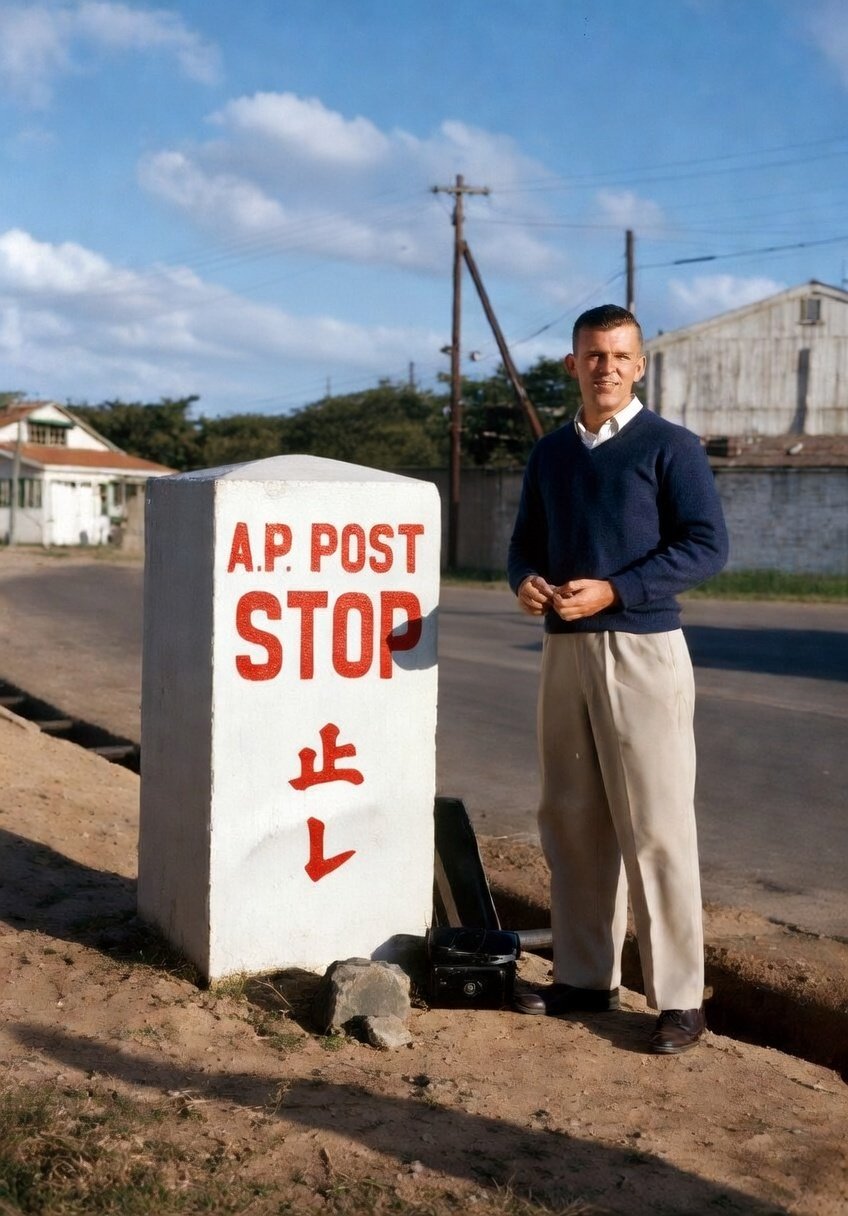
Camp Hakata (キャンプ・ハカタ) was a major U.S. military installation in Fukuoka, Japan, that operated from 1945 to 1972 during the Allied occupation and early Cold War era. It sat in the Saitozaki area of Wajiro Village (now Fukuoka City’s Higashi-ku), on the former site of the Imperial Japanese Navy’s Hakata Naval Air Squadron seaplane training base. The camp (often used interchangeably with nearby Brady Air Field/Base) served as a key barracks, logistics hub, communications/intelligence post, and support facility. After closure, the land became Umi-no-nakamichi Seaside Park (海の中道海浜公園) and part of Marine World.
Pre-U.S. and Early Occupation Period (1940s)
✪ The area had Japanese military roots: Fukuoka No. 1 Airfield opened in 1936, and in 1940 the Navy established a seaplane training squadron in Saitozaki (Hakata Naval Aviation Squadron). It supported wartime operations but suffered damage from U.S. bombing raids, including a major firebombing of Fukuoka on June 19, 1945.
✪ U.S. forces seized the site on October 5, 1945, as part of the occupation of Kyushu. Brady Air Field (in the Gannosu area) was established under Army control and became the airfield component of the broader Camp Hakata complex.
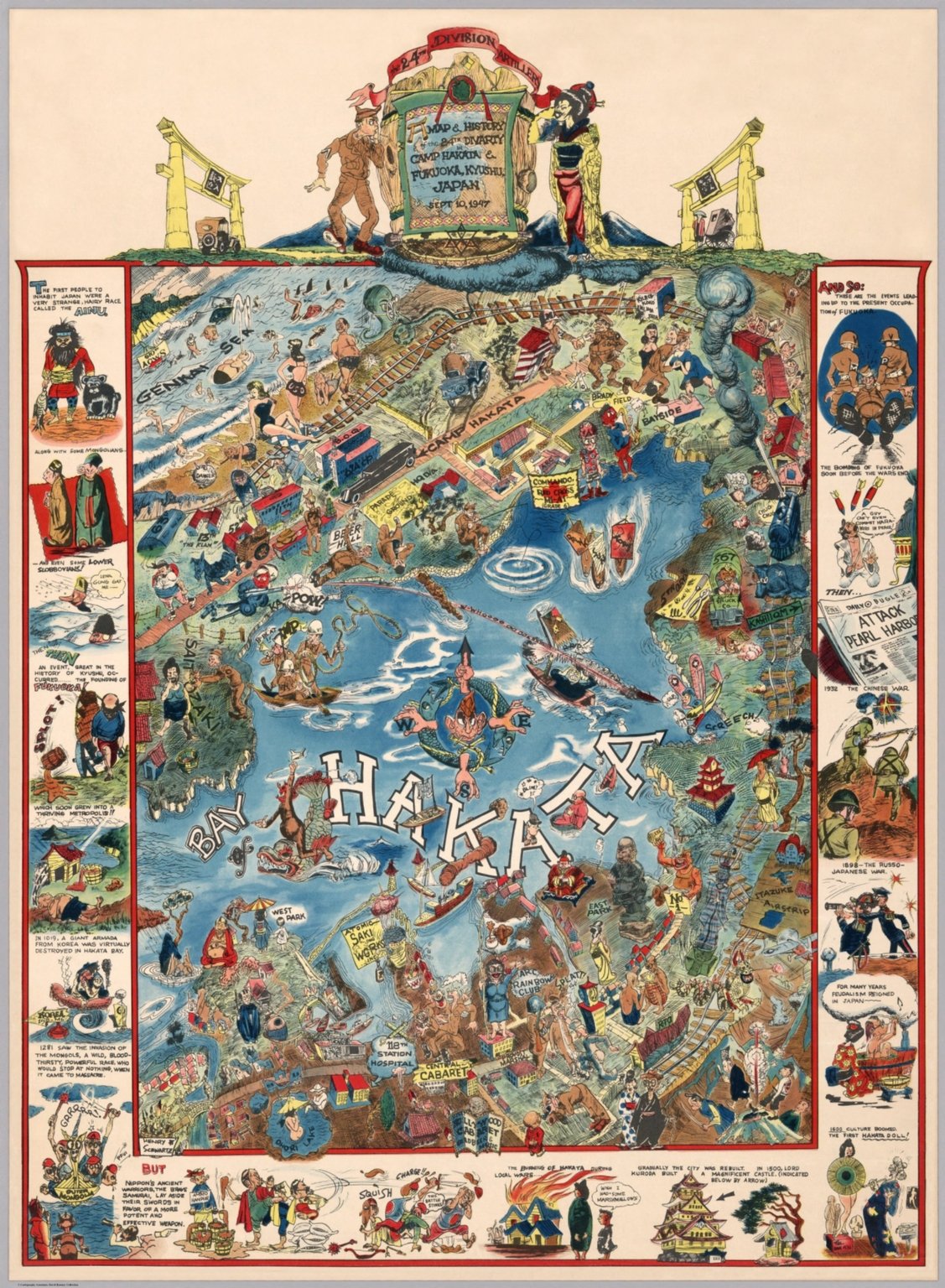
The 24th Infantry Division (which had fought in the Pacific, including Leyte and Luzon) took up occupation duties on Kyushu. A vivid 1947 pictorial map drawn by artist Henry Schwartz (likely a soldier in the 24th Divarty) humorously depicts camp life—barracks, PX, interactions with locals, bars/cabarets, and satirical takes on occupation realities (drinking, fraternization, MP oversight). It also references recent war damage, like bombed-out buildings and unexploded mines.
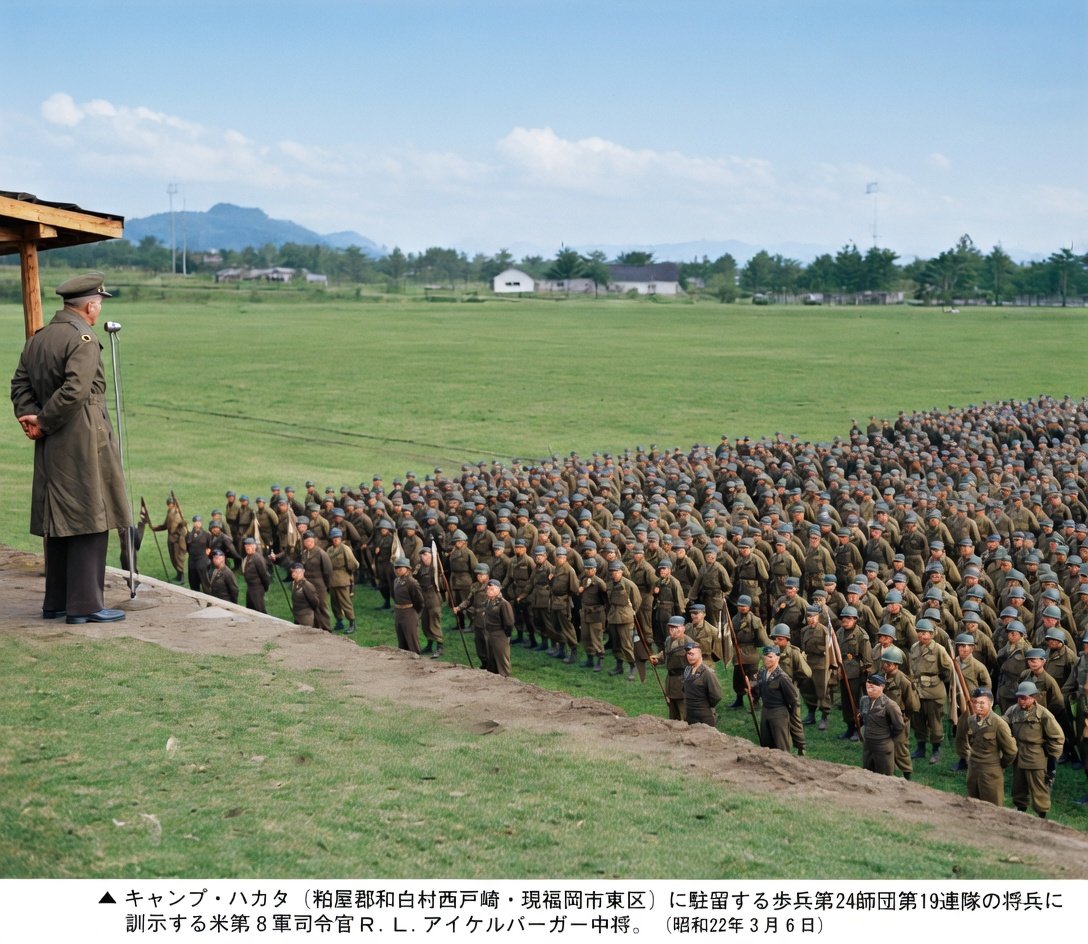
On March 6, 1947, Lt. Gen. Robert L. Eichelberger (commander of the U.S. 8th Army) visited Camp Hakata and addressed troops of the 19th Regiment, 24th Infantry Division, who were stationed there (photo). Eichelberger was a key figure in the occupation under MacArthur.
Korean War Role and Expansion (1950s)
Camp Hakata/Brady Air Base became a vital transportation and supply hub during the Korean War (1950–1953). It supported logistics when Chinese forces pushed UN troops back in late 1950, with aircraft and supplies moving through the facility.
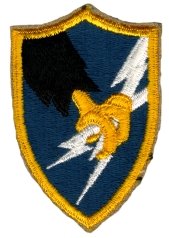
In 1948, the Army Security Agency (ASA) 126th installed shortwave direction-finding (HF/DF) equipment in Saitozaki for signals intelligence and communications.
A famous highlight: On February 9, 1954, Marilyn Monroe visited the base for a troop entertainment/morale event. This was during her honeymoon in Japan with Joe DiMaggio; she also visited injured soldiers at hospitals in Japan and performed for troops in Korea. Locals still celebrate the visit today.
Later Years, Name Changes, and Closure (1950s–1972)
The base evolved with shifting U.S. military needs:
✪ 1956: Brady Air Field transferred to Air Force control; functions shifted from “Camp Hakata” to the airfield.
✪ 1958: Operated as Brady Air Base with the USAF 6918th Radio Squadron Mobile (later Security Squadron) focused on radio/signals work.
✪ 1961: Re-designated as a Brady Auxiliary Air Field, tied to Itazuke Air Base (today’s Fukuoka Airport).
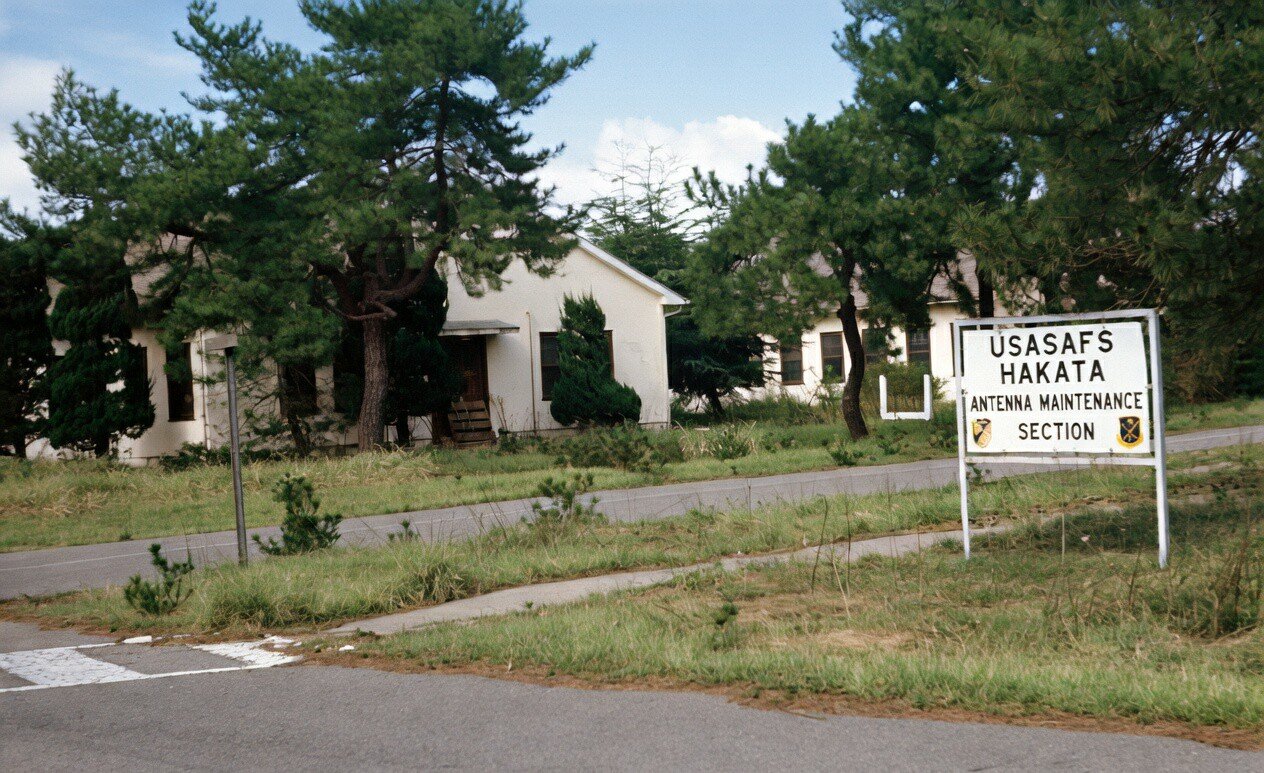
✪ 1962: Renamed Hakata Administration Annex (though “Camp Hakata” remained the colloquial name). A small Navy Security Group detachment (Naval Security Group Activity, Hakata) was also present for crypto/comms duties in the early 1960s. See below for more history on the 14th Army Security Agency.
U.S. forces fully withdrew in 1972. The site was officially returned to Japan on March 10, 1977, and redeveloped into the public park.
Legacy Today
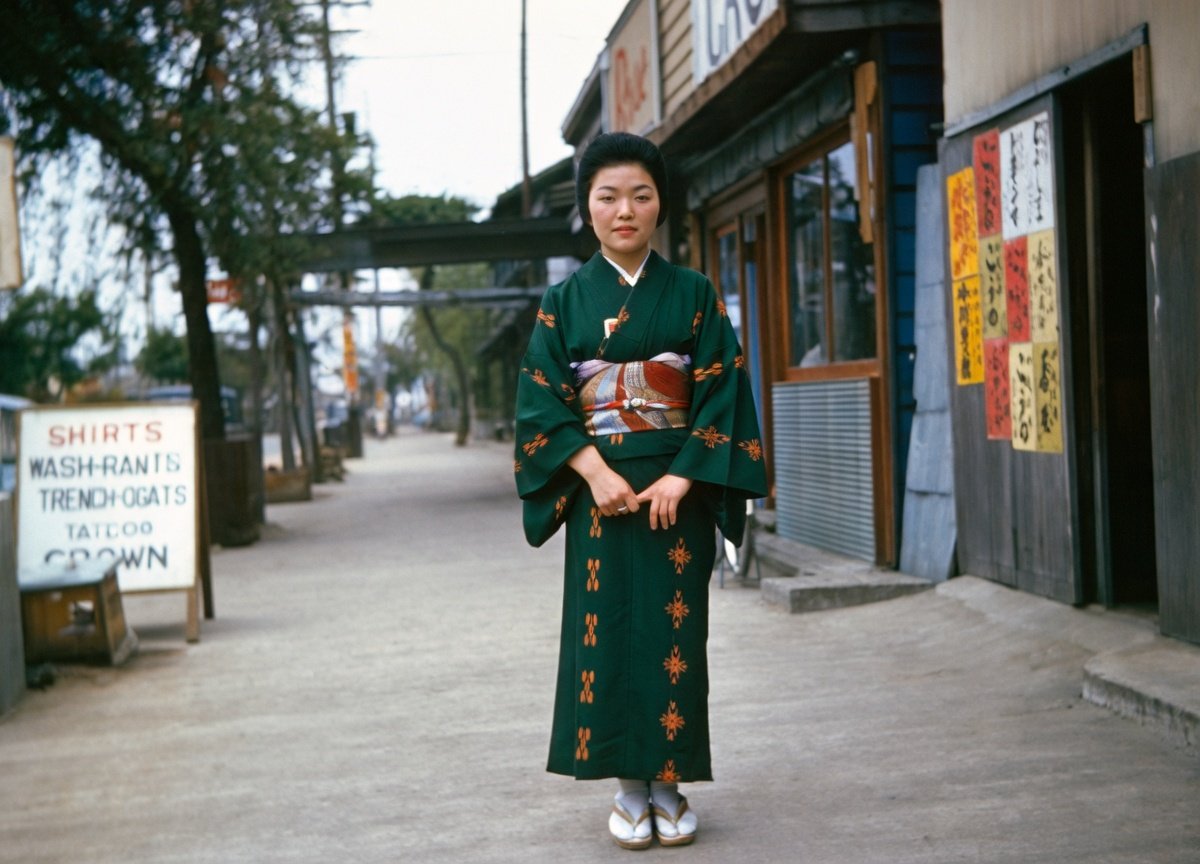
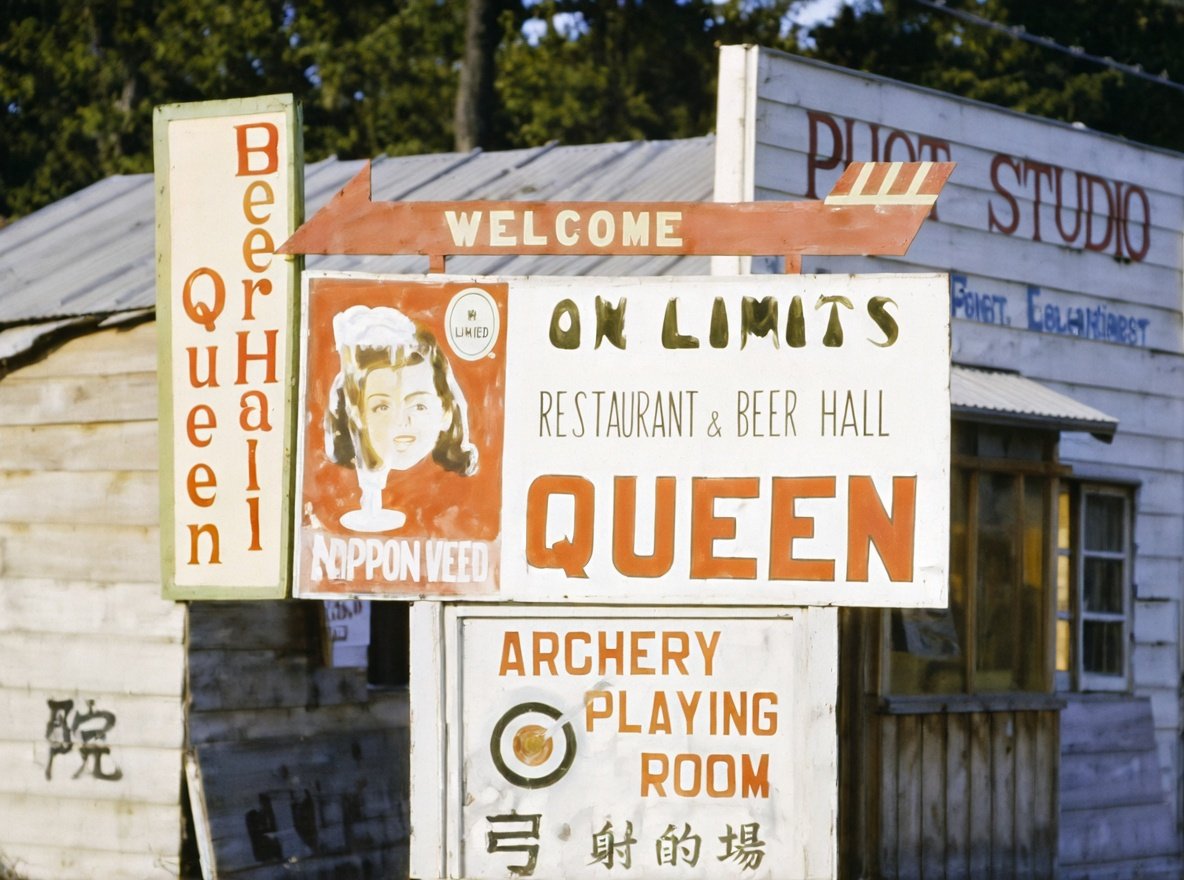
For locals, Camp Hakata was “Little America”: Bars, shops, and American cars filled the streets of Saitozaki, with strong U.S.-Japanese community ties (many Japanese worked on base as cooks, bartenders, maids, etc.). Veterans and residents recall the vibrant, cross-cultural scene.
Modern efforts preserve the memory through the Camp Hakata Project (launched around 2018 by local merchants and volunteers): shutter art depicting American themes, street renaming (e.g., “Marilyn Street”), bicycle tours, and a translated recipe book (HAKATA HIBACHI) recreating dishes from U.S. dependents’ cookbooks. The area around the old gate and barracks still has visible remnants.
Connection to Nearby Bases
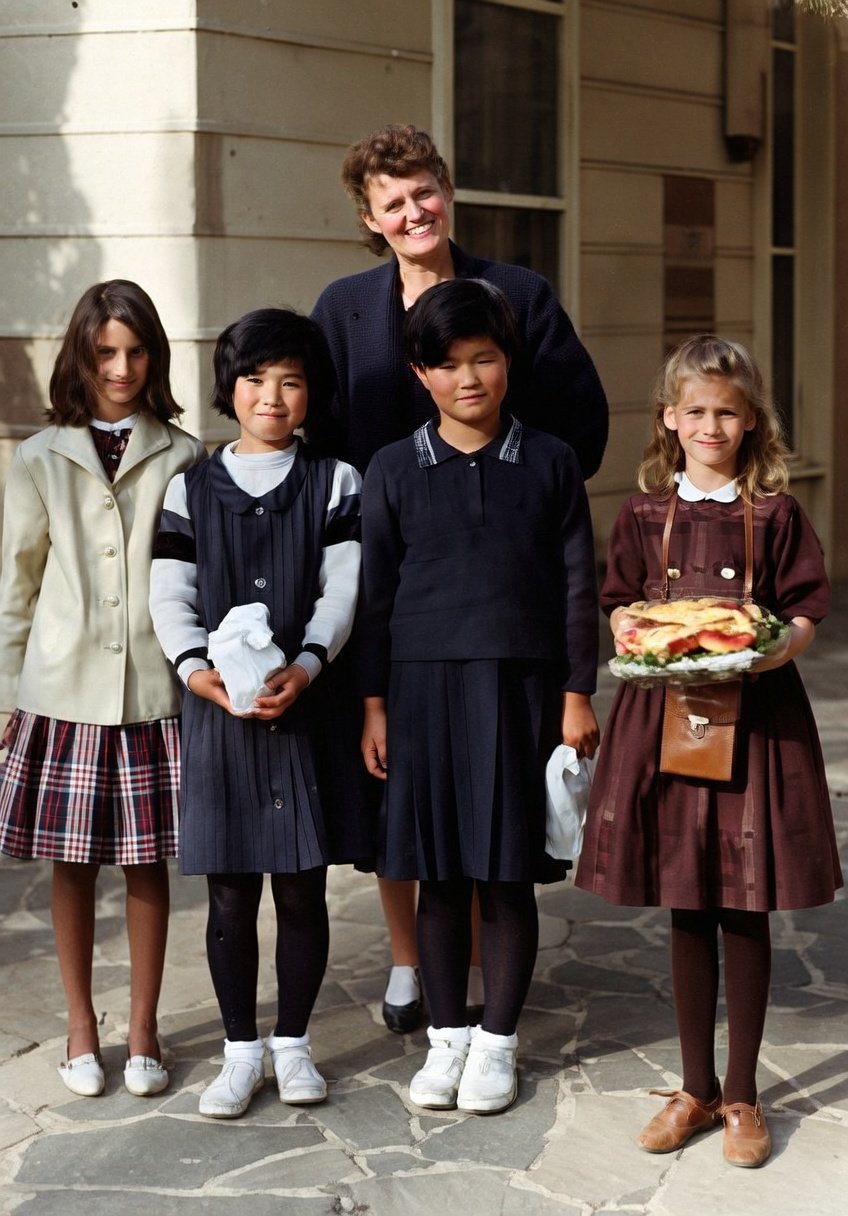
Camp Hakata/Brady was part of a network including Itazuke Air Base (Fukuoka Airport) and supported dependents’ schools (e.g. 1st-grade class photo). The facilities were sometimes administratively merged or referred to collectively in the 1950s–60s.
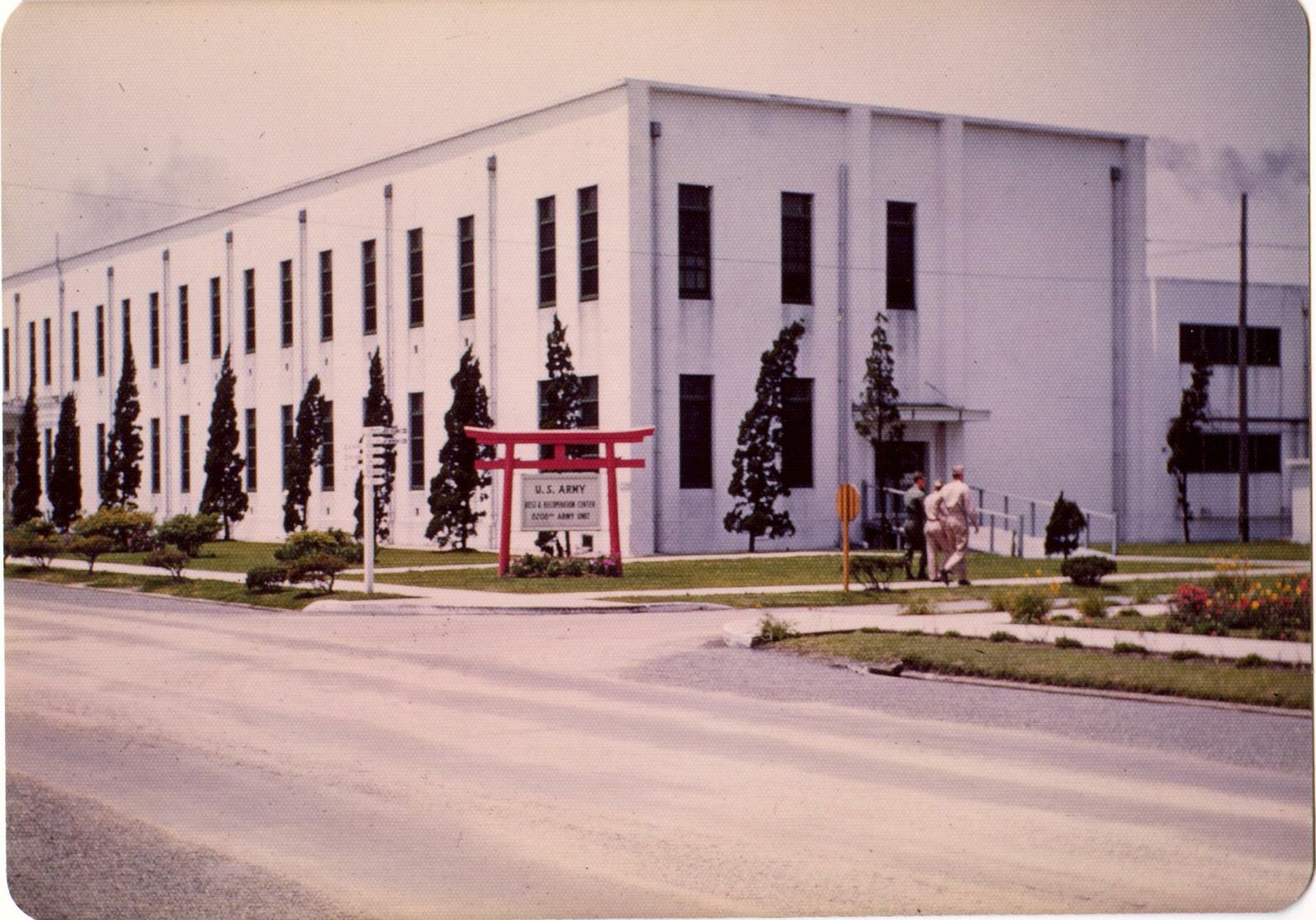
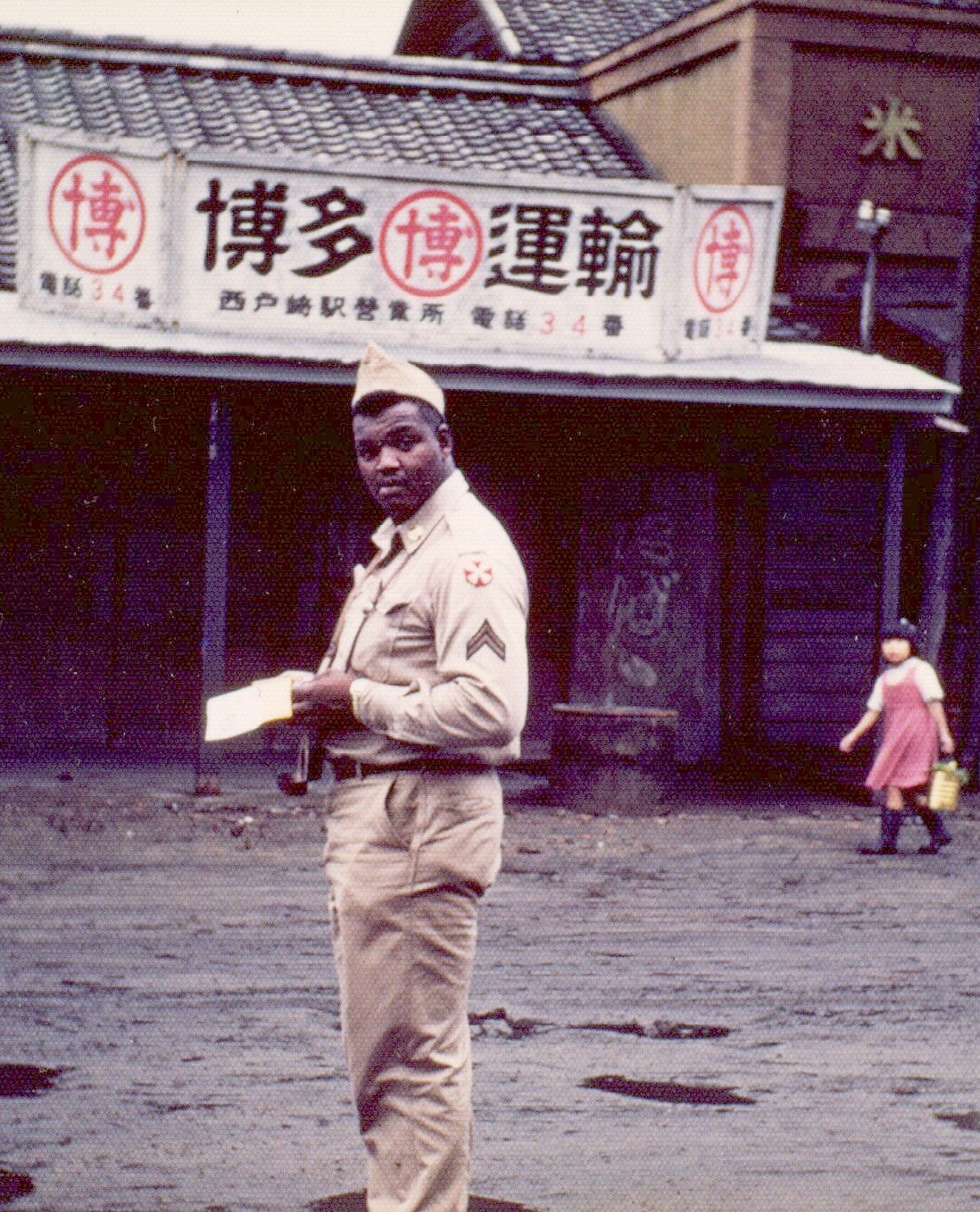
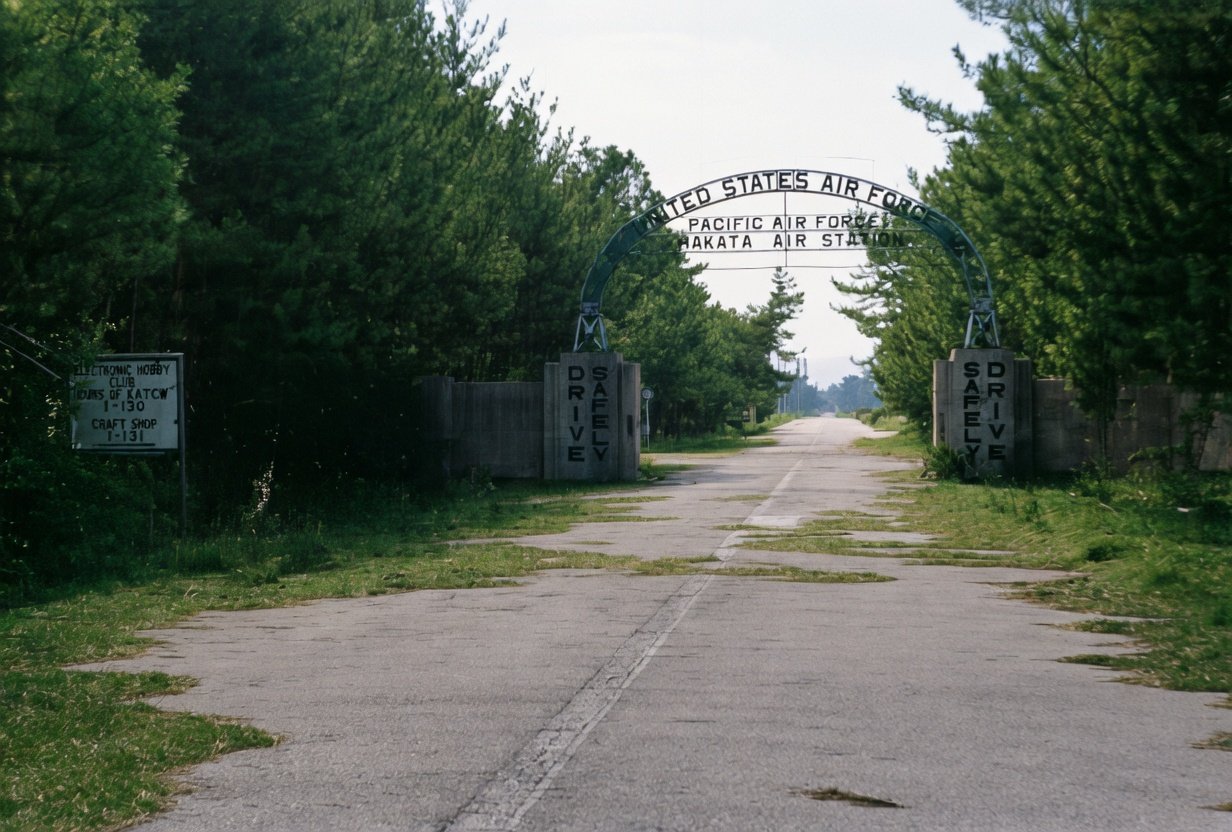
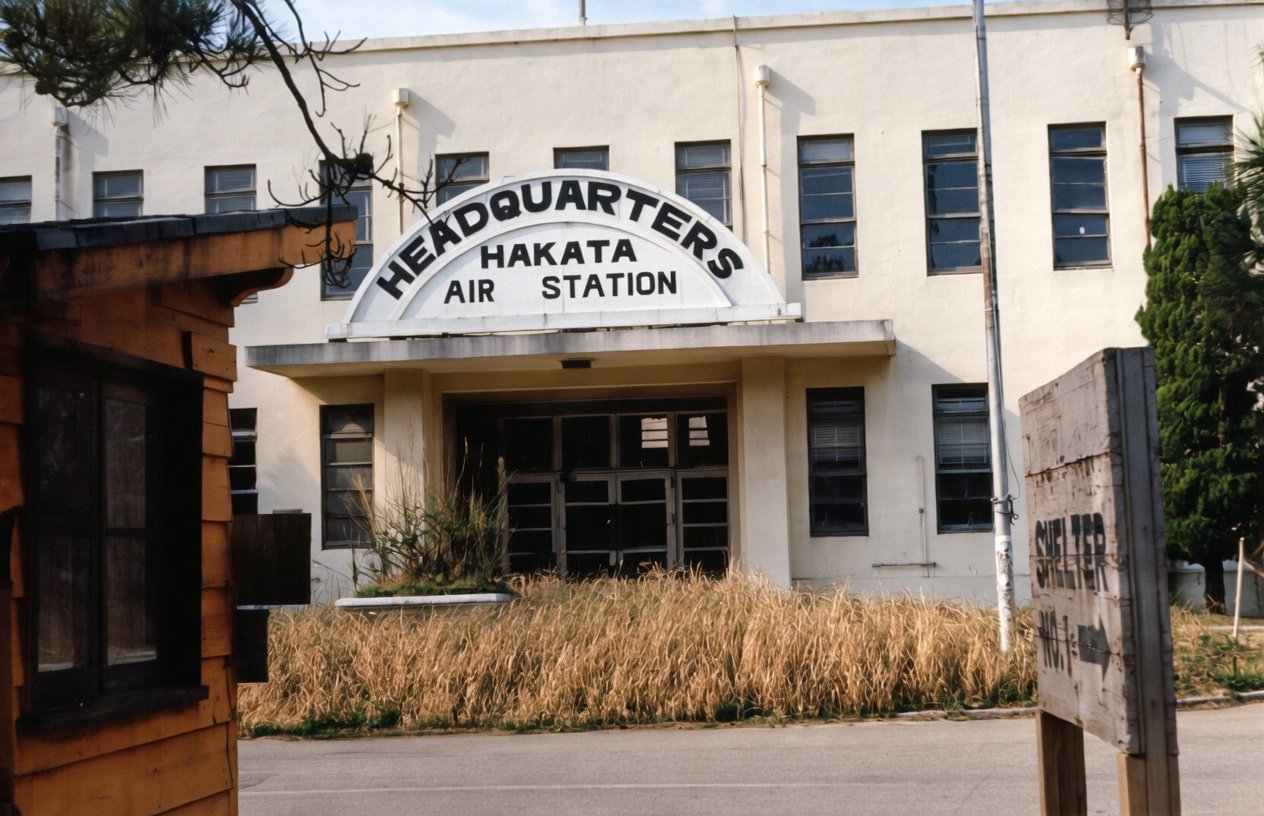
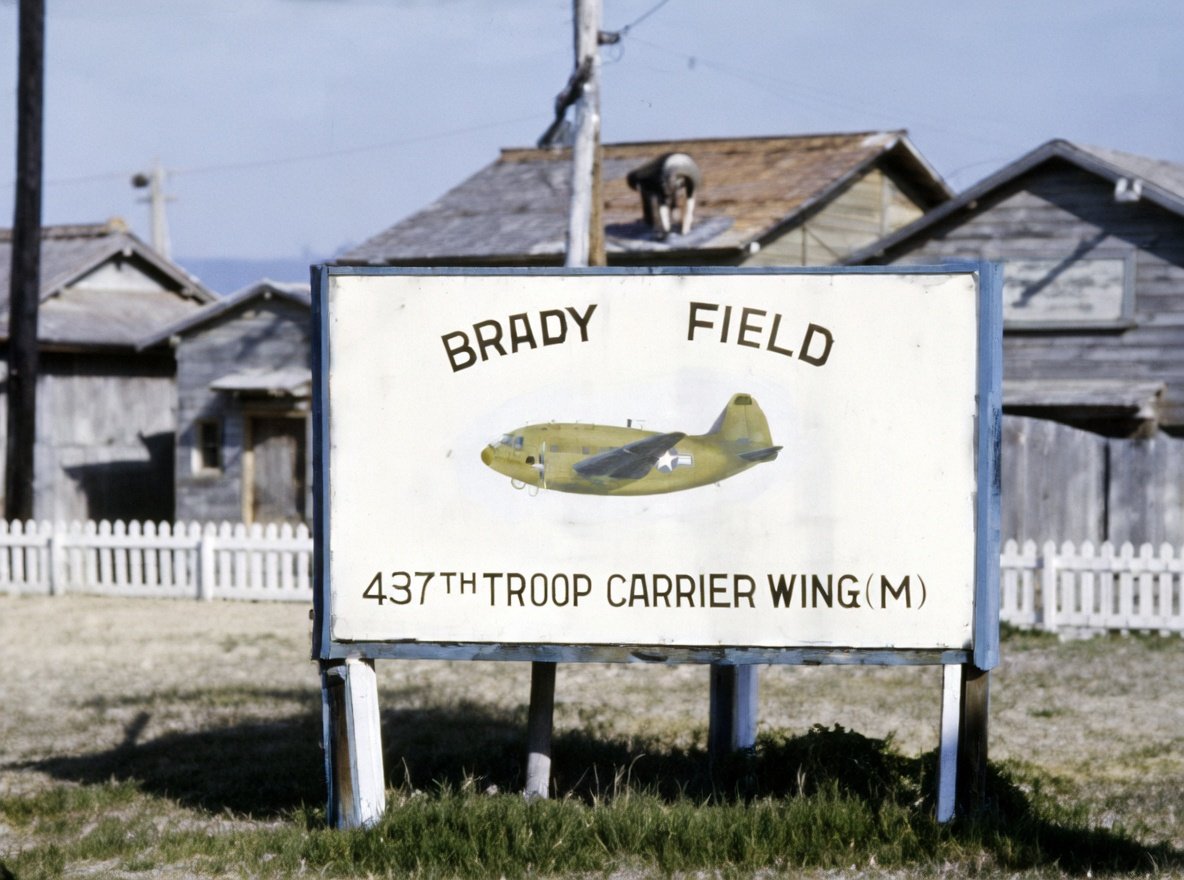
Brady Air Field seems to have been named after Cpt. John A. Brady Jr. of the Army Air Corps, who was shot down over Luzon in late 1944 or January 1945. He was flying for the 24th Division Artillery, which was stationed at Camp Hakata at one time. In the early days of US occupation, there were two fields, the Saitozaki Air Field and the Gannosu Air Field. There is some question as to which was renamed Brady, although most believe it was the Gannosu Field, but some claim it was the Saitozaki Field and the name transferred to the Gannosu Field after the Saitozaki Field was destroyed.
-- Graham
This base was first established in March 1936 for the Japanese Navy as a naval air and torpedo base and was called the Japanese Imperial Naval Air Force Hakata Base.
It was taken over in October 1945 by the U.S. 5th Amphibious Corps which furnished logistical support to the U.S. military units in Kyushu. From 1945 until the Korean Conflict, the 24th Infantry Division Artillery, a component of the 8th U.S. Army, was stationed here. During this period, many buildings were added to the base, including dependent quarters, 12 H-type barracks, three utility plants and auxiliary facilities.
With the advent of hostilities in Korea, the 8024th U.S. Army Station Complement Unit was formed in July 1950, and this unit assumed command and logistical responsibility for the base. In the latter part of that year, the 141st U.S. Army General Hospital was activated to provide support for Korea. New construction of covered ramps and the modification of eight of the previously constructed H-type barracks were undertaken to provide a 1500-bed hospital.
From 1951 to 1954, several anti-aircraft artillery units were based here to provide support to Itazuke Air Base from which the 437th and 315th Troop Carrier Wing flew in support of the Korean War effort.
The Air Force assumed control of the base in 1956 and named it Brady Air Base, and on 1 January 1962 the base was redesignated as Hakata Administration Annex, the name it carries today.
Hakata Administration Annex is located in the northwestern part of Japan’s southernmost island of Kyushu, on a narrow peninsula directly across Hakata Bay from the City of Fukuoka. It is bound on the south by the bay, on the north by Genkai Sea and the Korean Strait, on the east by the town of Gannosu, and on the west by the small city of Saitozaki.
The annex is considered a part of Itazuke Complex and has an area of 999 acres. Including outlying areas, the base land holdings total 1,425 acres.
Saitozaki is a small petroleum import town where several Americans reside. It has numerous restaurants and bars frequented by base personnel, and these establishments are inspected periodically to insure that they meet with minimum U.S. health standards. There are no off-limits establishments in this area or in Shikanoshima, a resort area at the tip of the peninsula, some four miles beyond Saitozaki.
The little town of Gannosu (which means Goose Nest) is smaller than Saitozaki, but also has many bars and restaurants, none of which are off-limits.
The City of Fukuoka is a metropolis of 850,000 people and has all the amenities associated with cities of comparable size. It is the largest city in Kyushu and is the center for most activities on the island.
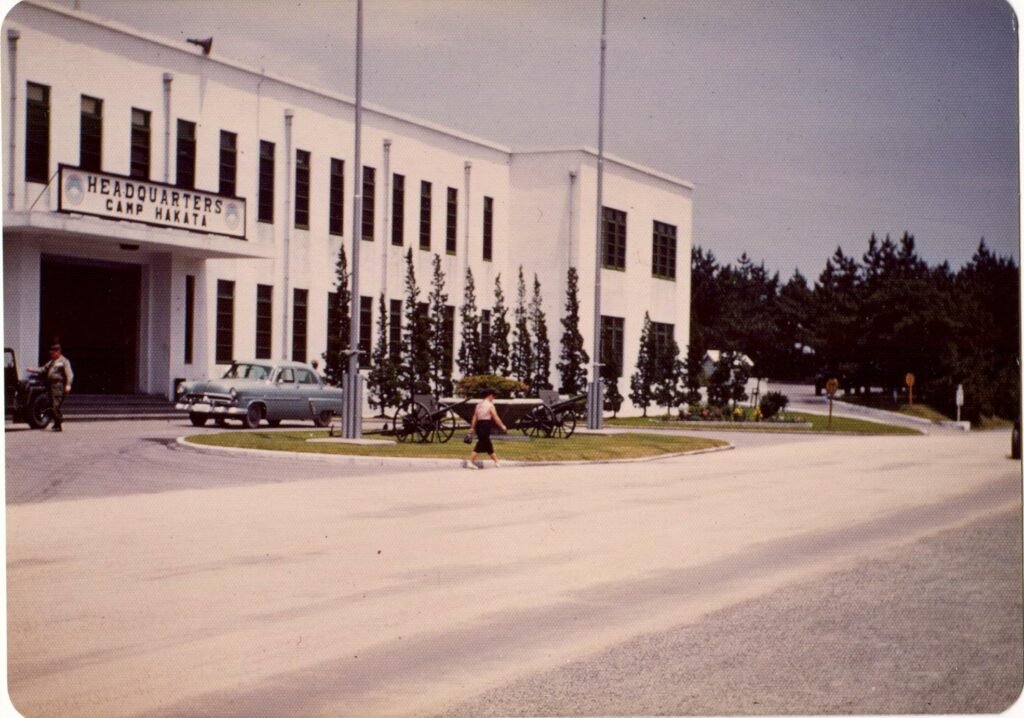
14th Army Security Agency Field Station Hakata, Japan, Army Detachment
Administered By: Doty, Richard L., CW3 – Sept. 9, 2023
Naval Security Activity Detachment Hakata was activated in May 1959. Because of the size of the command and scope of the mission increased the detachment was changed to on July 1, 1967, to a Naval Security Group Activity (NSGA) Hakata. NSGA Hakata was co-located with the U.S. Army’s 14th Army Security Agency Field Station, Hakata, Japan.
After 13 years in operations, in April, 1972, NSGA Hakata closed and most of the personnel, assets, mission and functions were transferred to NSG Det Pyong Taek, South Korea, which had recently opened on March 1, 1972.
E3s and E4s slept in the Army barracks in single bunks. You could have one or two small pieces of furniture next to your bunk. A chair and/or small table. I had a custom built stereo with a walnut cabinet and 2 large speaker systems in walnut. After you made E5 you were assigned to one of the Air Force bungalows that sat on the left side as you entered the base Main Gate. The Army barracks were further down the road on the right. The bungalows were sort of like condos with two of them attached in the middle and a front door at each end. There were two men assigned to each side. Separate single beds, not bunks, with end tables, dressers, chairs and a table, a closet each, and a regular bathroom with shower, sink and toilet. There wasn’t a lot of extra room but you could still add whatever you liked. They were low squat buildings that sat in amongst some trees and were very cozy. Jerry Fuller and I shared a bungalow and we each kept a bottle of Brandy in our night stand for a nightcap if we wanted. I don’t remember anyone ever entering our quarters without an invitation, so the privacy was nice too after living in barracks your entire military life up to that point. After making 2nd class you also had the option of receiving subsistence pay instead of just eating all three meals every day at the Army chow hall. You could still eat there, but you had to pay each time.
The Japanese base known as Hakata Annex was occupied and came under American control in October, 1945, following Japan’s defeat in WWII. Hakata was continuously occupied under various designations, including Hakata Air Station, Camp Hakata, Brady Air Field, Brady Air Base, Brady Auxiliary Air Field, and the Hakata Administration Annex until it closed in June, 1972.
[Abridged from AFTWS Unit Histories]
Excerpt from:
US Signals Intelligence (SIGINT) Activities in Japan 1945 – 2015: A Visual Guide
(Nautilus Institute for Security and Sustainability Special Report, 23 December 2015)
22. Hakata (USM-48), Kyushu
Hakata is the ancient name for the area now called Fukuoka, and historically, the name of its port area. It was the area chosen by the Mongols for their invasions of Japan in the 13th century, including two major efforts by Kublai Khan. US SIGINT activities began at Hakata in 1948, when the ASA’s 126th Security Service Company at Fushimi Momoyama established a HF DF station near the town of Saitozaki at the tip of the Uminonakamichi Peninsula bounding the northern side of Hakata Bay.314 It was selected as the site for a large ASA SIGINT station by a Site Survey team during the first half of 1955.315
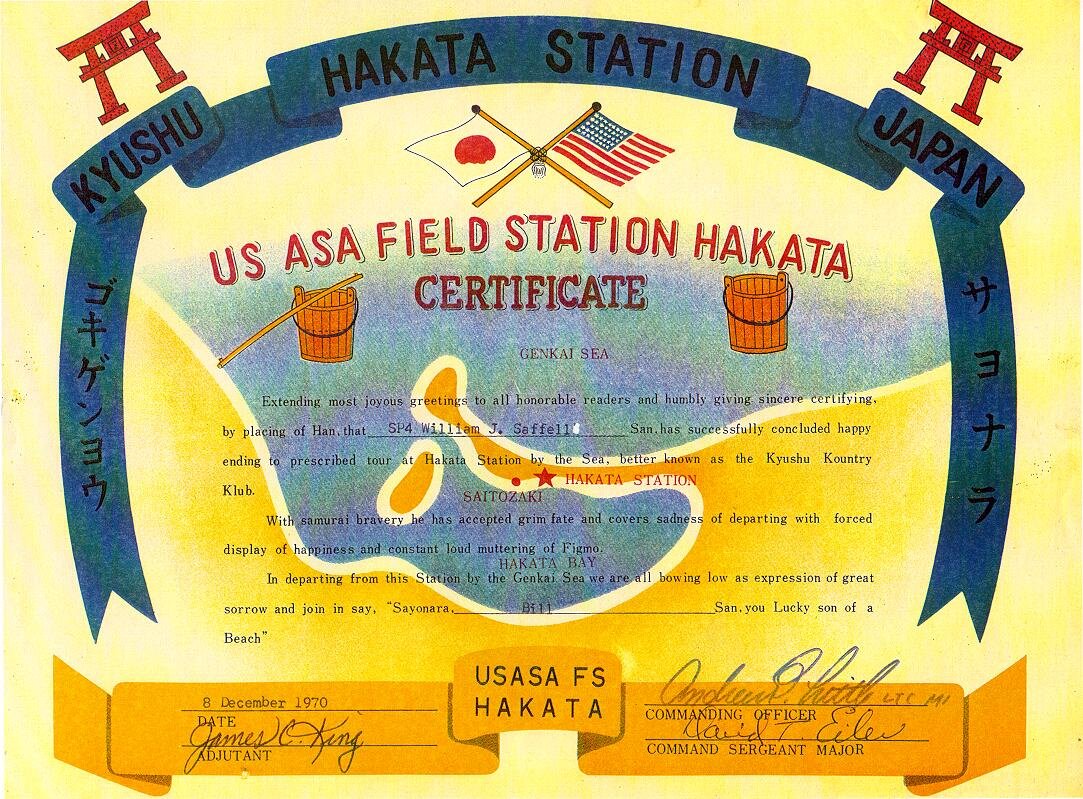
The 14th ASA Field Station was activated at Hakata on 15 October 1955 as Field Station 7202; it was designated 14th ASA Field Station in early 1957. Officially called ‘Hakata Administrative Annex, Itazuke Air Base [Fukuoka]’, it was located near Saitozaki and west of Brady Air Base, which was established in 1950-51. It was a tenant unit of the USAF’s 6348th Support Squadron at Brady.316 It was also referred to as USA-58 and USM-48 in NSA reports.317
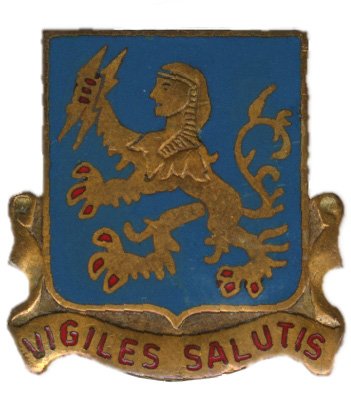
The 14th Field Station served as ‘operational host’ and provided support to USAFSS and NSG units at Hakata. 318 The USAFSS presence began when the 6918th RSM was activated as a first echelon site on 10 August 1958. The unit became operational on 3 November 1958. It was redesignated the 6918th Security Squadron on 1 July 1963. It was initially assigned to the 6902nd Special Communications Group (SCG) at Shiroi Air Base for second echelon processing, but was reassigned to the 6922nd RGM at Kadena on 22 October 1959.319
The 6918th Security Squadron maintained a Contingency Team, which deployed ‘to hot spots in Asia to conduct site surveys and establish intercept sites’. Some deployments involved ‘civilian clothing assignments’, as in the case of deployments to Bangkok in 1960-61. Others were ‘strictly military’, as in the case of the assignment to establish a USAFSS intercept station at Da Nang, South Vietnam, in March 1962.320
The NSG established a detachment (of NSGA Kami Seya) at Hakata in May 1959. It became a ‘full-fledged’ NSG Activity on 1 July 1967, at which time it had about 85 officers and enlisted men.321 It had a total strength of about 80 personnel in 1968-69, making it ‘the smallest Service presence’ at Hakata.322 The unit concentrated on the interception of Chinese communications.323
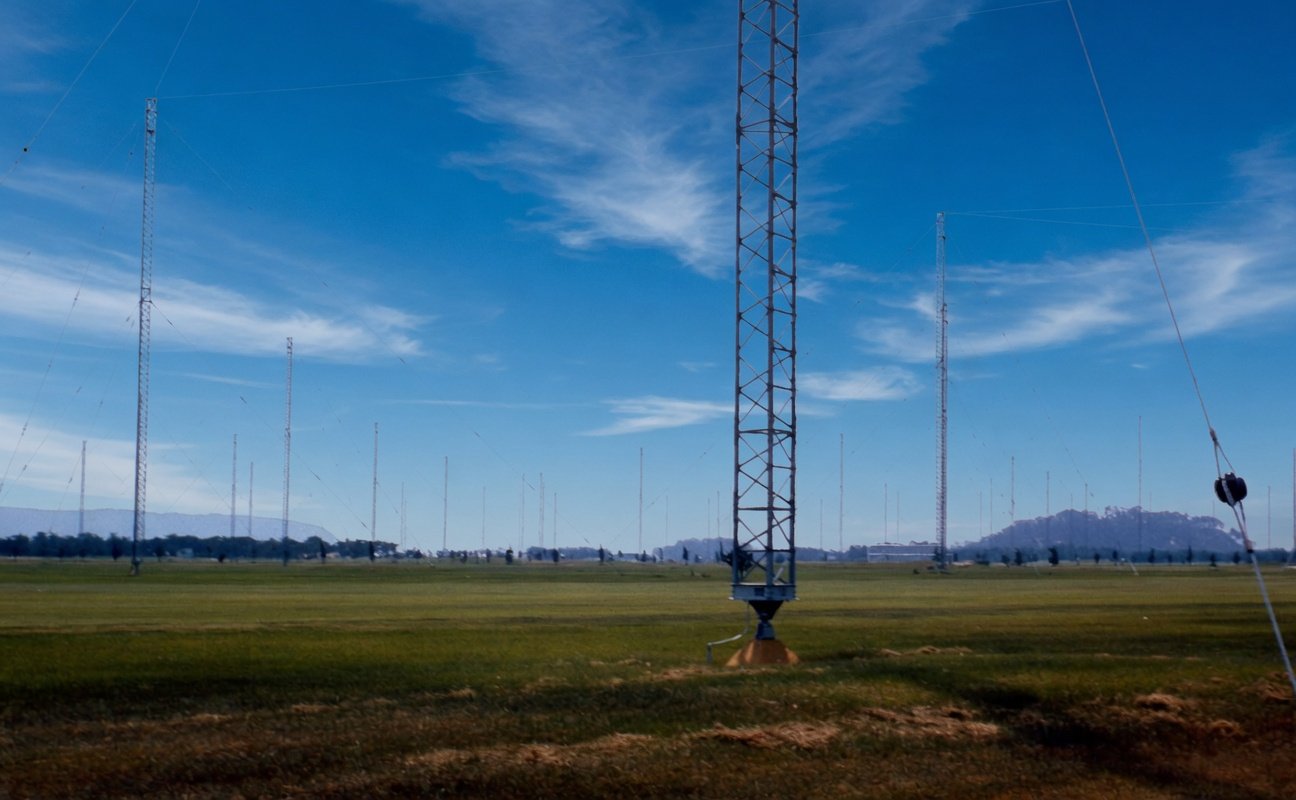
The three SCAs were located in a single operations building, adjacent to ‘a golf course used by Japanese civilians as well as US military personnel’. The operations building was administered by the ASA, which had the largest presence there. The ASA’s Communications Center also served the USAFSS and NSG units. ‘Surrounding the operations building was the antenna field with its assortment of rhombic arrays’. In the 1960s, the station was supported by the Joint Sobe Processing Station (JSPC) at Sobe, while the NSG unit was frequently in contact with ‘our counterparts at NSGA Taipei’.324
In 1963, one of the ASA’s first AN/TLR-28 systems was installed at Hakata.325 The AN/TLR-28 incorporated new 14-track Mincon CMP-114 magnetic tape recorders which could record 14 tracks simultaneously, fed from several receivers. The AN/TRL-28 and the CMP-114 opened the way for Wideband collection, or Multiple Signal Collection, whereby narrow-band signals in contiguous parts of the radio frequency spectrum could all be recorded for later processing.326
The NSG installed an AN/GRD-6 HF DF antenna system at Hakata in 1967-69, similar to those constructed at Kami Seya and many other NSG sites around the world a decade before. By 1969, NSGA Hakata had become ‘an important element’ of the Bullseye HF DF network.327
NSGA Hakata maintained a Direct Support Unit which provided small detachments of personnel for service aboard EC-121 SIGINT aircraft and special SIGINT-equipped submarines. A submarine detachment typically included five men from Hakata, and involved 7-8 week missions.328 Two NSG personnel from Hakata were aboard the EC-121 electronic reconnaissance aircraft that was shot down by North Korean fighter aircraft on 15 April 1969. They had reported to Kami Seya on temporary duty just ‘the day prior to the flight’.329 The flight was monitored by members of the 6918th Security Squadron, who occupied Room 5 in the Operations Building, and who monitored the North Korean reaction by intercepting its air defence search radar transmissions.330 However, an NSG operator who was working in Room 1 has stated that, at the time of the actual shoot-down, he happened to walk past Room 5 and found it empty; ‘the Air Force collectors … were scattered around the building doing various personal things’ while ‘emergency air tracking [was] coming across an open speaker’.331
A large number of Japanese citizens were employed at the Field Station. On 1 July 1964, for example, 73 Japanese were at the station, with 96 authorized; on 30 June 1965, 77 were authorized and 76 assigned.332
As the Vietnam War wound down and other capabilities came on-line, Hakata’s functions were transferred to other sites in Honshu, Okinawa and South Korea. 333 The USAFSS’s 6918th Security Squadron was deactivated on 30 June 1972.334 The NSG Activity was inactivated in April 1972. The 14th Field Station was closed on 30 June 1972. It received a Meritorious Unit Commendation (MUC) for the period from 1 January 1971 to 15 March 1972.335
The ASA personnel transferred to the new USASA Field Station at Misawa in northern Honshu and to Torii Station in Okinawa.336 The NSG personnel were transferred to sites in South Korea and Camp Hanza in Okinawa.337 Many members of the USAFSS’s 6918th Security Squadron were transferred to the 6921st Security Group at Misawa.338
FOOTNOTES
314 Correspondence from Wayne Gilbert, 9 December 1999.
315 ‘Duty with the Navy at Kamiseya Naval Station, 1955’, 8612TH A. A. U. Camp Chitose II, 1954-1957, at
http://www.angelfire.com/fl2/altha11/index35.html.
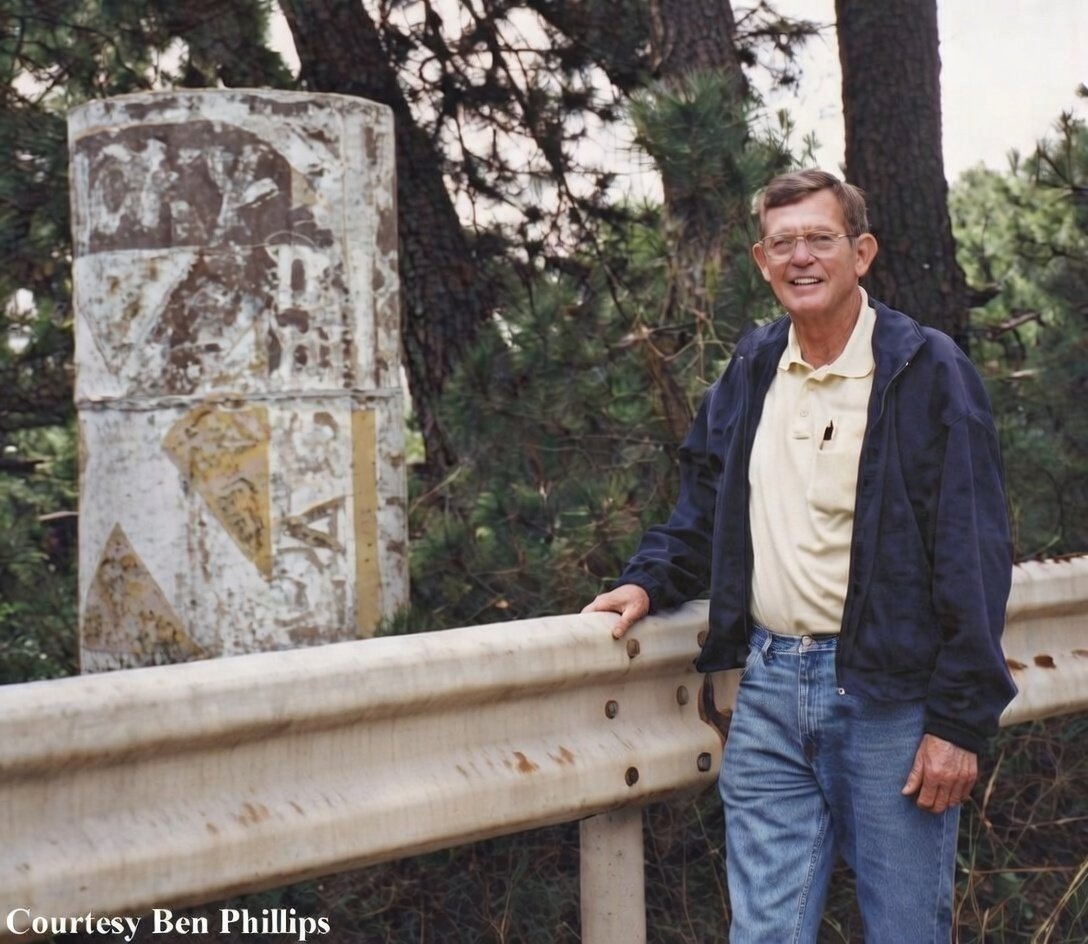
316 U.S. Army Security Agency, Annual Historical Summary, FY 1965, p. 360; and Benjamin Phillips, ‘My
Remembrance of the 14th’, at http://members.aol.com/cyberdenis/army/stories/ben-1.htm.
317 ‘The Joint Sobe Processing Center, 1961-1971: A Brief Overview of a Successful Experiment’, (United
States Cryptology History, National Cryptological School Press), at
http://www.governmentattic.org/10docs/NSA-JointSOBEprocCtr_1974.pdf; and ‘The National Security
Agency and the EC-121 Shootdown’, pp. 13-24.
318 U.S. Army Security Agency, Annual Historical Summary, FY 1965, p. 164.
319 Richard R. Ferry, A Special Historical Study: Organizational Development of the USAFSS, 1948-62, p. 48; and
James E. Pierson, A Historical Study of the Organizational Development of United States Air Force Security Service, 1970-
1974, p. 42.
320 P. G. Kivett, Intelligence Failures and Decent Intervals, (AuthorHouse, Bloomington, Indiana, 2006), pp. 15, 27-
28; and Phil Kivett, ‘“. . . and so, It’s All Come Down to This”’, Viva AFSS, 3 November 2008, at
http://vivausafss.org/Kivett.htm.
321 Vance H. Morrison, ‘U.S. Naval Security Group Activity Hakata, Japan’, NCVA Cryptolog, Spring 1995, p. 7.
322 Jim Lampley, ‘14th USASA FS Hakata Guestbook’, at
http://titan.guestworld.tripod.lycos.com/wgb/wgbview.dbm?owner=hakata.
323 Jim Lawrence, ‘Navy [Hakata] 1962-1963’, at http://members.aol.com/cyberdenis/army/stories/navy.htm.
324 Vance H. Morrison, ‘U.S. Naval Security Group Activity Hakata, Japan’, p. 7.
325 Kenneth L. Bird, in ‘14th USASA FS Hakata Guestbook’, at
http://titan.guestworld.tripod.lycos.com/wgb/wgbview.dbm?owner=hakata.
326 Jules Gallo, ‘NSA Signal Collection Equipment and Systems: The Early Years – Magnetic Tape Recorders’,
Cryptologic Quarterly, 3 September 1991, DOCID 3967121, pp. 57-59, at
http://www.nsa.gov/public_info/_files/cryptologic_quarterly/nsa_signal.pdf.
327 Vance H. Morrison, ‘U.S. Naval Security Group Activity Hakata, Japan’, p. 7.
328 Ibid., p. 21.
329 Ted Raboum, ‘Room Five – Empty’, NCVA Cryptolog, Fall 1998, at
http://usspueblo.org/North_Korea/EC121_save.html; and T. Wayne Babb, Honto!, p. 434.
330 ‘The National Security Agency and the EC-121 Shootdown’, pp. 13-24; and Matthew Aid, ‘1969 EC-121
Shootdown’, at http://www.imjinscout.com/EC-121_Shootdown.html.
331 Ted Raboum, ‘Room Five – Empty’.
332 U.S. Army Security Agency, Annual Historical Summary, FY 1965, p. 361.
333 Vance H. Morrison, ‘U.S. Naval Security Group Activity Hakata, Japan’, p. 11.
334 James E. Pierson, A Historical Study of the Organizational Development of United States Air Force Security Service,
1970-1974, p.42; and Richard Green, in ‘Freedom Through Vigilance Association [FTVA]: Sign In Roster’, at
http://www/ftva.org/janjun03.html.
335 ‘Units and Awards’, The Hallmark, September 1972, p. 17.
336 Patrick Ciccarone, ‘708th Military Intelligence Detachment Says Farewell’, DVIDS, 12 June 2014, at
http://www.dvidshub.net/news/133601/708th-military-intelligence-detachment-says-farewell#.U79gv0Bade5;
Richard Lewis, in ‘6918th SS Hakata Japan’, at http://www.e-guestbooks.com/view.billmink; and Greg
Sheppard, ‘14th USASA FS Hakata Guestbook’, at
http://titan.guestworld.tripod.lycos.com/wgb/wgbview.dbm?owner=hakata.
337 Vance H. Morrison, ‘U.S. Naval Security Group Activity Hakata, Japan’, NCVA Cryptolog, Spring 1995, p.
21.
338 Richard Lewis, in ‘6918th SS Hakata Japan’.
The Army Security Agency by Lynn Circle – Thanksgiving 2012
The Army Security Agency was arguably the most closely kept secret ever held over decades by the American military (along with its brothers in the Air Force and Navy.) During the early years, members of the ASA couldn’t even tell someone outside their unit what they were. Instead they were officially designated as “Signal Corp” or “Radio Research” units. (It wasn’t until the 1990’s that James Davis, the first American soldier to die in Vietnam in 1961, was recognized as belonging to the ASA. Until then he was listed as Signal Corp.)
We were the watchers on the borders of the Free World. We based in the freezing arctic and on burning deserts. (But I was lucky enough to be based in what was then beautiful and rural Japan and we lived better than perhaps anyone else in the American military.)
For our potential enemies we were the ghosts in the woodwork, the “man who wasn’t there.” Oh, they knew something about us; they knew enough to offer rewards for our capture. In 1963, rumor said it was $58,000 in today’s dollars dead and twice that alive. But they didn’t know who we were and to my knowledge no one ever collected that bounty.
We were not fighters; that wasn’t our job. Our mission was to gather information without detection, and that we did very, very well. My unit, the 14th United States Army Security Field Station (usually abbreviated as 14th USASA Field Station), was dedicated to the protection of the strategic security of the United States of America. How we achieved that is something we still don’t talk about. I was an 058 and others who belonged to the ASA will know what I am talking about. But all I tell anyone else (and this is also true) is that I was a glorified clerk typist with a security clearance whose greatest dangers faced were paper cuts.
It is an article of faith among most who served in the ASA that if we had not been disbanded in 1976, President Jimmy Carter would have been forewarned about coming events in Iran. Nor, do we think, would the murderers of 9/11 have been able to successfully carry out their slaughter. That may be arrogance on our part, but most of us do believe it.
I am certain there are men and women serving in silence and darkness and even danger this very minute in order to provide the information needed for protecting the United States of America. We will probably never know their names, nor where they serve, nor what they do. But on this Thanksgiving Day, it is for them I give thanks. It is because of them I can celebrate today, happy, fat, and blissfully ignorant of much of the troubles of the world.
From the NSG website:
Jim Lawrence (former CTI2), 1962-1963
Some general information about Hakata/Brady Air Base. There were only 45 of us in the Navy Detachment including one officer, in my time Lt. Taylor, 2 chiefs, one in charge, first Harold Gunter, then Theodore Mara, and one who did decryption, then normally two or three first class who were section leaders, then a dozen or so second class and the rest almost all third class. Us grunts who manned the radios, 2nd class and below worked a rotating shift. Starting with an 8 hour Swing, 8 off, 8 hour Day, 8 off, 8 hour Grave, then 32 hours off, then start all over again. That made a seven day a week work schedule. I don’t know about anyone else but in the 20 months I was at Hakata I didn’t get one day of leave. The schedule was grueling to say the least. We always seemed tired, and we were always in a rush. By the time we hit the graveyard shift it was tough to stay awake but you had to keep alert because there was always someone to give you a hotfoot if you dozed off. I got my share… and gave one or two as well.E3s and E4s slept in the Army barracks in single bunks. You could have one or two small pieces of furniture next to your bunk. A chair and/or small table. I had a custom built stereo with a walnut cabinet and 2 large speaker systems in walnut. After you made E5 you were assigned to one of the Air Force bungalows that sat on the left side as you entered the base Main Gate. The Army barracks were further down the road on the right. The bungalows were sort of like condos with two of them attached in the middle and a front door at each end. There were two men assigned to each side. Separate single beds, not bunks, with end tables, dressers, chairs and a table, a closet each, and a regular bathroom with shower, sink and toilet. There wasn’t a lot of extra room but you could still add whatever you liked. They were low squat buildings that sat in amongst some trees and were very cozy. Jerry Fuller and I shared a bungalow and we each kept a bottle of brandy in our night stand for a nightcap if we wanted. I don’t remember anyone ever entering our quarters without an invitation, so the privacy was nice too after living in barracks your entire military life up to that point. After making 2nd class you also had the option of receiving subsistence pay instead of just eating all three meals everyday at the Army chow hall. You could still eat there, but you had to pay each time.
Liberty consisted of what you could do in 32 hours, that is after you got about 10 hours sleep off your graveyard shift. That meant you’d wake up in the late afternoon, go get dinner at the chow hall, hang around for an hour or so telling lies to all your friends, then either going to the base movie, the EM (enlisted men’s) Club on base, or going into either Saitozaki to down a few drinks, mostly beer, and the logical consequence of that, or head over into the bright lights of Fukuoka for some entertainment or local culture. The Yatai (mobile food stands) along the river were always interesting, a really nice German style rooftop beer hall, clubs, restaurants, a floor show, department stores, tailor shops, jewelry stores, markets, so much to do there. If you had a Japanese girl friend, which was actually against regulations for us because of our security clearances, there were temples and shrines, beaches and mountains to go exploring in as well. My wife Kimiko and I used to go to Fukuoka regularly where I would soak up Japanese culture and language like a sponge. Dazaifu was about the most distant place we ever went, a trip we made again when we were last in Kyushu in the late 90’s.
The EM Club was a really nice place to socialize. Drinks were cheap and varied, there was a jukebox and once a week? some of the guys who had musical talent would get a band together and play on the small stage. We had Hiram Pritchard from Texas who played saxophone, Jim Plum from Iowa played drums, and several others played guitars, piano, bass and trumpet. Once a week or month, we had a woman from a jewelry store, and a tailor, both from Fukuoka, who would bring samples with them to sell items to us. I bought lots of shirts, vests, suits and a couple beautiful coats from Hong Kong Tailors, and a really nice blue sapphire ring from the jeweler. I gave the clothing away as I grew out of them, but still have the ring.
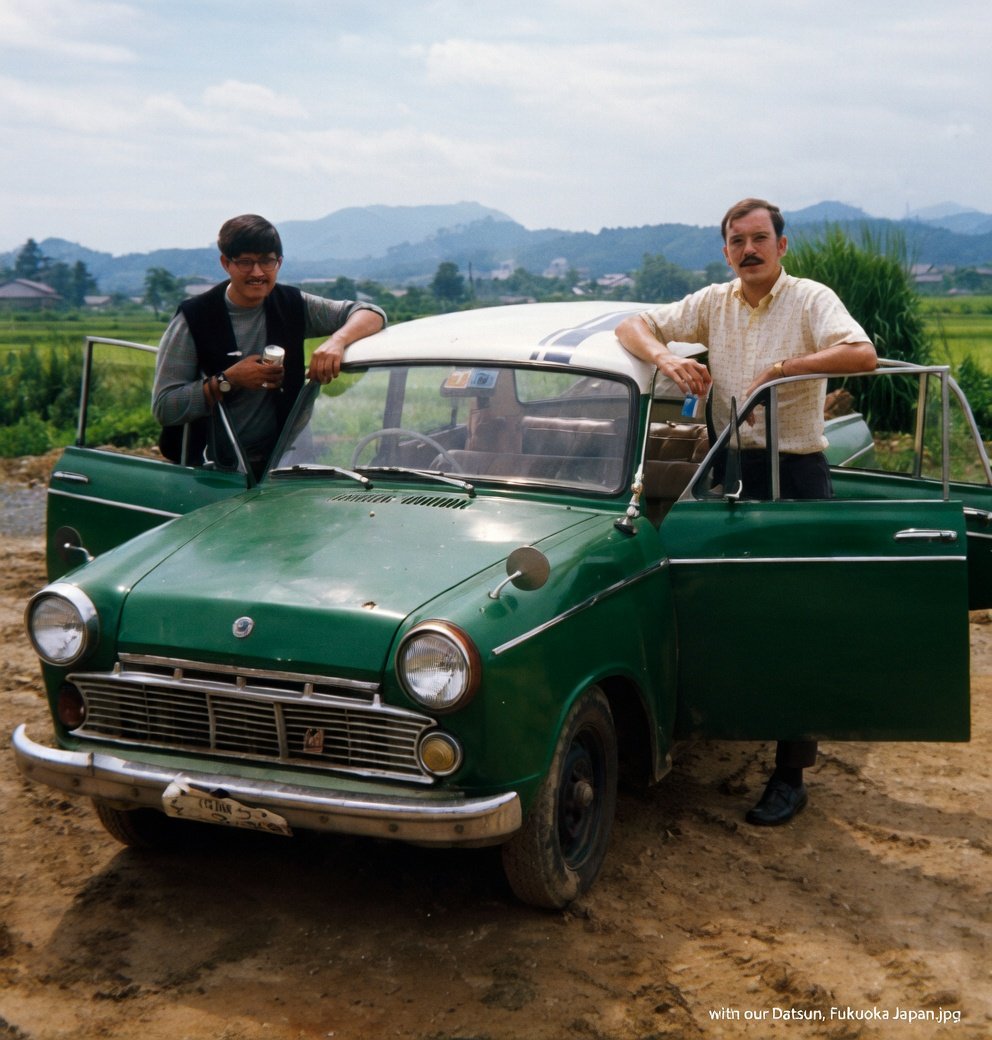
As time went by during your tour at the base, alternative transportation might become something you would address. You could walk down into Saitozaki, and if a bit too woozy on the way back, take a cab. You could also take a bus into Fukuoka and again, a cab back if it was late or your sense of direction was blurred. Cabs, even when shared, got expensive after a time and there were options. I chose to go into Fukuoka to a motorcycle dealer and bought a used Meguro. It had a one cylinder 250 cc engine. At the time the Japanese motorcycle police rode two cylinder 500 cc Meguros. So I couldn’t outrun the police I suppose. Others bought mostly Hondas, 125s or 250s. Bob Killen bought a British Triumph 500 cc. Other options were usually bicycles, or cars, especially those that had been brought over from the U.S. by those who went before and then sold their car to someone before they left to go back to the U.S. So a wide variety of recent and very un-recent vehicles came on the market sporadically. I think we had to get base license plates for them, but I don’t remember any inspections or insurance requirements, nor driver’s tests, utilizing our home state driver’s licenses for the duration of our tour. One thing to remember is that in Japan you drive on the left, so American cars had an inherent danger involved in driving them in Japan.
Our base Army PX wasn’t all that big but fairly well stocked with items young men would crave. The normal array of toiletries and clothing, but I remember most the new releases on 45’s and music albums from the U.S. I also remember the Japanese craft items sold there. Hakata dolls, fans, china, especially sets of Noritake, bamboo and beautifully crafted wooden items that all sold at prices you’d never see off base. Which brings me to U.S. script. Funny money printed by the U.S. government, I suppose to keep American dollars out of the hands of the Japanese. I sure missed greenbacks when I was in Japan. We could buy Yen with script at 360 Yen to the dollar. We needed that disparity in order to survive on $65 a month even if we didn’t have enough free time to really enjoy it.
I truly loved Japan, even though I couldn’t wait to go back to the U.S. at the time. The grueling work schedule had more to do with it than anything else. Kimiko and I made dozens of trips back to Japan over the years, staying with relatives mostly up until seven years ago when we finally rented an apartment near her relatives to stay at when we went over, and then four years ago we bought a cute little house a few miles away that we go to once a year now, staying 3 to 6 months at a time. We have a small car there and a 250cc Honda scooter that we tool around on in nice weather. I still love most aspects of Japanese life and never get tired of the things we see and do there. We’ve also surrounded ourselves here in the U.S. with Japanese art and objects that we take pleasure in on a daily basis. And finally, Kimiko’s many, many years as a professional chef in Japanese restaurants lends itself well to my love of quality Japanese food.
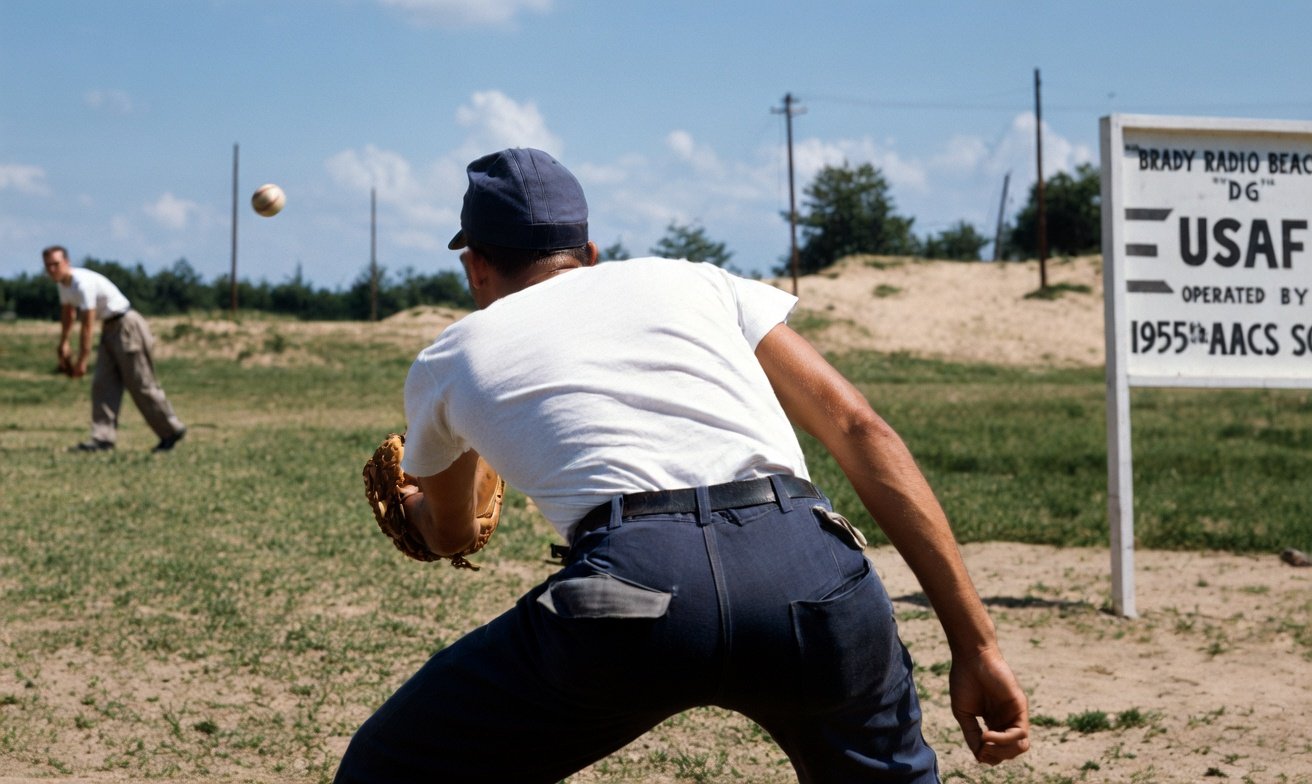
Personal collections capturing life on Fukuoka's US military bases, 1945-1972.
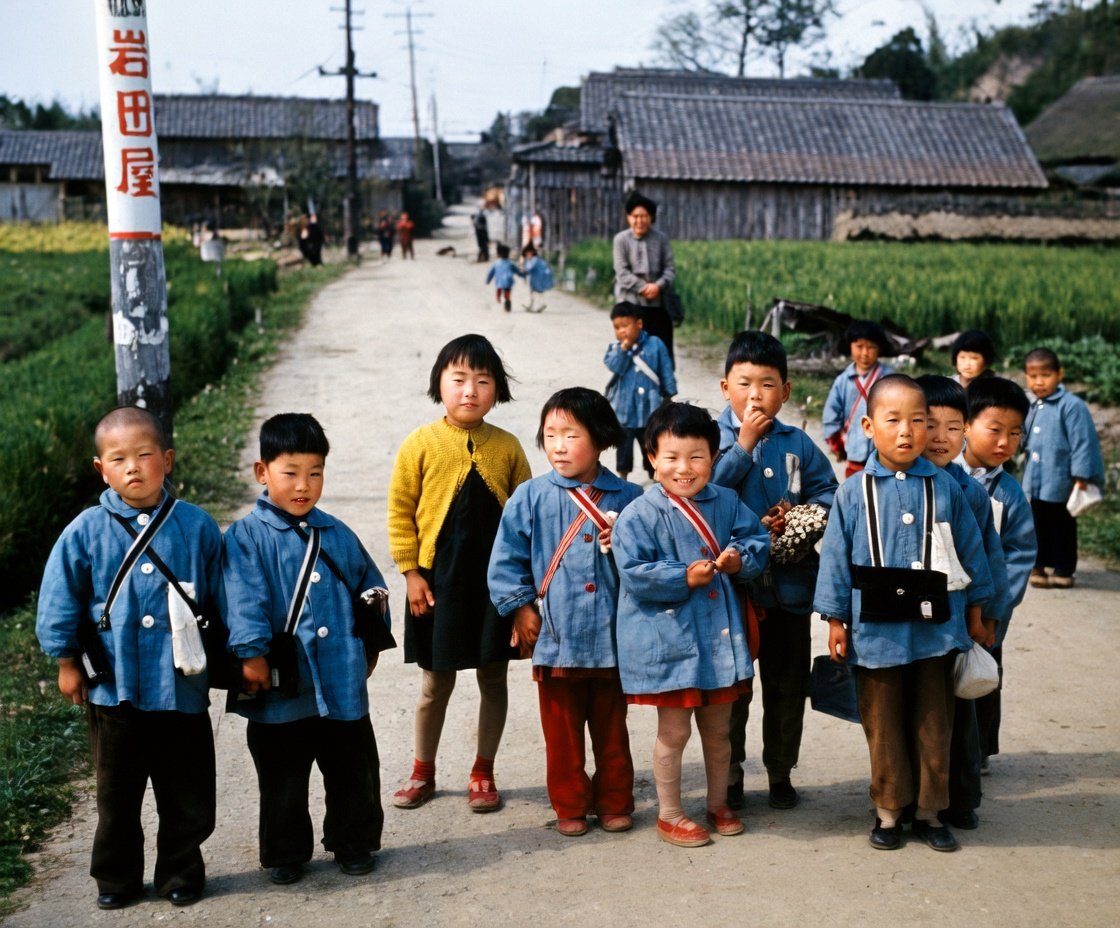
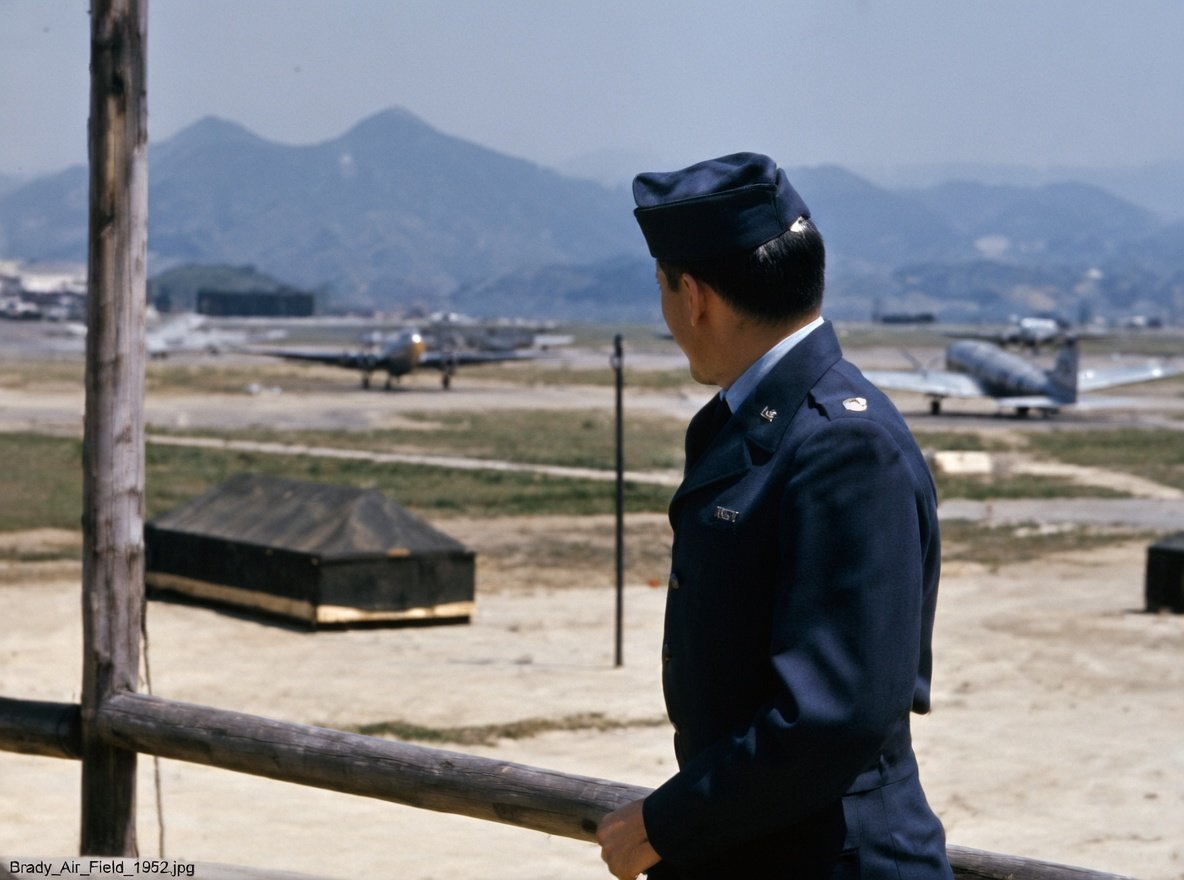
NOTE: Collections are in chronological order. Emails from the individuals can be read on the “Reminiscences of Brady” webpage. Color images are AI renditions of original black & white photos, which can be found in the individual collections. Needless to say, these AI renditions are not 100% accurate in portraying military uniforms, signs, insignia, patches, etc. Please let me know about what corrections need to be made.
As with any of the images shared on this website, if you plan to use any of them for commercial purposes, PLEASE have the courtesy to advise me of your intentions. Permission to use may be required.
Digging thru the past...
And sharing it with the world
fukuokabases@use.startmail.com
Wes Injerd 2026. All Rights Reserved