The Preservation of a People
米国日系人 ― 疎開と移転
Table of Contents
I. Dedication
II. Introduction
III. The Pre-War Years — FBI, G-2, MAGIC, ONI Intelligence
- February 10, 1940 – Federal Bureau of Investigation Case Report on the HEIMUSHA KAI (Association of Japanese in America obligated to Military Duty)
- January 30, 1941 to January 23, 1942 – MAGIC decrypts
- February 12 to June 9, 1941 – Intelligence Reports based on MAGIC
- July 3, 1941 – FBI Report on Heimusha Kai and other organizations
- October 4, 1941 – FBI Case Report on the NANKA TEIKOKU GUNYU-DAN
- October 30, 1941 – Daily Worker News Report on Japanese Espionage
- November 1941 – Japanese on the West Coast by Curtis Munson
- November 3, 1941 – Army G-2 Summary on Japanese Military Servicemen’s League and Japanese American Citizens League
- December 4, 1941 – Office of Naval Intelligence Report, Japanese Intelligence and Propaganda in the United States During 1941
- December 4, 1941 – Letter, Special Agent in Charge Honolulu to Director of FBI re detention of aliens
IV. The War Begins — December 8, 1941 ~ 1942
a. Intelligence — MAGIC, FBI, G-2, ONI
- December 7, 1941 – Presidential Proclamation 2525 re Alien Enemies, Japanese
- December 7-29, 1941 – FBI File Memos and Reports on Round-up of Enemy Aliens
- December 10, 1941 – FBI letters re Curtis Munson and apprehension of dangerous citizens
- December 12, 1941 (Feb. 15, 1942; July 2, 1946) – FBI reports on custodial detentions, searches and apprehensions on the West Coast
- December 24, 1941 – ONI Report on Tokyo Club Syndicate with its Interlocking Affiliates
- 1942 – Investigation Of Un-American Propaganda Activities In The United States – Report on Japanese Activities
- January 16, 1942 – FBI letter to FCC re illicit short-wave radio transmissions
- January 21, 1942 – G-2 Bulletin on Japanese Espionage
- January 23, 1942 – FBI Case File on Juichi Hazama
- Jan. 26, Feb. 7, June 19, 1942 – Ringle Reports on the Japanese Question in the U.S., Japanese Menace on Terminal Island, Memoranda
- January 30, 1942 – FBI Case Report on Compulsory Military Service Association
- January 30, 1942 – FBI letter re Prospectus of Heimusha Kai of Utah
- January 30, 1942 – FBI Case Report on the NANKA TEIKOKU GUNYU-DAN
- February 2, 1942 – Hoover memorandum for Attorney General, pros and cons of evacuation
- February 9, 1942 – FBI letter to Attorney General re Enemy Alien Problem in Western Defense Command
- February 10, 1942 – Memo re Japanese internee complaints at Ellis Island
- February 19, 1942 – Executive Order 9066 authorizing the Secretary of War to provide for those excluded from military areas
- February 28, 1942 – G-2 Report on Enemy Situation in Western Defense Command
- April 6, 1942 – G-2 Memo re Enemy Agents in Pacific Northwest
- April 28, 1942 – INS on treatment of alien enemy detainees
- September 7, 1942 – FBI Case Report on Japanese Espionage in Hawaii
- September 9, 1942 – FBI case file on John Mikami re Pearl Harbor
- October 17, 1942 – Excerpt from Internee Hearing Board Report on Richard Kotoshirodo espionage case
V. The War Relocation Authority Years
a. Evacuation, Relocation and Resettlement
- March 6, 1942 – Western Defense Command HQ Press Release re advice to enemy aliens and Japanese-American citizens
- March 18, 1942 – Executive Order 9102 establishing the War Relocation Authority
- March 1942 – The War Relocation Work Corps: A Circular of Information for Enlistees and Their Families
- March 23, 1942 – Letter from Japanese American Citizens League to Utah Governor April 15, 1942 – Memoranda on the Constitutional Power of the WRA to Detain Evacuees
- April 20, 1942 – M. S. Eisenhower, Memorandum for Members of Congress
- May 25, 1942 – State Dept. Report on Spanish Consular visit to Raton Ranch, Civilian Detention Station
- June 20, 1942 – “Manzanar Free Press” newsletter
- October 1942 – Dealing With Japanese Americans — Background for the Relocation Program
- October 1942 – Second Quarterly Report of the War Relocation Authority
- December 19, 1942 – Report on Conditions in Relocation Centers
- January 1943 – Selective Service Questionnaire
- March 1943 — An Anniversary Statement by Dillon Myer
- March 11, 1943 — Dillon Myer letter to Secretary of War Stimson, including reply
- April 20, 1943 — Letter from John Kitasako to Dillon Myer
- May 14, 1943 — Transcript of Press Conference with Dillon Myer
- June 5, 1943 — J. L. DeWitt’s “Final Report: Japanese Evacuation from the West Coast 1942” (transcription in progress)
- June 24, 1943 — Remarks of Dillon Myer in March of Time address
- July 7, 1943 – Statement by Dillon S. Myer, Constitutional Principles Involved in the Relocation Program
- July 7, 1943 – Statement by Dillon S. Myer, Evidences of Americanism Among Japanese-Americans
- July 21, 1943 – Community Analysis Report: Are the Nisei Assimilated?
- July 15, 1943 – Address by Dillon S. Myer, NBC broadcast
- August 6, 1943 – Address by Dillon Myer, The Truth About Relocation
- August 25, 1943 – Leave Clearance Interview Questions
- August 31, 1943 – Letter from Attorney General on Japan Govt. complaints re treatment of Japanese in U.S.
- September 11, 1943 – Myer letter to FBI re improvements at Centers
- October 18, 1943 – A talk by Dillon Myer, Obligations of Our Heritage
- November 16, 1943 – An address by Dillon Myer, The Relocation Program
- December 21, 1943 – Dillon Myer, Christmas Message to WRA staff
- January 21, 1944 – Address by Dillon Myer, Facts About the War Relocation Authority
- February 11, 1944 – Letter from Myer to Sen. Truman on educational program
- March 14, 1944 – Dillon Myer speech, Relocation Problems and Policies
- March 20, 1944 issue of LIFE magazine on the Tule Lake Pressure Boys
- March 23, 1944 – Dillon Myer speech, One Thousandth of the Nation
- March 6 – June 2, 1944 – Dillon Myer memoranda to Interior Secretary Ickes, and to Under-Secretary Fortas
- April 29, 1944 – Dillon Myer memorandum re DeWitt’s Final Report
- September 8, 1944 – Dept. of Interior news release re number leaving centers
- October 2, 1944 — Address by Dillon Myer, Race and Reason
- October 26, 1944 — Address by Dillon Myer, A Tenth of a Million People
- November 15 and 20, 1944 – Minutes of Meetings, WRA – War Department – Department of Justice
- January 1945 – Dillon Myer, General message on WRA policies and procedures
- January 1945 – Dillon Myer, West Coast speech excerpts
- January 10, 1945 – Dept. of Justice Assistant Attorney General John Burling reply to the Tule Lake Sokuji Kikoku Hoshi Dan and Hokoku Seinen Dan groups (transcription pending)
- February 19, 1945 – Myer speech to mass meeting of Minidoka residents
- June 19, 1945 – Myer speech, Problems of Evacuee Resettlement in California
- July 1945 – Annual Report of the Director of the WRA
- July 14, 1945 – Letter from Myer to S. Hideshima
- August 1945 – Myer, A Message to American Soldiers of Japanese Ancestry
- 1945 – WRA Relation with other Government Agencies
- 1945 – Statement by Dillon Myer, Relocation: The Final Chapter
- August 22, 1945 – Alien Enemy Control Unit Director Edward Ennis letter to ACLU Director Ernest Besig regarding renunciants (transcription pending)
- 1946 — WRA memorandum to members of Congress from the three West Coast States
- January 1, 1946 – Excerpts from WRA Final Report on Legal and Constitutional Phases of the WRA Program
- April 24, 1946 – Letter from Interior Sec. Krug to Speaker of the House Rayburn re bill to create Evacuation Claims Commission
- July 1946 — Semiannual Report of the War Relocation Authority (paging incomplete)
- April 1948 – Statement of D. S. Myer before a Subcommittee of the House Judiciary Committee re naturalization laws
- July 19, 1949 – Dillon S. Myer statement in support of H. R. 199 before a Special Committee of the Senate Judiciary Committee
- July 27, 1962 – Myer speech to Japanese American Citizens League
- WRA documents 1943-1947 – PDF files pending transcription
b. Intelligence — MAGIC, FBI, G-2, ONI, Senate
- March 24, 1942 – Fact Finding Committee on Un-American Activities, Testimony of Fred Tayama
- December 12, 1942 – FBI memo on establishment of WRA
- December 12, 1942 – FBI Report on Police and Internal Security Problems in War Relocation Camps
- December 15, 1942 – FBI Memo on Summary of War Relocation Authority
- 1943 – FBI memorandum on riots, strikes, and disturbances in Japanese relocation centers
- January 9, 1943 – FBI Report, Confidential Informant on conditions at Relocation Centers
- January 20, 1943 – Loyalty Investigations of American Citizens of Japanese Ancestry in War Relocation Centers
- January 1943 – Senate Hearings re Transfer of WRA Functions to War Dept. (6 pages)
- February 1943 – FBI survey of War Relocation Authority Camps; Myer response
- March 1943 – Excerpts from Senate Report on Un-American Activities in California, Japanese Activities
- March 23, 1943 – FBI report on registration for military service at WRA Centers
- May 12, 1943 – Naval Intelligence re Japanese-American protest of registration for military service
- September 30, 1943 – Dies Committee Report Summary and Eberharter’s Minority Views
- November 19, 1943 – Letter from John M. Hall to Dillon Myer, Excerpts from Confidential Letter from General Emmons to Mr. McCloy
- February 4, 1944 – Letter from Selective Service re denial of Japanese Americans for military service; May 12, 1943 ONI Report re registration protestor
- February 28, 1944 – Memorandum on Japanese-Organized Broadcasts
- April 16, 1945 – Excerpts from Un-American Activities Report on Japanese Problems in California
- April 23, 1945 – G-2 Report of Interrogation of an American-born Japanese POW
- April 30, 1945 – Myer testimony before subcommittee of Committee on Appropriations, House ofRepresentatives
- May 2, 1945 – Letter from Japanese at Tule Lake requesting ex/repatriation
- August 9, 1948 – INS letter re total interned in U.S. during WWII
- October 18, 1948 – Time Magazine article on Tomoya Kawakita
- 1964 – US Army Handbook, Guarding the United States and its Outposts – Continental Defense Commands After Pearl Harbor – Japanese Evacuation from the West Coast – The Hawaiian Defenses after Pearl Harbor
VI. Hearings on Evacuation, Relocation and Internment
a. Commission on Wartime Relocation and Internment of Civilians Hearings
- July 2, 1981 – Testimony of Rachel Kawasaki
- August 5, 1981 – Statement by Karl R. Bendetsen
- August 11, 1981 – Testimony of Boris T. Pash
- August 21, 1981 – Japan Times article by Kiyoaki Murata
- September 9, 1981 – Statement by Catherine Treadgold
b. Japanese American Evacuation Redress Hearing
c. Japanese-American and Aleutian Wartime Relocation Hearings
- June 20, 1984 – Testimony of Ken Masugi
- June 21, 1984 – Testimony of John J. McCloy
- June 27, 1984 – Testimony of David Lowman (2 pages)
- September 12, 1984 – Testimony of Karl Bendetsen
d. Recommendations of the Commission on Wartime Internment and Relocation of Citizens
- August 16, 1984 – Testimony of Samuel I. Hayakawa
- August 16, 1984 – Testimony of Frederick Wiener, including a statement by Shonin Yamashita, letter from John McCloy to Senator Charles Grassley, and excerpts from Acheson v. Murakami
- August 16, 1984 – Testimony of David Lowman
- August 16, 1984 – Testimony of Catherine Treadgold
- August 16, 1984 – Testimony of Lillian Baker, supplemented with 16 exhibits (2 pages) – Originals of documents in Lillian Baker collection
- August 16, 1984 – Testimony of Rachel Kawasaki
VII. My Comments on the Main Issues
a. The Military Necessity Question
b. The Intelligence Question
c. Prejudices and Discrimination
d. Concentration Camp?
e. Barren Deserts and Hard Times
f. Citizenship and Population
g. Yes-Yes, No-No — The Questionnaire
h. Reciprocation and Exchange
i. Preservation of a People
j. Filling the Need
k. The Irony
l. Closing Thoughts
m. Comments on the News
VIII. Discussion — Emails and Letters, Pro and Con
- Your Solution
- Educational Challenge
- Assorted Talking Points for Discussion Questions to Ask
IX. Assorted documents
- July 7, 1970 — Oral History Interview with Dillon S. Myer (Truman Library website)
- Oct. 24, 1972 — Excerpts from an Oral History Interview with Karl R. Bendetsen on reasons for EO9066
- “We didn’t lose everything” — The Other Side of the Japanese American Story
- Ronald Reagan and Redress for Japanese-American Internment, 1983-88 — An article by Timothy Maga
- News Clippings from the Past — A collection of news clippings from West Coast newspapers during 1942
- Through the Eyes of an Issei: The Internment of Japanese in the United States during World War II — Excerpts from Life Behind Barbed Wire by Yasutaro Soga
- Affidavit of Jiro Nakahara — Description of atrocities by a Nisei who worked for the Imperial Japanese Navy as a civilian radio monitor
- On the Japanese Problem – background articles from the early 1900’s on immigration and land policies regarding the Japanese in the U.S.
- The Japanese in Hawaii by Utaro Okumura (1920) — very enlightening background information on reasons for the feelings of “restlessness, misunderstanding, and suspicion” between America and Japan
- The Foreign Language Schools – excerpt from A Survey of Education in Hawaii (Dept. of Interior, Bureau of Education, 1920) revealing how Japanese language school instruction posed a very serious problem in Hawaii as well as on the West Coast
- Contents of the Japanese Language School Textbooks – excerpt from A Survey of Education in Hawaii (Dept. of Interior, Bureau of Education, 1920)
- Hawaii and Its Race Problem (Dept. of Interior, 1932) – excerpts on the Japanese race situation in Hawaii just prior to WWII
- Japanese Patriotic Organizations 1947-03-05 – Investigations Division (IPS) report on Ultra-Nationalistic, Nationalistic, and Conservative societies in Japan, with short history on Japanese nationalism
- Friendly Japanese (A-J, K-O, S-Y) – Produced in Aug. 1945 by the US Military Intelligence Division, a listing of Japanese in Japan (including many American-born) who were thought to be “loyal Japanese who… may be expected to cooperate with Allied occupation force.”
- Video December 7th (full version) – Controversial in its time; full of information dealing with the Nikkei problem in Hawaii.
- Relations Between US Military Forces and the Population of Hawaii by Bertrand Roehner (2014) – Excellent chronological information. Of note in this document: Chapter Six, “Sabotage and Espionage” and Chapter Seven, “The Niihau Incident.” See also my collection of excerpts.
- Yosuke “Frank” Matsuoka Collection – An assortment of documents and exhibit summaries from the Tokyo War Crimes Trials (IMTFE) regarding Frank Matsuoka who was raised and educated in Portland, Oregon, and Oakland, California, later becoming Japan’s Minister of Foreign Affairs just before the start of the Pacific War. He was arrested and died in Sugamo Prison in June 1946. Of note is his reference in 1941 to the Japanese Govt. “trying for many years to develop our people in foreign countries” (see page 5). The Issei probably were referring to this as noted in the WRA publication, Impounded People (see page 159), and therefore later stopped their donations to the motherland’s military support.
- July 1945 telegram to Swiss re well-balanced diet for Nikkei – Joseph Grew requesting Japan reciprocate and ensure American POWs and internees are adequately fed: “…the US Government can only assume that the Jap Govt sanctions the starvation of American POWs and civilian internees in its custody.”
- No Time in the Camps: Nikkei Living in the Free Zone – Articles, etc., relating to those ethnic Japanese (Nikkei) who were never evacuated to assembly centers and sent to relocation centers
- A NATIONAL DISGRACE: The Story of the Japanese Evacuation From the West Coast During WW II, Based on Contemporary Evidence Not Racial Demagoguery by the late Lee Allen (Internment Archives) – “The evacuation of Japanese and Japanese Americans from the West Coast in the early days of WW II is one of the most misrepresented events in American history.”
STATEMENT BY HENRY TANI, EXECUTIVE SECRETARY, SAN FRANCISCO CHAPTER, JAPANESE-AMERICAN CITIZENS LEAGUE, SAN FRANCISCO, CALIF.
The Japanese in San Francisco
THE PEOPLE
In any consideration of the Japanese people on the Pacific coast there is the necessity of understanding the various classifications into which these Japanese people fall.
THE ISSEI — FIRST GENERATION
There is, first, the real immigrant Japanese group which made its main appearance in the United States from 1890 to 1920. Immigration figures will reveal the extent of this movement more accurately. The important observation to be made at this time is the fact that with the Immigration Act of 1924 the flow of Japanese immigration was effectively blocked.
This will naturally show that every single alien Japanese (with the exception of a few merchants and ministers) in this country at this time have been resident of the United States for 18 years at the least. It also follows that of this group that is remaining in this country at this time practically all consider themselves permanent residents.
One speaks of this first group as the first-generation Japanese. The common term used to describe this group is the “Issei” (pronounced “iss-say,” meaning “first generation”). Our laws deny naturalization rights to these aliens, who otherwise might have become good American citizens. Only in passing might it be mentioned that, by and large, the Issei have been law-abiding and respectful citizens, and that they had contributed largely to the economic wealth of their neighborhood.
THE NISEI — SECOND GENERATION
The offspring of the Issei is the Nisei, (pronounced “nee-say,” meaning “second generation”), who are born, reared, and educated in the American culture and are inherently American in all manifest ways, except that there are occasional cultural inclinations showing their Japanese home influence.
It is no exaggeration that by their own admission the Nisei consider themselves far more American than Japanese. Testimonies to the contrary notwithstanding, school teachers, business associates, religious leaders, and those who have come to learn the Nisei in their normal ways of life will add their evidence to this fact. The Nisei is a citizen. He takes his citizenship seriously. He meets his obligation to society by cooperating with the civic authorities. Physically the Nisei conform more* to the American standards than do their parents — the result of the vigorous athletic program, the diet, and the relative free expression usual to American growth.
THE KIBEI — THOSE WHO RETURNED
Of the Nisei group, there is within them but yet apart from them another group which is usually referred to as the “Kibei” (pronounced “ki-bay,” meaning “those who came back”). Like the Nisei, the Kibei was born in the United States and thus is entitled to citizenship in the United States. Unlike the Nisei, the Kibei receives his education in Japan and is therefore more culturally Japanese.
Of course, the degree to which the Kibei is more Japanese than American depends largely on the number of vears and the age during which he was in Japan. Many of them returned to Japan with their family at a young age and returned to America in their late teens. It is unfair to classify the Kibei in one large group and generalize too freely with them since the variation is so largely dependent upon the many factors involved.
These things can be said of them, however: That their English is relatively poor, mainly because they missed the American schooling which their Nisei brothers and sisters got; their mastery of the Japanese language is definitely superior than what little Japanese the local Nisei got in the language schools here; their emotional life is definitely more unstable than for the Nisei, because the Kibei missed the family life which the Nisei had.
THE JAPAN-BORN NISEI
In all fairness to that very little minority within the Japanese community, one must mention the few individuals who were born in Japan and came to this country with their parents in their early childhood. Such individuals missed out in getting their United States citizenship by being born in Japan, but otherwise are Nisei in all other aspects. This group is culturally American, and, though technically they are Issei, they are so only because of their birth in Japan.
POPULATION BREAK-DOWN
According to the 1940 United States census, there were in California a total of 93,717 Japanese, of which 33,569 were aliens and 60,148 were citizens. This makes a ratio of 36 percent alien as opposed to 64 percent citizens. When cast upon the whole State population, which is 6,907,387, there are 135 Japanese for each 10,000 Californians.
For the city of San Francisco, the census figures show 2,276, or 43 percent, aliens as against 3,004, or 57 percent, citizens, making a total of 5,280 Japanese out of the city’s population of 634,536. The ratio, therefore, in San Francisco of Japanese to the total population is 83 out of 10,000.
NISEI BREAK-DOWN
According to the Nisei survey conducted by the San Francisco Chapter of the Japanese American Citizens League in October 1940, a further break-down of the total Nisei group revealed that 73.5 percent were Nisei, 22.8 percent were Kibei, and 3.7 percent were Japan-born Nisei. This is true of San Francisco only since the metropolitan area reflects the greater Kibei element.
Of all the Nisei who are 18 years of age and over, the concentration by age showed that 61 percent of the total were between the ages of 19 to 25, inclusive, and that 46 percent were between the ages of 20 to 24, inclusive. This substantiates the fact that the average of the Nisei is 21 years old, further proved by the fact that the birth rate of Japanese in California hit its peak in the year 1921. This can also be verified by the high attendance of Nisei students in our universities at this time. For instance, there were 500 at the University of California last fall.
JAPANESE TOWN
That the Japanese people in San Francisco are concentrated in their own Japanese town is proven by the fact that in an area of 24 square blocks 73.3 percent of the total Nisei in San Francisco, according to the Nisei survey, are stated to be living within this area.
RELIGIOUS AFFILIATION
It is interesting to note that the Nisei survey showed the religious affiliations distributed as follows: 42 percent Protestant, 35 percent Buddhist, 7 percent Catholic, 3 percent others, and 13 percent none.
DUAL CITIZENSHIP
It is true that the Nisei themselves are very vague about their dual-citizenship status since they are not well acquainted with the many laws that affect their status. However, 32 percent seem to hold this dual-citizenship status to the best of their knowledge, according to the Nisei survey. This figure includes those who are not certain of their status, and therefore the percentage figure is increased thereby.
CRIME AND DELINQUENCY
It is safe to say that, according to the best reliable sources, there is practically no crime or delinquency record involving the Japanese in San Francisco. It is also safe to say that relief cases (pre-war) have been very scarce and practically unknown though there were a few isolated cases now and then.
SELECTIVE SERVICE
The number of selectees in the United States Army from San Francisco has been variously estimated as being between 175 to 200, of which about 20 percent are volunteers. Of the total Nisei population, it is further estimated that 3,000 are probably in the United States armed forces.
PUBLIC CHARITIES
The community chest in its history of fund-raising campaigns have always received 100-percent response from the Japanese group. The usual quota for the Japanese community has been between $3,500 to $4,000, which is almost a dollar a head. Even since the outbreak of war the Japanese contribution to the Red Cross fund exceeded the expectation of local Red Cross officials.
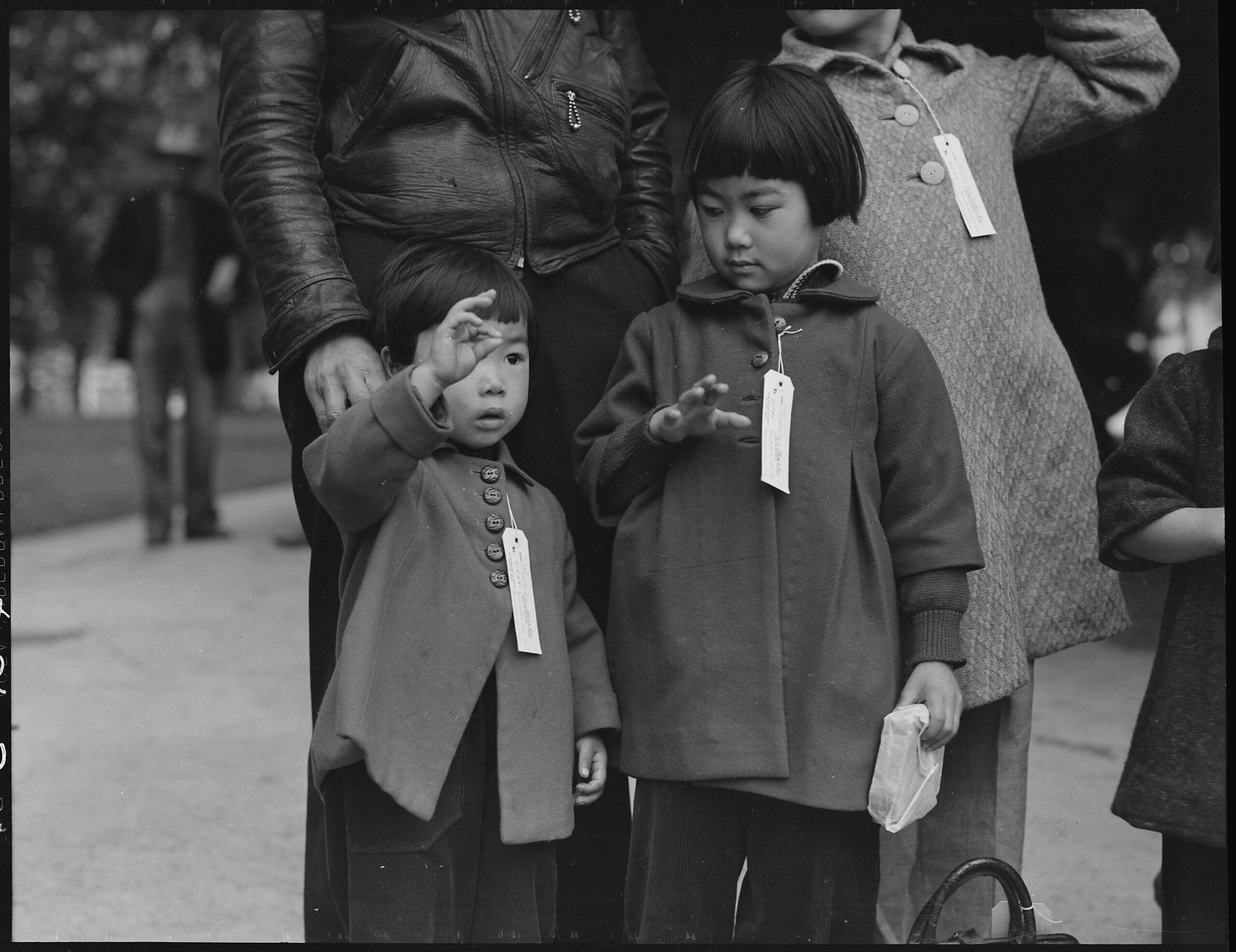
We, the members of the Japanese Farmer’s Association of Eastern Oregon and Western Idaho, wish to inform our relatives and friends in Japan that we are receiving the same good care and protection by the United States government that we received previous to the outbreak of present hostilities, and that we are doing our farming in a normal way just as in former years.
We are not restricted in traveling in our communities, or from community to and from our homes and places of business; or from going to church, schools, or any federal, state or local agency which might be required for the transaction of business.
We appreciate very much this freedom of movement and protection by the American government. No member of our community has been apprehended or detained by government authorities. So please do not be anxious about us. We are all right.
— H. K. Hashitani
Telegram sent by a group of Japanese to the Japanese Imperial Government on January 20, 1941 — From Quiet Passages by Corbett
SPECIAL WEBPAGE
Nisei in His Imperial Majesty’s Service:
Japanese Americans Who Served the Fatherland During World War II