Timothy Pietsch: Valiant for the Truth
Missionary to Japan
1936-1941, 1947-1992
“Before my mother died, she took me by the hand and said, ‘When you were born, your father and I gave you the name Timothy, as a prayer, that you might be like that man in the Bible, whose name means “honoring God.” Son, you know I have prayed for you. I wanted to be a missionary and the Lord never let me go. I have prayed that the Lord would send you.'” — Timothy Pietsch, age 12, the last words he heard from his mother before she died at age 35
“My mother had not prayed, ‘..if the Lord calls you’, she prayed, ‘When the Lord calls you.’ My call to Japan was strange – very, very strange. I was sitting way up in the second balcony of the Church of the Open Door listening to Louis T. Talbot preach a sermon on prophesy: Kings of the East. He got off the subject as he sometimes did. He said, ‘Hardly any young men have gone to Japan as missionaries from Biola or from this church, yet we we’re sending scrap iron to Japan’. Then he said, ‘I believe there is a young man in this meeting tonight that should go to Japan as a missionary’. And I thought he was pointing his finger at me.” — c. 1931
His Journey
Key Milestones in the Life of Timothy Pietsch

We first came in contact with the Pietschs in 1982, after having translated a tract against abortion into Japanese and sending a sample out to all the missionaries in Japan. Timothy received a sample and promptly ordered some from us. Included in the large envelope he sent were copies of a number of his newsletters and articles on an assortment of subjects — these vanilla envelopes I later coined, “Pietsch’s Packets of Power.” The newsletters and articles always had various sections and passages highlighted with a red marking pen, dealing primarily with compromise of the Christian church in Japan and in the US, and a subject dearest to Timothy’s heart — the sovereignty of God in man’s salvation.
Through these packets of power, my wife and I were led to see and understand those blessed truths, known to many as “the doctrines of grace.” Timothy would often include quotes from the Puritans — men such as John Owen, Thomas Watson and John Gill — which exalted a sovereign God and put the true nature of man in utter dependency upon that sovereign God. The most-quoted of all the godly men of the past, however, was the famous English preacher of the 19th century, Charles H. Spurgeon. A favorite insert of Timothy was Spurgeon’s Baptist Catechism, with a number of sections heavily marked in red. To this day, Spurgeon is our favorite “pastor” and we have been blessed by his sermons, both printed and audio.
In 1983, after having served as interdenominational missionaries in Fukuoka, we were led of the Lord to leave the mission. For a few years afterwards, we worked independently with another missionary family. Then in 1987, we moved to the Tokyo area to help out a fellow Christian in starting a home-schooling work as well as attend the Pietschs church. Through God’s providence, I was able to find work in the area as an English teacher in order to be self-supporting.
Many a day was enjoyed in blessed conversation with the Pietschs at their home in Meguro, and a special treat was spending a week in summer at their cottage at Lake Nojiri. Though we spent but a short time in Tokyo, we were able to understand more on what an amazing couple the Lord had placed in the center of Japan. It is to remember them that I have put together these special webpages, in the hopes that somewhere somehow God may use these words to point a finger once again and say, “There is a young man… that should go to Japan as a missionary.”
NOTE: Timeline edited from Timothy Pietsch, God’s Policeman by Mary Lou Grunigen (1992)
Most images have been rendered via GrokAI; original black and white images can be found in Pietch’s newsletters.


1864
GREAT-GRANDFATHER Charles Pietsch migrated from Prussia Germany to New York City; worked as a tailor. His son, Charles Gotfried, who was just six when they emigrated, also became a tailor.
1885
GRANDFATHER Charles G. Pietsch married Jeanette (Jennie) Marquart.
1900
The 1900 New York City Directory lists him as a tailor whose business was at 80 Nassau St. NY, and they were living at 51 Lynch Street with their children; William E. (Will) age 14. FATHER William Pietsch married Alice White.
1909
Alice died in childbirth.
June 10, 1910
Helen was born in Kobe, Japan, daughter of Southern Baptist missionaries. Educated at home by her mother in early years, she attended Brenau College in Gainesville, Georgia, Meredith College in Raleigh, North Carolina, and graduate school at the Southern Baptist Women's Training School, in Louisville, Kentucky.
October 31, 1911
Will's second wife, Sarah Leona Weber, married. Sarah had been baptized in San Francisco Bay by H. A. Ironsides, D.D. Litt.D., a famous Bible commentator and later Pastor of Moody Memorial Church in Chicago.
May 14, 1914
Will and Sarah's first child, Timothy Emil Gilbert Pietsch, was born in the house on 72nd Street, Brooklyn, New York.
Late in 1914 or in 1915
Will, who was a Plymouth Brethren "ministering brother," moved his family from New York to the West Coast and planned to eventually go to China as a missionary.
They did not reach China. Sarah became ill, and they had to disembark in Hawaii where they were to live for several years. Two more children were born in Hawaii. Mercy in I917, and later Peace, who died in infancy.
Will worked in a Christian school for Asian children, The Gospel Mission Children's Home at 853 7th Ave. Honolulu, HI. A Korean, Syngman Rhee, Ph.D., (later the first president of Korea), was chairman of the school board.
Will Pietsch, who never forgot his desire to minister in China, decided to go to that country alone and leave Sarah and the children in Hawaii.
Sarah's sickness exacerbated and she returned to Felton, California, with daughter, Mercy. This left Tim and his sister Grace in Castle Home, an orphanage predominately for minority children. Going to school there, Tim learned to read and write in Japanese before he learned those skills in English.
Will had been in China about two years. When he came back, he picked up Tim and Grace from the orphanage, and they joined Sarah and Mercy in Felton.
Those days in Felton were some of the best family times. Tim recalled selling newspapers as a young boy in the nearby Mount Hermon Christian Conference Center dining hall. He also led guided tours around The Welch Brother's Grove, (now called Big Trees Grove in Henry Cowell Redwood State Park). The entrance was near the train track, and visitors to San Francisco would come down on tour. He would give them facts about the beautiful woods, and include verses about God's creation that his mother taught him. The cost of the tour was fifty cents. One day a gentleman tipped him a whole dollar. Later he learned the gentleman's name was Henry Ford.
May 22, 1922
Grandfather Weber died and the Pietschs moved to Santa Ana, CA, probably living with Will's parents.
Tim's mother, Sarah, had a protracted illness which started with influenza contacted during the Great Epidemic after the First World War. She than developed infectious endocarditis, which complicated by an intractable dysentery, caused her death in 1926, at age thirty-five.
Tim says, "Before my mother died, she took me by the hand and said, 'When you were born, your father and I gave you the name Timothy, as a prayer, that you might be like that man in the Bible, whose name means honoring God'. Then she said, 'Son, you know I have prayed for you. I wanted to be a missionary and the Lord never let me go. I have prayed that the Lord would send you.'" He was twelve and these were the last words he heard from his mother.
After father's third marriage, Tim was sent around from house to house: Arnold and Susan Grunigen's in San Francisco, his Grandfather Pietsch's in Whittier, his Uncle Paul Pietsch's, and other relatives and friends.
Will Pietsch and his family lived a short time at 1600 W 65th Place in south Los Angeles, but by the time Tim graduated from high school, he had been in nineteen different schools. Tim says his dad was an obscurantist (he did not encourage education). He would say, "The only Greek I know is a restaurant keeper!" (Will had only gone through the fourth grade, and his writing was so poor that his father once gave someone ten dollars to teach him to write.)
Tim had to work his own way through high school. He lived with a farmer in Escondido, milking twenty-six cows every morning. He received ten dollars a month. He went on to the University of Southern California for a semester, then to Biola Bible College, where he graduated.
1931
"While in Biola College, I was delivering Mr. Hearst's newspaper, the Los Angeles Examiner, at two o'clock every morning. One morning, it snowed about two inches. It was really cold, and I was in tennis shoes and I said, 'Lord, Lord what shall I do with my life?' And I AM sure the Lord said, 'I want you as my servant in Japan.' And so, that is when I began to prepare to be a missionary in Japan."
1933
Timothy went to Wheaton College and Moody Bible Institute.
Will Pietsch joined the Baptists in Escondido, CA, because there was no salary for ministering brothers in the Plymouth Brethren. He held evangelistic tent meetings, and was especially popular with the Mennonites in the San Joaquin Valley. At one time he and Mildred went to England to hold evangelistic meetings. For a while he was assistant pastor at the Church of the Open Door in Los Angeles and was ordained with Charles Fuller at Grace Baptist church in Modesto, California. He and Fuller were close friends, and he helped start Fuller's Calvary Church in Placentia, CA. Will was a great organizer. He started the Christian League for the Handicapped and help start the Christian Anti-Communist Crusade. He was also on the board for the Independent Fundamental Churches of America.
THE CALL TO JAPAN
Tim's testimony: "My mother had not prayed, ‘...if the Lord calls you,' she prayed, 'when the Lord calls you.' My call to Japan was strange - very, very strange. I was sitting way up in the second balcony of the Church of the Open Door listening to Louis T. Talbot preach a sermon on prophesy: Kings of the East. He got off the subject as he sometimes did. He said, 'Hardly any young men have gone to Japan as missionaries from Biola or from this church, yet we we're sending scrap iron to Japan'. Then he said, 'I believe there is a young man in this meeting tonight that should go to Japan as a missionary'. And I thought he was pointing his finger at me."
1935
Helen Dozier came to Japan as a Southern Baptist missionary.
1936
Tim embarked on the ship Taiyo Maru. After arriving in Japan, he attended Nichigo School of Japanese Language and Culture, and there met his "dear sweet Helen."
He writes, "I attended Waseda International School, Nichigo School of Japanese Language and Culture, and it was there I met my delightful bride. Her name was Helen Dozier and a hundred times better than anything I had ever given up. You know you can't out-give God."

September 20, 1938
Tim and Helen were married in Fukuoka City. They had four children; Sally Sue, born June 19, 1939, William Kelsey, born November 9,1942, Timothy Arnold, November 24, 1943, and David Dozier, born February 24, 1949. The first and last were born in Japan, and the middle two in Turlock, CA.

1936-1949
Tim and Helen served with The Scandinavian Alliance Mission, later called The Evangelical Alliance Mission, or TEAM.
19??
The Pietschs left TEAM and formed The Tokyo Bible Center -- church, kindergarten and radio programs -- with Timothy Pietsch as Director and Helen as head teacher of the kindergarten. Later they had the assistance of Pastor Paul Suzuki, as assistant director and pastor of the church.
1939
Four generations of Dozier and Pietsch women

January 1941
Helen, Tim, and Sally Sue left Japan on the ship Nita Maru, an aircraft carrier.
1943-47
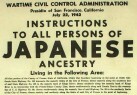
The Pietschs lived in Turlock, CA. Tim was a missionary in four relocation center camps. One was at the Tanforan Race Track in San Bruno, CA. There the Japanese were put into horse stalls. He also ministered to camps in Merced, and in Pinedale, near Fresno.


1943
Tim volunteered to go as chaplain when the interned Nisei men received their draft notices. Then the War Department saw his credentials and that he had attended a university in Japan, so they asked him to accept a commission in the Military Intelligence Service. He was first stationed in the Presidio in San Francisco. Later, he moved to Camp Savage in Minnesota, for further study of Japanese at the Military Intelligence Service Language School. Helen and the three children remained in Turlock. He was then sent to the Pentagon, to serve in the "Black Chamber" (a former girl's school in Arlington, Virginia) where they worked to break the Japanese secret codes. Tim was put in the Surreptitious Entry Unit, set up by President Roosevelt with J.E. Hoover of the FBI and the Department of Justice. They were "breaking book" and "finding book." "Finding book" meant going overseas to hunt for it, and so Tim was later sent to the Pacific Theater of war.

1944
Tim was sent out to the West Coast to pick up a company of men and to take them overseas as their officer in the Sixth Radio Squadron. Most of the men were Nisei from Hawaii and California. They went to Australia, around the great Australian Bight to Bombay, India, on their way to the fighting in Burma and China. When the war ended, Tim was in Bhamo, Burma. He served as the "Eyes Only" officer for General Davidson of the Tenth Air Force and Fourteenth Air Force in China. ("Eyes Only" means for the eyes of the President only.) Besides other secret work, they interrogated enemy prisoners and translated captured documents.
c. August 1945
Radio Intercept Section 6th AAF Radio Squadron Mobile 10th AAF, CBI Theater. (Photo taken at Field Hq, on the banks of the Irrawaddy River, Bhamo, Burma). Front Row, L-R: S. Iwahashi, Tommy Goto, Gilbert Nagata, Edward "Bull" Sumida, Harada, Shoji Fujishima, Masa Kanemoto, and K. Ishibashi. Middle Row, L-R: G. Okamoto, Goro Shimanuki, Frank Sakato, and Ralph Toyota. Third Row, L-R: Sanji Shirai, Teiho Chena, Mark Akisada, Bob Motoyama, Chuck Hironaka, Torao Ikeda, Kenneth Moriji, Tad Shimoda, Sachio Shigeta, H. Yamashiro, Herbert Saito, Ted Tsukiyama, and Lt Pietsch. (Courtesy of "Secret Valor" by Military Intelligence Service Veterans Club of Hawaii.)

June 1947
Tim returned alone as a missionary to Japan. Helen and the three children went to Hawaii to stay with her mother and grandmother. About five months later, in October, the US Army, which was in charge, allowed them to return if they brought a year's supply of food and clothing with them so as not to burden the Japanese economy. Since they were only receiving about $300 a month support money from TEAM , this was a difficult assignment, but they managed and the family was reunited.

April 4, 1949
Gen. Douglas MacArthur gives his "hearty endorsement" to the Pocket Testament League, requesting them to immediately distribute 10,000,000 copies of the New Testament and for all to assist the PTL representatives in their duties, specifically mentioning Timothy Pietsch. On the same day, MacArthur commends the reading of the Holy Bible, in which "you will find the Saviour of the world Who is the chief cornerstone of all liberty, the basis of fair and honest government, and the foundation for a true and living faith in God Whose promises never fail." In December of the same year, MacArthur urgently requests that "Christian people everywhere... support the Pocket Testament League in their noble efforts," hoping "that the people of America will grasp the present opportunity afforded by a merciful God to lay the foundation for a true and living faith."
Gen. MacArthur endorsement of Pocket Testament League
Gen. MacArthur commendation of Bible reading
Gen. MacArthur further endorsement of Pocket Testament League
September 1951
Radio ministry begins in Nagoya.


April 1952
First students graduate from Tokyo Bible Church kindergarten.

1955
The Pietsch family, in typical Japanese attire, standing in front of their home in Meguro, Tokyo.

1958
The last time Tim spoke with his father. He and daughter Sally Sue had come to the US from Japan for Sally Sue's wedding to a soldier she'd met while he was stationed in Japan. It was Christmas time and Tim was with Mercy at the home for the handicapped in Walworth, WI. He and Mercy held a four-way telephone call between Japan (where Helen was home with the other children), San Pedro, CA (where his father and step mother were living), and Oregon (where Sally Sue and her new husband, Chuck Weinberg were living).

February 1959
Death of Timothy's father, Will; buried at Forest Lawn Cemetery, Glendale, CA. Other notable preachers buried at Forest Lawn are Charles Fuller and John MacArthur.
THE FINAL YEARS
On his last furlough, Tim stated, "I am more thrilled at the privilege and the honor of being a missionary now than I have ever been. I AM the only male missionary remaining that was here before Pearl Harbor, including the Roman Catholics. We pray to be faithful to our Lord. It is easy to be a Roman Catholic in Japan, because you can carry on all the idolatry. Religion in Japan, even Christianity, has the concept that the living can do something for the dead. And the happiness and felicity of the living depends on that doing for the dead, such as the food on the family altar, the food and flowers on the graves. A missionary once asked an old Chinese, 'Who eats that food on your father's grave?' and the Chinese asked, Who smells the flowers you put on your father's grave?' A lot of our culture is based on that idea. Look at Romanism, saying masses for the dead. Even the big Catholic church in our area says come and be baptized, and then you can be baptized again for your dead ancestors. They don't just do this for the dead. They feel they must treat the dead well or they can cause storms, family upheavals, political strife, or other disasters. I think church attendance now is less percentage wise than when I first went."
"Helen and I are among the only three missionaries to have permanent visas. We pay taxes to the Japanese Government and the us. Once the IRS sent a man out to Japan and demanded that we pay twenty-one percent taxes on all unearned income. It just about wiped us out. We had set aside a Iittle money because we had no Social Security. I AM not complaining. We are thankful. Now that we are over 70, it costs about two dollars a day in the hospital, medicines, operations, anything. And if you have to go to a doctor, it is five dollars a month."
October 1991
Helen suffered a fall that left her temporarily paralyzed, and although she had a good recovery considering all things, she was left weakened.
August 29, 1992
At age 78, the Lord called this non-compromising contender for the faith home to rest. He was tired, he had heart and lung problems and diabetes, and he felt "swamped with work" as he kept up with his radio ministry even while hospitalized. Descendants:18 grandchildren and 14(?) great-grandchildren.
January 15, 2005
"Helen Pietsch, passed away on Saturday, January 15, 2005 at Summitview Healthcare Center in Yakima, Washington. For those of you who are unaware of her circumstances, Mom fell and broke her back in April of last year. She was living in her home in Tokyo at the time. Her granddaughter Julie, who teaches English in Japan, lived with Mom. And Paul (her pastor) and Atsuko Suzuki lived next door. Between them, Mom was well taken care of – and hoped to go straight from Tokyo to heaven. But the pain of her broken back was so intense that we found it necessary to bring her back to the States in June. Mom settled in at a nursing home in Yakima, and had several wonderful months here. She was visited by 52 family members, many of whom she had never met before. And many out of town friends came to see her as well. She loved the company. She really enjoyed the time reading (and answering) the letters that many of you sent her." (per email from Kelsey Pietsch)

Pietsch newsletters 1930’s
Pietsch newsletters 1940’s
Pietsch newsletters 1950’s
Lt. Timothy Pietsch in Radio Intelligence in CBI by Ted Tsukiyama
Are the Japanese Seeking God? (Timothy Pietsch in The Kings Business)
Article by Timothy Pietsch (The Kings Business, April 1946)
Timothy Pietsch – A Testimony of God’s Grace (August 3, 1986)
Videos showing Pietsch evangelizing in Tokyo just after the war:
I Saw Japan Part 1: Tokyo is a Large Modern City
I Saw Japan Part 2: Presence of U.S. Troops Aids Gospel Work
I saw Japan Part 3
Assorted Articles from Timothy Pietsch's Packets of Power
One of the great sorrows in postwar Japan has been the willingness of so many groups that seem so evangelical in the USA to build upon the old prewar foundations that tried to change the Christian gospel and make it something Japanese. This we have refused to do, for it is our conviction that there is very little from before the war that is worthy to build new work upon, for it compromised the Christian gospel and has refused to truly repent. In these great struggles in Japan the Lord has shown me,
FOUR BIBLICAL PRINCIPLES
1. It is always right to preach the gospel. II Tim. 4:2, I Peter 3:15. Ecumenical evangelism today demands a “united front” and won’t preach the gospel until all get together. No longer is the unity of the faith important but union has become the “god” that is worshiped. There is a great deal of difference between union and unity. You can tie a dog’s and cat’s tails together and you will have union but no unity. It is impossible even to imagine our Lord Jesus saying to some town: “You form a committee of the Sadducees, Pharisees, Herodians, Publicans and put on one of my disciples and then you vote to have me come and preach, but I won’t come until then:’ This is the ecumenical evangelism, and it is wreaking havoc on our mission fields.
2. It is always wrong to aid and abet a program of unbelief. Eph. 5:11. Unlike our denominations in the USA which were once born in revival but now have been taken over by “another gospel” and so are under the “anathema” of our Lord, the United Church of Japan (Kyodan) was born as a compromise with idolatry and its first official action was to send its moderator to the shrine of the sun-goddess to report the founding of the United Church. The great denominations from the USA point with pride and joy to this church as an example of union and many who make decisions under the ecumenical evangelism are added to this religious monstrosity. It is a very dangerous practice for true Christians to take the advice and counsel of men who remain in these modernistic controlled denominations year after year. It is like taking the advice of Lot in Sodom.
3. It is always wrong to pretend that an unbeliever is a Christian- even if by such pretense the evangelist is able to preach to great crowds and some are saved. Romans 3:7-8. The end does not justify the means. Some evangelists say that they work with the modernists so that they can preach to their people but in so doing they pretend that the modernists are true Christians by placing them in positions of leadership and having them lead in prayer during their campaigns. The fact that some are saved does not justify the pretending that unbelievers are children of God. Moses was judged for disobedience even though the water came forth from the rock. One ecumenical evangelist came to Japan and said, “We pretend that these men believe the Bible,” when he knew perfectly well that they did not.
4. It is always wrong to be neutral when the Word of God is at stake. Rev. 3:15-16. One cannot really say “yes” to truth without saying no to error. Some have told me, “Just preach a positive gospel and forget about modernism and idolatry.” Anyone who speaks of a “positive gospel” does not really know the gospel, for it is both positive and negative; it is the power of God unto salvation. A sure sign of a neutralist is the man who speaks of the “positive gospel” and beware of them for they are legion. A man who talks about a “positive gospel” is like the man who says: “Turn on the positive electricity,” but one gets no light. It is extremely dangerous to put oneself in the place where one cannot say “no” to error. Heb. 1:9.
Timothy Pietsch comments: General MacArthur's Directive regarding the abolition of State Shinto
Recently one of the leading newspapers at Japan reporting the proceedings in the Japanese Diet stated:
“Prime Minister Yoshida in reply to another interpellator, said he is contemplating the revision of the Educational Basic Law and educational policies. Yoshida said the occupation forces misunderstood the Japanese as a bellicose nation and sponsored legislation of the Education Basic Law, which decentralized educational administration. The government, he said, intends to rectify this extreme policy.
“Education Minister Shigeo Odachi said he wishes to revise the contents of school text books to stir up racial spirit and patriotism among the students.”
The background of all this is, of course,
GENERAL MACARTHUR’S DIRECTIVE
of December 15, 1945, entitled “Abolition of Government Sponsorship, Support. Perpetuation, Control and Dissemination of State Shinto,” in which he stated:
“They took the legend of the divine descent of the Imperial family from the sun goddess Amaterasu Omikami, and through school and other agencies attempted to inculcate into the minds of the Japanese the belief that the emperor Is an actual living god; as such is by divine right entitled to rule all lands and all peoples.
“Going still further, they claimed all Japanese are descended from one deity or another and therefore are superior to the people of other lands and that the islands of Japan themselves were of divine origin and were therefore superior to any other lands.
“The most important factor in conditioning the people to acceptance of a Shinto-centered state was the education system. The Japanese government used a device cleverly calculated to bar all other such teachings from schools. First in 1889, it Issued an order forbidding the teaching of religion in public or private schools. Then with all other religions thus out of the schools, it ordered State Shinto was not a religion and made its instruction compulsory in public schools.
“Through textbooks, highly indoctrinated teachers, and deeply impressive ceremonies, all the threads of Shinto’s nationalistic policies were woven into the student’s mind from the time he entered school until he finished his formal education. In this way, Shinto was made the principal instrument of inculcating submissiveness, loyalty to the state and unquestioning acceptance of the official views as to the proper nature of society and political and social morality.
“Just how successful this program proved has been demonstrated by the ease with which the militarists came Into power in Japan and led the nation into wars of aggression.
(It is well to remember that even today in 1953, the majority of Japanese voters were educated in the system mentioned above by General MacArthur and were taught from their early days the doctrines of Shintoism as the basis of patriotism. TP).
“It Is hereby directed (we cannot give all the provisions, but will state a few):
“All financial support from public funds and all official affiliation with Shinto and Shinto Shrines are prohibited and will cease immediately.
“The dissemination of Shinto doctrines In any form and by any means in any educational institution supported wholly or in part by public funds, is prohibited and will cease immediately.
“All teacher’s manuals and textbooks now in use in any educational institution supported wholly or in part by public funds will be censored, and all Shinto doctrine will be deleted. No teacher’s manual or textbook which is published in the future for use in such institutions will contain any Shinto doctrines.”
Many of the Japanese people and particularly many leaders in the Japanese government have taken General MacArthur’s dismissal as a repudiation by the United States of those principles for which he stood.
A VERY GRAVE MISTAKE
Though the peace treaty with Japan guarantees freedom of religion, it does not guarantee the separation of Shintoism from the Japanese government for many Japanese leaders assert that Shintoism is the Japanese form of patriotism and in order to be a good Japanese one must be a good Shintoist. We earnestly trust that many will pray that God will stay the hands of wicked men who would again introduce Shintoism into the public school system of Japan and again make it the standard by which loyalty is judged (II Thess. 3:2).
Timothy Pietsch's Letter to the Editor

Letters in the English language press, such as that of “Vigilant” protesting the police department’s joint sponsorship with Shinto priests of ceremonies dedicating newly installed traffic lights are certainly worthwhile. Missionaries who take the position that as guests in the land they cannot make such public comments forget they are here to teach by word and example, and this example of speaking out is much needed.
The letter stated, “This morning policemen came and erected an open pavilion, of red and white bunting, on the sidewalk in order to hold a ceremony to dedicate the new stop light. A Shinto altar was erected in the pavilion, and food and sake [wine] placed upon it . . . When such is sponsored by the police, on public property and with the money of taxpayers, is this not a direct violation of the Constitution? Such violations cannot be excused by calling them ‘custom’ or ‘non-religious.’ Shintoism under the law is religious and has no special rights or privileges.”
Those who break the law, and the Constitution, do not like to have their actions brought to light and held up to public rebuke. Especially do they not like to have it called to the attention of the world in the English language press. It is well known that protests published there get results and have a salutary influence. Such writings of the men of the wrestling type have a real contribution to make in the protection of the future. — from The Two Empires in Japan by John M. L. Young (1958)
Spurgeon's Catechism
One of the greatest blessings that ever came to our home and our work was to be introduced to the catechism that Charles H. Spurgeon compiled for his Metropolitan Tabernacle in London. We use it here as the basis cf our work and we ask those who make decisions for Christ to memorize it, and we use it as the basis for starting new churches. While I was in the USA, I suggested to some pastors that they use Spurgeon’s catechism and put one question and answer each week in their church bulletin and ask all their people to memorize it. It is not enough to be against modernism, but we must have positive living faith in our Lord Jesus Christ. If you would like a copy of Spurgeon’s catechism, please let as know and we will be glad to send you a copy. — Newsletter, July 1959
Timothy would often send in his “packets of power” Spurgeon’s Catechism with this portion highlighted in red:
From: Spurgeons Catechism with proofs 1855.pdf
29. Q. How does the Spirit apply to us the redemption purchased by Christ?
A. The Spirit applies to us the redemption purchased by Christ, by working faith in us, (Ephesians 2:8) and by it uniting us to Christ in our effectual calling. (Ephesians 3:17)
Ephesians 3:17 that Christ may dwell in your hearts through faith; that you, being rooted and grounded in love
30. Q. What is effectual calling?
A. Effectual calling is the work of God’s Spirit (2 Timothy 1:9) whereby, convincing us of our sin and misery, (Acts 2:37) enlightening our minds in the knowledge of Christ, (Acts 26:18) and renewing our wills, (Ezekiel 36:26) he does persuade and enable us to embrace Jesus Christ freely offered to us in the gospel. (John 6:44,45)
Acts 2:37 Now when they heard this, they were cut to the heart, and said to Peter and the rest of the apostles, “Men and brethren, what shall we do?”
Acts 26:18 ‘…to open their eyes, in order to turn them from darkness to light, and from the power of Satan to God, that they may receive forgiveness of sins and an inheritance among those who are sanctified by faith in Me.’
Ezekiel 36:26 I will give you a new heart and put a new spirit within you; I will take the heart of stone out of your flesh and give you a heart of flesh.
John 6:44 No one can come to Me unless the Father who sent Me draws him; and I will raise him up at the last day.
John 6:45 It is written in the prophets, ‘And they shall all be taught by God.’ Therefore everyone who has heard and learned from the Father comes to Me.
31. Q. What benefits do they who are effectually called, partake of in this life?
A. They who are effectually called, do in this life partake of justification, (Romans 8:30) adoption, (Ephesians 1:5) sanctification, and the various benefits which in this life do either accompany, or flow from them. (1 Corinthians 1:30)
Ephesians 1:5 having predestined us to adoption as sons by Jesus Christ to Himself, according to the good pleasure of His will
1 Corinthians 1:30 But of Him you are in Christ Jesus, who became for us wisdom from God—and righteousness and sanctification and redemption—
From: The Death of Death in the Death of Christ by John Owen (1647)
p18
Nay, but in dying for us Christ did not only aim at our good, but also directly died in our stead. The punishment due to our sin and the chastisement of our peace was upon him; which that it was the pains of hell, in their nature and being, in their weight and pressure, though not in tendence and continuance (it being impossible that he should be detained by death), who can deny and not be injurious to the justice of God, which will inevitably inflict those pains to eternity upon sinners?
It is true, indeed, there is a relaxation of the law in respect of the persons suffering, God admitting of commutation; as in the old law, when in their sacrifices the life of the beast was accepted (in respect to the carnal part of the ordinances) for the life of the man. This is fully revealed, and we believe it; but for any change of the punishment, in respect of the nature of it, where is the least intimation of any alteration?
We conclude, then, this second act of God, in laying the punishment on him for us, with that of the prophet, “All we like sheep have gone astray; we have turned every one to his own way; and the Lord hath laid on him the iniquity of us all,” Isa. liii. 6: and add thereunto this observation, that it seems strange to me that Christ should undergo the pains of hell in their stead who lay in the pains of hell before he underwent those pains, and shall continue in them to eternity; for “their worm dieth not, neither is their fire quenched.”
To which I may add this dilemma to our Universalists:– God imposed his wrath due unto, and Christ underwent the pains of hell for, either all the sins of all men, or all the sins of some men, or some sins of all men.
If the last, some sins of all men, then have all men some sins to answer for, and so shall no man be saved; for if God enter into judgment with us, though it were with all mankind for one sin, no flesh should be justified in his sight: “If the Lord should mark iniquities, who should stand?” Ps. cxxx. 3. We might all go to cast all that we have “to the moles and to the bats, to go into the clefts of the rocks, and into the tops of the ragged rocks, for fear of the Lord, and for the glory of his majesty,” Isa. ii. 20, 21.
If the second, that is it which we affirm, that Christ in their stead and room suffered for all the sins of all the elect in the world.
If the first, why, then, are not all freed from the punishment of all their sins? You will say, “Because of their unbelief; they will not believe.” But this unbelief, is it a sin or not? If not, why should they be punished for it? If it be, then Christ underwent the punishment due to it, or not. If so, then why must that hinder them more than their other sins for which he died from partaking of the fruit of his death? If he did not, then did he not die for all their sins. Let them choose which part they will.
p91
Thirdly, If Christ died in the stead of all men, and made satisfaction for their sins, then he did it for all their sins, or only for some of their sins. If for some only, who then can be saved? If for all, why then are all not saved? They say it is because of their unbelief; they will not believe, and therefore are not saved.
That unbelief, is it a sin, or is it not? If it be not, how can it be a cause of damnation? If it be, Christ died for it, or he did not. If he did not, then he died not for all the sins of all men. If he did, why is this an obstacle to their salvation?
Is there any new shift to be invented for this? or must we be contented with the old, namely, because they do not believe? that is, Christ did not die for their unbelief, or rather, did not by his death remove their unbelief, because they would not believe, or because they would not themselves remove their unbelief; or he died for their unbelief conditionally, that they were not unbelievers. These do not seem to me to be sober assertions.
p251
Should I now go about to declare in how many things the honour of Christ, and the excellency of his death and passion, with the fruits of it, is held forth in that doctrine which we have sought to open from the Scriptures, above all that can be assigned to it agreeable to their own principal maxims who maintain universal redemption (and that according to truth itself), I should be forced to repeat much that hath already been spoken, so that it shall suffice me to present the reader with this following antithesis:–
Universalists.
Scriptural Redemption.
1. Christ died for all and every one, elect and reprobate.
1. Christ died for the elect only.
2. Most of them for whom Christ died are damned.
2. All those for whom Christ died are certainly saved.
3. Christ, by his death, purchased not any saving grace for them for whom he died.
3. Christ by his death purchased all saving grace for them for whom he died.
4. Christ took no care for the greatest part of them for whom he died, that ever they should hear one word of his death.
4, Christ sends the means and reveals the way of life to all them for whom he died.
5. Christ, in his death, did not ratify nor confirm a covenant of grace with any federates, but only procured by his death that God might, if he would, enter into a new covenant with whom he would, and upon what condition he pleased.
5. The new covenant of grace was confirmed to all the elect in the blood of Jesus.
6. Christ might have died, and yet no one be saved.
6. Christ, by his death, purchased, upon covenant and compact, an assured peculiar people, the pleasure of the Lord prospering to the end in his hand.
7. Christ had no intention to redeem his church, any more than the wicked seed of the serpent.
7. Christ loved his church, and gave himself for it.
8. Christ died not for the infidelity of any.
8. Christ died for the infidelity of the elect.
Evening Service Sermon, Sunday April 28, 1946 Speaker: Rev. Timothy Pietsch
During my days in the service of our country, I was stationed in Washington, D, C. in the Pentagon Building, and I was not furnished any quarters, so I had to go out and find a place to stay and I went and asked a lady if she had a room. She “began to ask me questions of what I had done before I went into the service, I told her that I was a missionary. She was very happy over that. She asked me what country I was from. I told her that I had been a missionary in Japan, and did she turn on me. She said, “You certainly made a flop of it, didn’t you?” I had to turn toward her with tears in my eyes and say, “Yes, as missionaries to Japan, we did very little.” I had to confess of all the failures, of how many I might have spoken to, that I did not.
I might ask you, what did you ever do to get the Gospel to the land with which so recently we have been at war?
We often said, “The Japanese are great imitators,”. but did we ever give them a chance to imitate the Lord Jesus Christ? How many missionaries from Japan do you know? How many times have you ever prayed that your daughter or son would go as a missionary to Japan? Cur Government took your sons and daughters to send them in defense of our country.
There would never have been a war if the Gospel had been preached in Japan like it has been preached in Southern California. I was the first missionary to ever go from this Church. What did you ever do to get the Gospel to the people with which we have been at war?
Without warning, on September 17th, 1951, Japan attacked Manchuria. On December 7th, 1941, without warning, Japan attacked the United States. For ten years and three months, Japan exploited Manchuria as one of the stepping stones in what she believed to be Japan’s conquest of the world. We knew Japan was an aggressor nation. What did we send to Japan? I believe that every home represented here sent scrap iron to Japan. During those ten years and three months, we sent to Japan twenty-one million tons of scrap iron, and all the time we knew where it was going, but somehow we did not raise our voices.
I believe that a man who soils a gun to a known delinquent boy is just as guilty for the murder which that boy commits with the weapon as the boy himself.
We lived in the city of Nagoya, and we returned home in 1941, and our friends asked us where we worked, and we told them, but no one had ever heard of the place, and yet, it is a city much larger than the city of Los Angeles. It was ninety-nine per cent wiped off the face of the earth and that is the reason we have heard of it now. What sorrow and tragedy has come to our nation because we failed to send ambassadors of the Lord Jesus!
In the ways of God that are past finding out, Japan is open as a mission field as never before. In the last five weeks in the Youth for Christ meetings in Yokohama, one hundred forty-seven young people have come to accept the Lord Jesus Christ as Saviour, and in a recent letter from a Japanese girl who went over in 1939; she went back to Japan, she tells how on May 25, 1945, she fled from her home, never expecting to return for the houses on three sides were burning, and yet, the only house that remained in all the devastated area, was hers, a witness to the keeping power of the Lord Jesus Christ. All the people around that area took it that the Lord protected these people because they were Christians, and many Japanese today believe that the reason that they have been brought to a place of such dire humiliation is directly due to the fact that they had false Gods. They do not look upon the surrender as defeat, but they look upon it as liberation, and it is to them liberation and the Lord has opened the door.
Forty years ago a great Christian leader stated that we must either send a thousand missionaries now, or someday we would have to send a hundred thousand marines. This was in 1905 at the time of the Russo-Japanese war. Christian friends, it always costs to obey God, but obedience never costs as much as disobedience. To do the will of God is the most glorious tiling, No greater thing can ever come to a young man or woman than to go to those who have never heard His Word. It is the greatest honor and privilege to stand on our street corners in Japan with the Japanese Bible and to tell them of the wonderful Lord of Glory. It was deeply impressed upon me during my time as a missionary in Japan and during my service in the armed forces, the truth that we must accept Christ as Lord.
In Japan, there was a very great tendency among the Japanese professed Christians to accept Jesus as Saviour. They said, “We believe that He died for us, but we cannot accept Him as our Lord because of the exigencies of the situation that prevails, and our Government demands first allegiance. We cannot put anybody above the Emperor. We believe that Jesus is our Saviour.” They don’t call Him, Emperor; they call Him, Torino Heika. “We cannot accept Him a s our Lord. Japan and the Emperor is our Lord.”
I might mention right here, that now, beginning this year for the first time the Japanese will be able to be true to their country and true to God without being traitors. To be a true Christian, you had to put Christ above the Emperor and very few Japanese are willing to do that. Most of the Japanese Christians were constitutional Christians, and the first law of Japan was to worship the Emperor. The Japanese government demanded not only the things of Caesar, but the things of God as well. They were Christians only after they were Japanese. There was a very famous Japanese Chris tian leader. I have heard him talk many times about the Blood and the Substitutionary Atonement, but he never acknowledged Jesus Christ as his Lord.
During the days of heart searching in Japan, when our friends were writing us to come home, saying, “You are just wasting your time,” and others refused to give their money to send the Gospel to Japan, we searched the Word of God asking Him why we were there.
I never found a single passage of Scripture in the Bible where you could accept Christ as Saviour and reject Him as Lord and be saved. I have not found a single passage in the New Testament that says, “We must accept Christ as Saviour,” but we read in Romans, the tenth chapter and ninth verse: “That if thou shalt confess with thy mouth Jesus as Lord, and shalt believe in thine heart that God hath raised Him from the dead, thou shalt be saved,”
We read In Romans, the fourteenth chapter and the ninth verse: “For to this end Christ both died, and rose, and revived, that He might be Lord both of the dead and living.”
And I say, I wonder sometimes if we don’t have right here in America, a counterpart of what was going on in Japan. I believe that He died on the Cross for me. The systems of this world have no place for Christ as Lord. Some professed Christians say, “Jesus is my Saviour, but the world is my Lord.”
This doctrine, I believe, is the most essential doctrine of salvation. It is the basis of the keeping of the believer. You can’t preach that Jesus was the Saviour and divorce from Him the fact that He was the Son of God. There is not a single place in Scripture where it says, “I can receive Christ as Saviour, and all His wonderful work on the Cross, and reject Him as Lord and be saved,” If somehow you could divorce from Him the fact that He is Lord and present Him simply as a Saviour, like some kind of a religious insurance policy, the world has no argument with him.
In Japan, if you preached that you must confess Him as Lord and that you must bow your heart and your head to Him, you could find yourself in trouble. We got into very serious trouble, for to try and intimate that anyone is greater than the Emperor Is like treason.
Is Jesus Christ your Lord? If He Isn’t, you have no place in a Missionary Conference. You need to go to a revival.
In the first chapter of John, He is presented as the King of Glory, the Creator of the world, “who was in the world, but the world knew Him not. He came unto His own, and His own received Him not.” This rejection began before His birth, and its culmination was before Pilate when, the crowd cried out, “We will not have this man to reign over us,” but as many as say, “We will have this man to reign over us,” God gives the power to become His sons, even to those that believe on His name. This is the very basis of missions; that He is our Lord,
*Many times in my college days, when I was in Wheaton, my roommate would talk to me and say, “If you have to be a missionary, why don’t you be a missionary in a nice place,” and people have said to us, “Why are you a missionary to the Japs?” We are not missionaries to the Japanese because we love them. Oh, how frail has been our love, but because the Lord Jesus Christ loves them, God loves the Japanese and He is sending His Gospel to Japan,
I pray like Isaiah did of old. “Oh Lord, I am a sinful man, for my eyes have seen thee, but Lord, I have heard Thy voice.” We have heard thy voice; “Whom shall I send,” and Lord when you are sending forth the Word, send me as one to carry It.
The Lord has opened Japan. What are we going to do about it? Is He your Lord? Are you willing to let Him talk to you? Did you notice in the verse that was quoted in the first message, Acts 1:8, “Ye shall be my witnesses both in Jerusalem, and in all Judaea and Samaria, and unto the uttermost part of the earth.”
Did the Lord send His disciples immediately to the people they hated the most; with whom they had no dealings, to the Samaritans? Yes, and it was in Samaria that the great revival broke out under Philip. Are there any who have natural prejudices toward the Japs?
Being a Christian is not a natural man, but a Christian Is a supernatural man. I am going to name a man for you; Arnold Grunegen, who is very interested in the Japanese. When we went to Japan as Missionaries, he helped us a little with our support. During this war, their oldest son, a Radio Operator on a B29 was shot down over Kobe, and has never been heard from since. It would be only natural if he did not want to have any more to do with the Japanese, but In a very nice letter to our mission, he wrote telling them of the loss of their son and that they wanted to send money that the Japanese might hear the Gospel of the Lord Jesus Christ. Are you going to Samaria, to the people we naturally dislike? This is the true Christian.
“Let this mind be in you, which was also in Christ Jesus: who, being in the form of God, thought it not robbery to be equal with God: but made himself of no reputation, and took upon him the form of a servant,, and was made in the likeness of man and being found in fashion as a man, he humbled himself, and became obedient unto death, even the death of the Cross.”
Yes, it is sometimes very humble to be a missionary, but never as humble as what our Lord suffered for us. The only reason we are missionaries is that we have a personal relationship to the Lord Jesus Christ, and a missionary call to us Is simply the recognition of His command and cur ability that He has given us. Naturally, He has given us strength to carry His Word in obedience to that command.
I have been in missionary appeals here at B.I.O.L.A., at Wheaton, and at Moody’s before going out to the field. How many are willing to do what the Lord wants us to do? I say the most wonderful thing is to be a representative of the Lord Jesus Christ to those who have never heard. I have heard parents say that if God calls my children, I am willing to let them go. You know, our Lord is not Interested in your willingness.
I want to give you an illustration from the Army. In the Army, when I would be going across an area and I would call my First Sergeant and tell him that this area needs policing, he would answer, “Yes sir;” he had to be, he was willing. But when that Sergeant saw the area all dirty and he got a detail, I tell you that it made all the difference in the world. How many Christians are simply willing? “Delight thyself in the Lord.” That is what the Holy Spirit Is here for, to get the Gospel to the ends of the earth,
The reason we don’t have more men on the mission field Is because we don’t have more Christian mothers at home, The last time I ever saw my mother on earth before she passed away, she said, “Son, we gave you to the Lord before you were born,” and they gave me the name of Timothy, When I was a young man, I thought my parents had afflicted me terribly by giving me the name of Timothy, especially when the teacher would say, “Now Timothy, it is your time to recite,” My mother called me to her side, and she said, ‘We gave you the name of Timothy with the desire that you might be like the man In the Bible, for Timothy means to honor God. So, It is more than that I want to tell you. You know I wanted to be a missionary to China, but God never In His wisdom let us get that far,” Mother said, on her deathbed, “I prayed that God would take you and send you to those who have never heard. Son, will you promise me that you will answer that call?” Mother did not have any hesitation. “If God calls you, will you heed that call?”
Some people act as though the worst thing that could happen, would be to have their children called as missionaries, I think you know my sisters are missionaries as well. The Lord took us all and gave us the privilege of preaching His Word.
Young men and women, are you willing to do the will of God ±m obedience to His Word? It Is the most wonderful thing in all the world. I am very grateful that the Lord sent me to Japan. Just ten years ago tonight, I was off the coast, just ready to land as a new missionary. One of the greatest moments of my life was v/hen I went to a little Japanese village. I visited a home, throwing open the sliding door, I bowed In Japanese style and said, “Pardon me.’ Usually from the inside of the house, there is an answer, but there was no answer, but I heard little footsteps coining over the rice straw mat. They have very clean rice straw mats, and I heard these little footsteps, then I saw a little black head coming around the door and then running as fast as they could to the back of the house and saying, “Mamma, Mamma, come quickly, Mr, Lord Jesus has come back to our house.”
I stood with this very Bible on a Japanese street corner and read to a little group of people, of the One who left Heaven’s Glory to come to the earth. He did not love white men only; He loved white, black, yellow and red, and I told them the story of our Lord Jesus Christ. There was a little boy about ten years old, I presume, in the group. I visited in their home, but he did not know my name, so he gave to me the name of the one that God delights to honor. Isn’t that what it means to be a Christian?
In Second Corinthians, the fifth chapter and the twentieth verse: “We are ambassadors therefore on behalf of Christ, as though God were entreating by us: we beseech you on behalf of Christ, be ye reconciled to God.” In place of the Lord Jesus Christ, we plead with men in His stead, “To be reconciled to God,”
The Sin of Neutrality by Timothy Pietsch
(Rev. Timothy Pietsch was a Baptist missionary to Japan. His timely article was published in the Reformation Banner, July-December 1992.)
[Meiderlin’s slogan is often quoted by politicians and clergymen, “In essentials, unity; in non-essentials, liberty; in all things, charity.” It is also said, “The church must always remain focused on its primary goal of preaching Christ and not be caught up with endless and senseless arguing over theological issues.” Such slogans sound quite pious and right but are often a subtle guise for an underlying sin—the sin of neutrality! What is the sin of neutrality? Let us hear from the late Rev Timothy Pietsch, founder of Tokyo Bible Church, and longest-serving missionary to Japan.]
It is always wrong to be neutral when the Word of God and Satan are in conflict. Many seek to be neutral so that they will not be faced with having to make decisions with regard to these excruciating problems (such as ecumenical evangelism) that divide Christians. In the days of our Lord upon earth, there were those who pretended obedience by inventing the slogan “Corban” (Mark 7:11), thus “making the Word of God of none effect” (Mark 7:13).
Positive Only?
Today we find men who claim to be born-again Christians doing much the same kind of thing by inventing slogans and devices that nullify the clear commands of God’s Word. We find many who say “We are too busy preaching the positive Gospel. We do not have time to be negative.” Beware of the man who speaks only of the positive Gospel, for there is no such thing. It is the Gospel of our Lord Jesus Christ and of Him it is said, “Thou hast loved righteousness, and hated iniquity” (Heb 1:9).
The Gospel is both positive and negative. Many times a man’s love of righteousness is determined by how strongly he hates evil. The true Gospel preacher is a “savour of death unto death” and “of life unto life” (2 Cor 2:16). The man who speaks of the “positive Gospel” is trying to avoid warning of the coming of the wolves. Even a dog will bark when his master is in danger. How can these men who refuse to warn concerning the rise of the great world church of the Antichrist be considered faithful undershepherds? It is just as foolish to speak of turning on the positive electricity. It is impossible to really say “Yes” to Truth, without saying “No” to error.
The three Hebrew children not only claimed positively that Jehovah could save them from the burning fiery furnace, but that even if He did not, they would not bow down, nor worship the golden image that the king had made (Dan 2:18). Their negative action was mandatory to back up their positive claim, or it meant nothing. Many times it is the negative refusal to go along with the crowd that draws the attention of the world (1 Pet 4:4)!
Biblical Separation
Another very common slogan that makes the clear command of God’s Word of none effect is “We believe in separation, but not in second degree separation.” Philip Foxwell, formerly of the Independent Board of Presbyterian Foreign Missions (IBPFM), stated to me most emphatically, “Pietsch, we repudiate your position for you not only separate from unbelievers but you separate from some believers.” I replied that I thought he did so also. I asked him about a certain missionary that had run away from his wife to live with another woman and asked if he would allow him to speak at his seminary. Brother Foxwell replied that he thought the missionary I spoke of was a born-again Christian but living in adultery and until he repented he could not allow him to speak at the seminary. I asked, “What about these men who deliberately commit spiritual adultery by pretending that unbelievers are believers and who add numbers to the apostasy? Is not such spiritual adultery worse in God’s sight than adulterating marriage?” He replied that he did not believe in “second degree separation” and that the Bible teaches us that we should separate from unbelievers but that it never teaches us what we should do about those believers who refuse to separate from unbelievers.
In seeking to defend his thesis that there is no Biblical principle against cooperation in the work of the Lord with men who work with modernistic unbelievers, Foxwell wrote an article entitled, “Principle or Prudence,” which was published in the Spring-Summer 1965 issue of REAP magazine, edited by Kenny Joseph. In this he states: “Yet cooperation with a professing conservative within the NCC or the Kyodan (United Church of Japan) is not the same category as “Thou shalt not steal.” We cannot allow a professing Bible believer the freedom to add up the plus and minus of committing adultery. But we must reject the exegesis of those who would make an absolute of “second degree separation.” We must practice charity and grant freedom to evangelicals who have a separation problem.”
Principle or Prudence?
According to this very common thesis, it is not a matter of principle but only of prudence and greater or lesser expedience, in working with those who pretend that unbelievers are believers. If the advantages outweigh the disadvantages and the plus is greater than the minus, then go ahead and cooperate in the work of the Lord with those who remain in an organization controlled by unbelief. Over the years we have pleaded with Philip Foxwell and Kenny Joseph to repudiate this article which so wrests God’s Word and the command, “Come out from among them, and be ye separate, … and touch not the unclean thing,” making it of no effect, but they have absolutely refused to repent.
These men represent a group of missionaries that have found it very profitable to claim to be Bible separatists but at the same time attack what they revile as “second degree separation.” By this device they are able to get support and help from Bible-believing separatists and at the same time remain in good standing with the neo-evangelicals enjoying their financial support. They are very quick, however, to separate themselves from those they vilify as “second degree” separatists. These men walk with one foot on each side of the fence and have found it very profitable to do so, but now the fence is getting higher and their feet do not touch the ground on either side. The Bible knows nothing of this degree separation from apostasy. Beware of the man who speaks of “second degree separation” for he is inventing a straw man that he can knock down to try and prove he is being faithful to the Lord, when actually he is only pretending obedience. “Cursed be he that doeth the work of the LORD deceitfully” (Jer 48:10).
Another device by which men seek to avoid an issue is “Contend for the faith, but don’t contend with the brethren.” My own beloved father, Dr W E Pietsch, from whom I learned in my youth many great Biblical principles, used this device as a means to avoid having to withstand the compromising position of his very close friend, Dr Charles E Fuller. Sometimes in seeking to be faithful to our Lord we have the agonizing task of standing up against those closest to us. I had to point out to my father how untenable his slogan really was for it is like a man saying, “I am going to contend for the heavyweight championship of the world, but I refuse to fight anybody.”
Have Positive Convictions
Paul in contending for justification, had to withstand Peter to his face before them all, for he was to be blamed (Gal 2:11). Contending for the faith without withstanding Peter would have meant that Paul really was not very positive in his position. Often men are not negative because they are not really positive in their convictions.
“It’s only a very loose organization and we agree to disagree” is the slogan used by some to excuse their association or identification in the work of the Lord with the agents of Satan, or with those who cooperate with them. A doctrinally loose organization is as dangerous as a morally loose woman and one should stay as far as possible from them. Agreeing to disagree with error is the sin of coexistence with unbelief and so contrary to that which is demanded in Ephesians 5:11.
Those who invent these slogans and devices that make the Word of God of no effect, and those who follow them are certainly under the indictment of God: “This people draweth nigh unto me with their mouth, and honoureth me with their lips; but their heart is far from me.” (Matt 15:8). “So then because thou art lukewarm, and neither cold nor hot [but neutral], I will spue thee out of my mouth.” (Rev 3:16).
With very disastrous and tragic results, many Christian pastors of Japan before and during World War II compromised with Shinto idolatry to avoid a frontal clash with their country and to keep from being considered traitors. When they bowed before a Shinto shrine or Shinto god-shelf or allowed their children to do so they used the excuse, “We are not worshipping in our hearts.” By this device they made the clear command of God’s Word of none effect. Many pastors and missionaries today use similar devices to avoid isolation, being considered irrelevant, misunderstood and ridiculed. But the same disastrous results that came from compromise with Shinto idolatry is sure to come upon them if they do not repent.
Don’t Tolerate Unbelief
Many years ago Henry Parsons Crowell pointed out that the battle for truth is lost in any group when the mainstream becomes tolerant of leaders who are tolerant of unbelief. This is the center of the battle, and brought up to date we ask, “Do you cooperate in a Billy Graham Crusade?” If so you are tolerant of unbelief (for leading modernists always have prominent positions on the committees). Do you cooperate with those who cooperate in a Billy Graham Crusade? If so you are tolerant of those who are tolerant of unbelief. If a compromising or backslidden Christian can be at ease in your presence then there is something wrong with you.
Luther’s Warning
Martin Luther, more than four hundred years ago, stated: “If I profess with the loudest voice and clearest exposition every portion of the truth of God except precisely that little point which the world and the devil are at the moment attacking, then I am not confessing Christ, however, boldly I may be professing Him. Where the battle rages, there the loyalty of the soldier is proved; and to be steady on all the battlefield besides is merely flight and disgrace if he flinches at that point.”
Timothy Pietsch and Mitsuo Fuchida


Timothy Pietsch and Mitsuo Fuchida
Newsletter, Dec. 25, 1951
This last summer and Fall, it has been our joy to have our dear Brother in Christ, Mitsuo Fuchida, twice in our home for about a week each time. This man received a tract from me in front of Shibuya station where I preach three times a week, in February 1949. The tract he received was entitled, “I was a prisoner of Japan” and was the story of Sgt. Jacob DeShazer who was on the first bombing raid of Japan with General Doolittle. This tract was printed and sent to Japan by the BIBLE MEDITATION LEAGUE.
Mr. Fuchida wrote me telling me how impressed he was with the tract. He wrote that he had been the commanding officer of all the planes that attacked Pearl Harbor but was now a farmer in Nara Prefecture near Osaka. I asked our printer, Brother Kinichiro Endo, to write and answer him. In the Spring of 1950 when I was in Osaka, we wrote again telling Mr. Fuchida that we would be near his home and how he could contact us.
He came to the hotel where we were staying and spent the night with us. That first evening, I spoke to him about four or five hours and showed him with others in the hotel the sound movie, “God of Creation,” put out by Moody Institute of Science. The next morning, Brother Glenn Wagner, foreign secretary of the Pocket Testament League, spoke to him through his interpreter, Brother John Fukuda, and Mr. Fuchida claimed to make a decision for Christ.
When he came to see us this last summer here in our home in Tokyo, I asked him if he was sure of his salvation. With a sad smile he replied that he was not sure. It was at the time I was very sick with jaundice so did not have strength to speak to him for a long period at a time, so I called in others to speak with him, including our dear Brother Bob Wright from Ireland and Brother Malcolm Frehn who works in the Military Headquarters. Helen and Paul Suzuki also spoke to him very carefully. When he was leaving after his first visit, I asked him, “Do you have confidence now that you are truly saved?” With a big happy smile he replied, “I am sure there is a place reserved in heaven for me from before the foundation of the world.”
Most competent observers here in Japan are all agreed that there is a tremendous return to Shintoism. I asked our Brother Fuchida on his second visit to our home this last October, “Why are the Japanese people returning to Shintoism?” He replied, “The Japanese people as a whole are not particularly interested in keeping Shintoism going. However, the Japanese know nothing else on which to depend. America is demanding that Japan re-arm as speedily as possible. The Japanese government wants to get volunteers for its new forces and so stirs up patriotism. It knows of only one way of getting patriotism and that is through the old Shinto Shrines.”
Recently a Japanese newspaper carried the story that before Premier Yoshida, who signed the Peace Treaty in San Francisco, went to the Yasukuni Shrine to worship the spirits of the war dead, he asked permission from General Ridgeway’s headquarters. On at least three occasions in recent months, United States Army and State Department facilities have been dedicated to Shinto gods of Japan. Some of us are wondering if some of the leaders of our beloved nation have so forgotten the God of our Fathers, THE GOD OF THE BIBLE, that they are now willing to use the Shinto gods of Japan as a bulwark against communism? Is the United States primarily responsible for the great resurgence of Shintoism in Japan???


“I heard Timothy Pietsch preach in San Jose, California, about 45 years ago on the doctrine of election from Romans 9. It was a life-changing sermon. His son, a G.A.R.B. minister in Paso Robles, California, told me that when his father died, the family cremated him and scattered his remains over Mount Fuji, as a symbol of his zeal to see all of Japan bow the knee to Christ.” — from Anecdotes of Church History by Rev. Jim West (Sacramento, CA)


