The Preservation of a People

米国日系人 ― 疎開と移転

VIII. Discussion — Emails and Letters, Pro and Con


YOUR SOLUTION

It has been said that no other WWII subject has been covered as much as the Japanese evacuation and relocation in the U.S.; one cannot fail to note that, within the last 20 years, much has been written which is critical of the U.S. Government’s decisions and policies regarding the whole episode.

After you read through these pages I have assembled, I would be most interested in your thoughts, the new insights you have gained, your criticisms, and your solutions. If you had been there, what would you have done with the people of Japanese ancestry? How would you have handled the bigotry, the intelligence presented to you, the pressures of a war on two fronts, the needs of the entire American populace in general, including those of Japanese, German and Italian ancestry?

I will post your responses, if you wish, with privacy to name and location honored. Please let me know where you are coming from — are you pro, con, a little of both, or undecided. How much have you read on the issue? A lot of people read a book or see a movie and then form concrete opinions. Fill me in on your background, your motivation, and be as clear and concise as you can in your comments and/or questions.

I would like especially to throw out a challenge to the critics to come up with a better plan as to what should have been done with these 35,000 Japanese enemy aliens in the US, and their US-citizen children, and the remaining adult single Nisei. Should these families have been split up, with alien parents in internment and children in centers, and the US Govt. paying for both? Or let the children remain in their homes? Or do nothing at all with all of them? In other words, what could the US have done differently?

As you formulate your ideas, please remember this: Try to put yourself into that time frame, that period in history, without regard to the hindsight afforded us now, without all the modern conveniences and technologies that we have today, under much different living conditions than we have now, and a different mindset towards other races.

EDUCATIONAL CHALLENGE

With only a simple search on the Internet, one will quickly find a number of links to educational pages regarding the story of Japanese evacuation and relocation. I submit this page with a similar motive and the hope of promoting a more complete knowledge of the events of those years in American history. Students are welcome to use these pages, which I have personally transcribed, for whatever use they may see fit in order to further their education.

I challenge you to read through all of these documents, every one of them, as there are comments and various points contained that are pieces of the larger puzzle, bits of information that fills in the blanks. Fitting these pieces all together and standing back to look at the picture will, I trust, be rewarding.

I would highly recommend to developers of curricula on Japanese-American studies that lesson material include selections from these webpages. Students will be challenged by the variety of topics covered, and perhaps be forced to view assumptions from new angles.

Be sure to check out the questions I have put together for use in curriculum.

ASSORTED TALKING POINTS FOR DISCUSSION

I have assembled here an assortment of thoughts which I developed while working on the various documents. I hope they will be a springboard to provoke more thought and study into this subject of immense complexity.
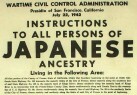
  • There were several exclusion proclamations issued by Attorney General Biddle, even prior to E.O. 9066:
 
    • January 29, 1942 – San Francisco and Los Angeles declared as prohibited areas to all alien enemies
    • January 31, 1942 – 69 additional areas in California designated as prohibited
    • February 2, 1942 – 15 additional areas in California designated as prohibited
    • February 4, 1942 – 7 areas in Washington and 24 areas in Oregon designated as prohibited; entire coastline of California from Oregon border to 50 miles north of L.A. designated as restricted area
    • February 7, 1942 – 18 areas in Arizona designated as prohibited
 
  • E. O. 9066 merely authorized the Secretary of War and military commanders to determine both military areas and who should be excluded from those areas, and those individuals could even include U.S. citizens — if deemed necessary, every single person in those areas. However, it did not order any evacuation at all. The following were the exclusion orders, over a month later:
 
    • Civilian Exclusion Order No. 1, March 24, 1942 – Bainbridge Island, Washington
    • Civilian Exclusion Orders No. 2 and No. 3, March 30, 1942 – Areas near Terminal Island in southern California; vicinity of Los Angeles
    • Civilian Exclusion Orders No. 4 and No. 5, April 1, 1942 – San Diego County, California; San Francisco waterfront
    • Civilian Exclusion Order No. 6, April 7, 1942 – Los Angeles County, California
    • Civilian Exclusion Orders No. 7, No. 8 and No. 9, April 20, 1942 – Additional areas in Los Angeles County: Santa Monica, West L.A., San Fernando Valley
 
  • Was the whole evacuation and relocation program a waste of time and money? If so, the Corps of Engineers in their budget pre-assessments would have decided it was so and gone another route. But they did not. There must have been good reasons for continuing with the program even though the costs and logistics were huge. Along this line, the question must be asked: was the whole war then a waste of time and money?
 
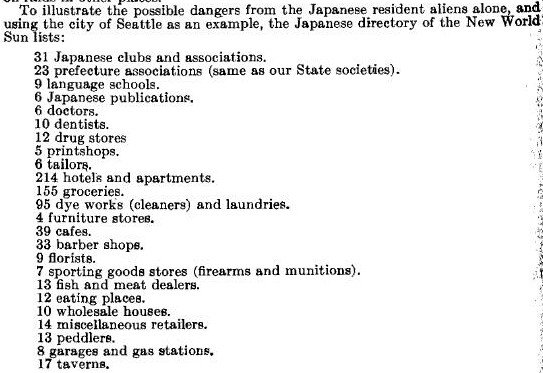
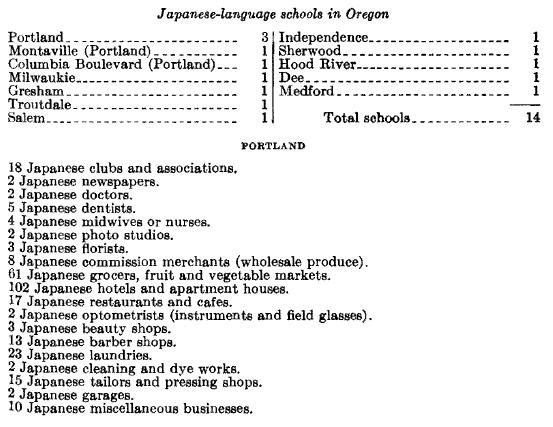
  • Many of us do not realize just how many Japanese organizations — business, cultural, and religious — were here in the US prior to WWII, nor the potential danger they would have posed to security had they continued during the war. The documents on the Tokyo Club, or the Japanese Central Association (discussed in IA094), shed some light on the enormity of these networks within the US. Furthermore, the monetary and social support contributed to these many organizations by the Japanese community on the West Coast was quite considerable and not to be overlooked. A comparison of how much support came from US-resident enemy alien German and Italian nationals for their own countries would be an enlightening study.
Nikkei_businesses_Seattle_1941
Nikkei_businesses_Portland_1941
  • What must have been in the thoughts of those men, privy to ONI, G-2 and other top secret intelligence, who were bombarded with accusations of racism and prejudice against the Japanese people in the US? What integrity they held in the face of that onslaught! They did not waver an inch and kept the secret without any hint of its existence. Not until nearly 40 years later were these secrets made known, and it is with great respect we remember those men — British, Australians, Americans — who labored, and suffered greatly, to keep those secrets with which they were entrusted perfectly safe, not only during the war, but until the day they died.
 
  • Language unity is of great importance in any society, a glue which binds together a people. There is a great need for our Government to stress the importance of English language study for immigrants, to promote English as the language for all commerce, industry and services. Had the early Japanese immigrants learned English to begin with and got a good hold on that language, what a different situation it may have been on the West Coast (see TL43).
 
  • Dillon Myer often mentioned that he wanted all the people at the centers to return to normal living conditions. In fact, he urged the revocation of the evacuation orders as early as April 1944.
 
  • Robinson in FDR and the Internment mentions other books in the early 1900’s dealing with the Japanese threat and the emphasis on racism. What would be interesting to probe is the influence of Darwin’s theory of evolution — subtitled “Preservation of Favoured Races in the Struggle for Life” (viz. the white races surviving as fittest and hence supreme) — on race issues vis-a-vis the Japanese.
 
  • What exactly was it that made the Japanese race so odious to Americans in the decades preceding the war? Was it the language barrier? Cultural insularism? The fact that they had just been liberated from 250 years of isolation and did not know how to deal with other nationalities? Was it communication problems, and the tendency to stay in groups rather than gregariousness? These problems are evident today with immigrants — foreign neighbors who do not speak English well or do not socialize with the general community, conducting themselves in a manner or custom not known to the general public, to the consternation of onlookers. The Japanese nation is known for its “groupism.” That is a part of their culture, and for that concept to exist in a nation that stresses individualism would cause a tremendous amount of friction. Therefore the assimilation issue was raised (see TL20; also Tayama’s comments in IA201: “the Issei had endeavored at all times to maintain the traditions of Japan in the United States.”). Perhaps they were just too tradition-minded, and so neighbors thought them to be more foreign than American. Situations with immigrants today are very similar, and it will always be so with anyone living in a foreign land.

Love ye therefore the stranger:
for ye were strangers in the land of Egypt.

Deuteronomy 10:19

  • There are many verses in the Bible regarding foreigners, “strangers” (a search here shows 198 references for “stranger” in the Bible), and how, if they were to live among the Israelites, they were to abide by all the laws, manners and customs of the Jewish nation. Conversely, the Israelites were commanded not to oppress them, but to love them as their own selves. Much blame can be placed on Americans for their “vexing” of immigrant strangers. Hence, the legal battle of the Japanese-American’s should really have been directed at the general American public rather than the US Govt. It should also have included a major claim for compensation against the Japanese Govt. for its lack of support.
 
  • About prejudice: Consider these two statements — “Japanese are hard workers,” and “Japanese are sneaky.” Most would say the 2nd statement shows prejudice, but the 1st statement is equally so. Both need qualification — just exactly who are we talking about. It is interesting to note that the Apostle Paul considered the common saying to be true, that the inhabitants of the island of Crete were “slow bellies,” i.e. they were slothful and intemperate (Titus 1:12, 13). There are, therefore, truths, even though on the surface appear to be discriminatory stereotypes.
 
  • Living standards in the centers — The barracks, by today’s standards, were indeed austere, bleak and undesirable. However, it could very well be said the living quarters were indeed better than what the Issei may have had previously in Japan, or indeed what they had just moved from, given the large families and low income levels. Photos are available showing the different living standards back then in post-depression-era U.S.A. — for many, however, the depression was not over and the centers provided a raise in their standard of living. One can find in many areas in Japan even today housing conditions which by our standards are cramped and of inferior quality. The danger lies in using today’s standards to judge standards of the 1930’s and 40’s. This is a force, almost like gravity — unseen yet very active — that historians must come to grips with else they will be sucked into the vortex of false assumptions. It would be similar to living on the moon — all your ways of doing things would have to change drastically due to a whole new environment; your actions and reactions will change.
 
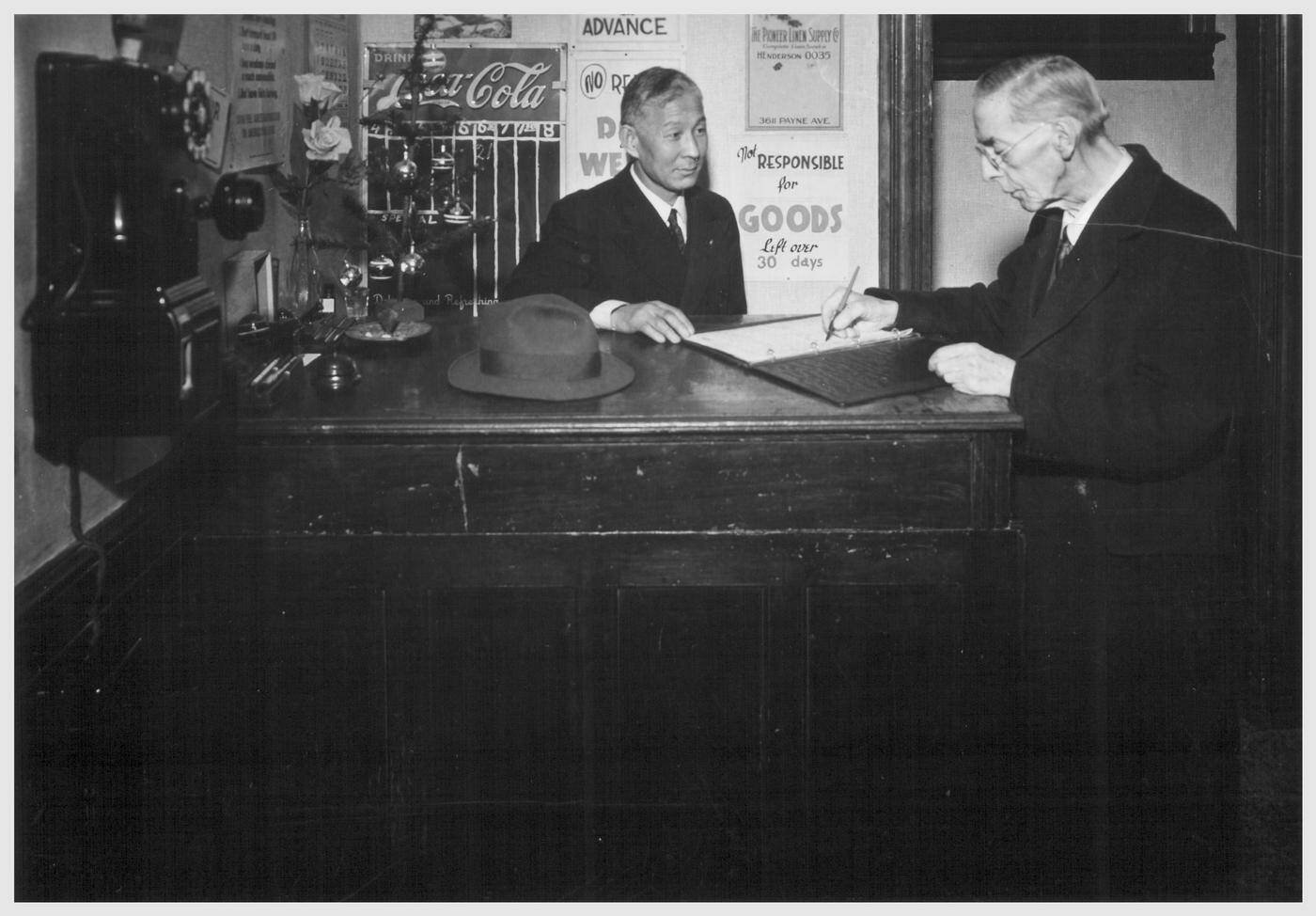
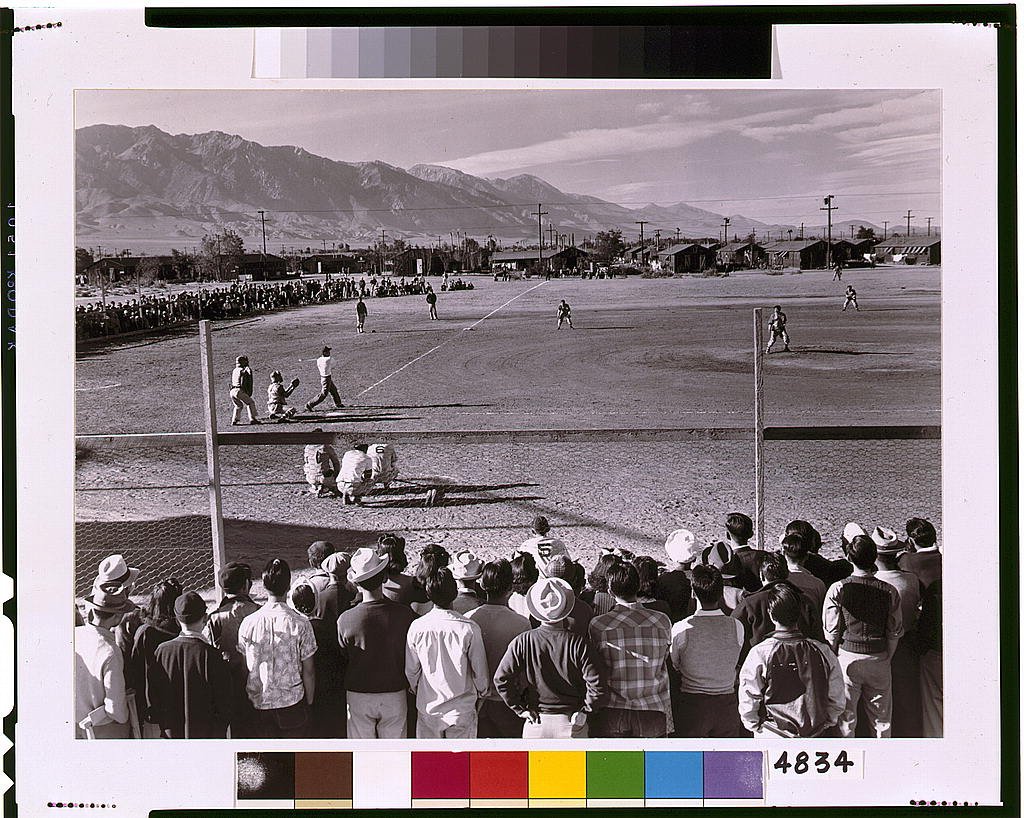
  • Speaking of photographs, there are some who feel the images taken by famous photographers such as Dorothea Lange and Ansel Adams were staged, that is, the persons photographed at the assembly and relocation centers were only smiling for the photographer, instead of showing what they perceive as the “true situation,” i.e. grim, horrific, and hopeless. One has only to spend a short time looking through the hundreds of images online taken by a variety of photographers then (media and otherwise) to see the unreasonableness of such an assumption. I found these photographs here to be quite representative — it is very hard to believe all the people in the photos were suffering from their “grim circumstances” as they attended and partook in dances, plays, festivals, sporting events, and even weddings.
 
  • If the epithet were true, that the centers were really “concentration camps,” then there surely would have been escape attempts. Yet there are no reports of fences cut or tunnels dug. Also, where is evidence of mass protests and refusals after EO9066 and subsequent proclamations if there were indeed a “forced removal”? The truth of the matter will reveal that the evacuees were eager to live in a place free from fear of attack, retaliation, discrimination, prejudice, mockery — a movement of a very willing people, and therefore the whole process went virtually without a hitch. Furthermore, regarding “forced removal,” the leave and resettlement program began in July 1942, and later in October, allowed even aliens to be eligible for indefinite leave. Within a year, over 15,000 had left on seasonal or indefinite leave — no one “forced” to do anything here. On Oct. 1, 1942, indefinite leave was allowed, so anyone who was evacuated would only have had to live at a center for only 6 months or so; had that person left prior to EO 9102, there would have been no relocation center life for them at all! Consider this: “By June 5, when the movement of evacuees from their homes in Military Area No. 1 into assembly centers was completed…” (TL04). The evacuees could have moved anytime to other locations in the US by June 5, 1942. Perhaps they didn’t want to due to the fact many mid-western states did not want them.
 
  • One theme for further research is the idea that the centers created evacuee dependency on the social care they received, and so it was difficult for many to leave their comfortable living standards when they were allowed (see TL56). Some refused to leave, spoiled by the very program they had perhaps once disdained. See TL52 re not leaving the centers — some 44,000 people who could have left the centers were still residing there in June 1945; nearly 25,000 had already left in the year leading up to that time, which means almost 2/3 of the evacuees preferred living in the centers in that final year. The relocation program was in many ways a welfare state, not so much helping those who could not help themselves to survive (as in Hawaiian evacuees; see TL06-3), but where many could have chosen not to work at all, and yet would still have been taken care of. It is impressive just how much assistance there was available, even for relocation purposes (see TL47 as well as statistical charts in other WRA publications, e.g. The Evacuated People). Consider also: It may not be readily admitted but the centers provided an oasis from all anti-Japanese sentiment, not only from harassment but from the likelihood that their goods would not have been marketable due to boycotts against Japanese-produced fruits and vegetables and other products. Could there have even been a worse scenario, such as retaliation after Americans heard of Japan’s atrocities against our soldiers in the Philippines and elsewhere? (Interestingly, MacArthur recommended the opposite, that Japanese nationals in the U.S. be the “lever under the threat of reciprocal retaliatory measures” and force “applied mercilessly” if necessary. Obviously, this was never carried out, in spite of the fact that Allied civilians in the Philippines were treated mercilessly.)
 
  • Detention” is another word that is thrown around casually. Generally speaking, that people were detained at centers can be said, much the same way employees are detained at the workplace — they can’t leave without certain repercussions, hence their liberty is inhibited, though of course with their full understanding, whether willing or unwilling. Same with marriage, staying at home rather than going out somewhere you want to really go. But that the evacuees were in prison-like detention at the centers (not the separate internment or detention camps, mind you) without any escape is hardly an adequate description, else there would have been mass revolts and escapes during the months and years they were at the centers. See usage of “detention” in WRA report IA175.
 
  • Much can be written in praise of the evacuee labor in agriculture. In TL32 is a very good quote re Idaho workers’ help. This has correlation today with migrant workers — without their work in the fields tons would be lost; the economics of migrant labor is enormous, probably overriding controversial issues such as illegal immigration and dollars sent to the home countries.
 
  • On the “incarceration of American citizens” — The last population census in the U.S. prior to WWII was taken in 1940. It showed there were 126,947 people of Japanese ancestry in the continental US (Hawaii and other US territories, by the way, had 158,000). Now, if roughly 110,000 of these nearly 127,000 were in the centers, where were the remaining 17,000? This would be an interesting study to see what became of them — in my Dedication I mentioned a few; some 5,000 moved out of the West Coast military areas (never lived in relocation centers); around 8,000 were interned by the INS. But the rest?

    Per 1940 Census, ethnic Japanese:
    Total in US = 126,947 (foreign born 47,305)
    Total on West Coast = 112,353 (CA = 93,717; OR = 4,071; WA = 14,565)
    Total in other states = 14,594

    Also, out of the 110,000 in the centers, 72,000 were U.S. citizens, and among those there were about 41,000 19 yrs. of age and under — children, average age 16, who still lived with their parents. So, since these children could not be separated from their families, basically the whole issue of “incarcerating American citizens” dealt with approx. 31,000 people. Now of those, some 13,000 joined the armed services. Then there were around 10,000 (including Issei) who were out working on farms or elsewhere on seasonal and indefinite leaves, another 15,000 or so (including Issei) relocated within the first year, and there were about 6,000 Nisei who went to colleges and universities, many spending very little time in the centers. This would leave how many then left at the centers who were not minors? Not many at all. And each month the number of those living in centers was getting smaller due to relocating in other non-military zoned areas of the US. Considering these numbers, it answers the assertion that “American citizens spent the entire war in concentration camps.”

A battalion of U.S.-born Japs is fighting well in the front line in Italy; another 2,500 Japanese-Americans are elsewhere in the U.S. Army; hundreds serve in Military Intelligence in the South Pacific; 20,000, cleared by FBI, now live in the Midwest & East.
TIME magazine, Dec. 20, 1943
Hitoshi Fukui of Los Angeles and the Heart Mountain Relocation Center
Mr. Hitoshi Fukui of Los Angeles and the Heart Mountain Relocation Center now leases and operates a small downtown hotel in Cleveland. An Issei (born in Japan), Mr. Fukui is a veteran of World War I, and the result of this and his high standing in his community, was granted American citizenship. His wife Chieko is a Nisei (born in the United States). The Fukuis have two children, a daughter and a son, Soichi, who is a student at Oberlin College. "We believe it is a mistake to stay in the centers. It is bad for our people to be bitter. They should come out and begin to live again." -- Cleveland, Ohio. 1/?/44 (The Bancroft Library, University of California, Berkeley)
  • Issei prevented from becoming naturalized — I am still looking for statistical information that would show just how many Issei were naturalized when they were permitted to, and how many simply did not want to. I have heard that there were not that many who chose naturalization prior to the anti-naturalization law of 1924 (see interesting chronology here). If so, the concept (a concept that even Dillon Myer believed, see TL62) that the Issei would have chosen to become naturalized if they had been given the chance, thereby they would be protected by the US Constitution, does not have much that force at all. Other ethnic groups did not avail themselves of the naturalization laws, apparently due to the stringent language requirements. I have read also that the Japanese Govt. did not allow her hojin to become citizens of the United States, but this point needs verification.
 
  • Loyalty and registration — The key word is “faithful,” and the idea of not betraying your own country, especially the problem of betraying one’s trust. There is nothing wrong with trying to find out if someone is really true to their word. Can you trust that person? How do you know you can? In companies the #1 threat of theft comes from employees, not outsiders. In the same way, the threat the ethnic Japanese presented in the US was not something that was to be taken lightly. The unfortunate thing was that it encompassed their children who were US citizens by birth. It had nothing to do with discrimination, just as in a company it does not — the issue was with human nature. Therefore a registration process was necessary to determine just how faithful a person claimed to be. The same oath is administered to any person who wants to become a US citizen. Read this from the official US Govt. page on naturalization:

Oath of Allegiance to the United States – The oath you take to become a citizen. When you take the Oath of Allegiance to the United States, you are promising to give up your allegiance to other countries and to support and defend the United States, the Constitution, and our laws. You must be able to take and understand the Oath of Allegiance in order to become a naturalized citizen.

“I hereby declare, on oath, that I absolutely and entirely renounce and abjure all allegiance and fidelity to any foreign prince, potentate, state, or sovereignty, of whom or which I have heretofore been a subject or citizen; that I will support and defend the Constitution and laws of the United States of America against all enemies, foreign and domestic; that I will bear true faith and allegiance to the same; that I will bear arms on behalf of the United States when required by the law; that I will perform noncombatant service in the Armed Forces of the United States when required by the law; that I will perform work of national importance under civilian direction when required by the law; and that I take this obligation freely, without any mental reservation or purpose of evasion; so help me God.” (http://uscis.gov/graphics/services/natz/English.pdf)

Remember, the whole purpose of the registration process was to enable the evacuees to leave the centers. Question #28 was a simple question that would help determine who could leave. If I were asked either version of #28 (see here in Comments), or the above official version, I would not hesitate at all to give an answer in the affirmative. In fact, the majority of registrants did indeed answer “Yes” to the question. See TL21 and IA106 for more. Another thing to keep in mind is the fact that there were Issei, Nisei, and Kibei who were under investigation for subversive activities in the US, and it was their connections with the extensive networks of Japanese organizations that impacted nearly the whole of the ethnic Japanese in the US, due largely to the fact that the Issei, who were primarily under surveillance as “enemy aliens” and represented 30% of the ethnic population, had families which made up the other 70%, who were not under surveillance but yet were involved only because of their family connections. There is reference to a sad situation where even the Imperial Japanese did not feel the Nisei who went to Japan could be trusted. This may explain why the extra effort by those educated in the US to display their patriotism by being extra harsh on Allied POWs over whom they were interpreters and guards.

As the best possible evidence of their loyalty to this country… Japanese and alien Italians and Germans who may be required to move should continue their farming operations.

Western Defense Command HQ Press Release re advice to enemy aliens and Japanese-American citizens, March 6, 1942

  • From TL04: “The overwhelming fear of the evacuees — the one which most deeply influenced their efforts toward adjustment — was their anxiety about the post-war future. Younger evacuees in particular were frequently heard asking questions such as : ‘Where shall we go from here after the war?’ ‘How shall we earn a living?’ ‘What will be the long-time effect of life here upon our character, and how will we be affected in our future adjustments?'” I would say the future of these youth turned out well, very successful for many; compare with the civilian internees who returned from Japan after the war.

You are about to read an account of a young Japanese who arrived in the United States as a student on the eve of the Pacific War, and stayed there throughout and beyond the war years. This preface is intended to forewarn contemporary American readers about something they will not find here, whose absence they may find disconcerting.

The missing element is racial discrimination against the protagonist. If you expect these memoirs to be made up of a litany of outbursts of grief and fury by a victim of prejudice, you will be disappointed.

Yet you cannot be blamed if such are your expectations. The setting seems to have been perfect; In the first place I was a Japanese, a foreigner in America. In addition, I was officially an enemy alien, because of the unusual circumstances in which I found myself. The Pearl Harbor attack exposed Japan and Japanese people to violent opprobrium: They were characterized in the press as treacherous, cunning, untrustworthy, barbaric, bestial, sadistic, and so on, almost ad infinitum. Americans today [1991] over fifty years of age perhaps remember the intense anti-Japanese sentiment that enveloped continental America at that time. By today’s standards, it would seem, I was doubly qualified to be a target of hatred. Yet such was not the case.

The fact is that I spent seven delightful and fruitful years in America including the war years, and found myself among friends wherever I went.
— Kiyoaki Murata, from his Preface to
An Enemy Among Friends
Questions to Ask – a little questionnaire for all those concerned with the issues
Baseball game, Manzanar Relocation Center, Calif. 1943
Japanese Americans observe an amateur baseball game in progress; one-story buildings and mountains in the background. Manzanar Relocation Center, Calif. 1943 (Ansel Adams)
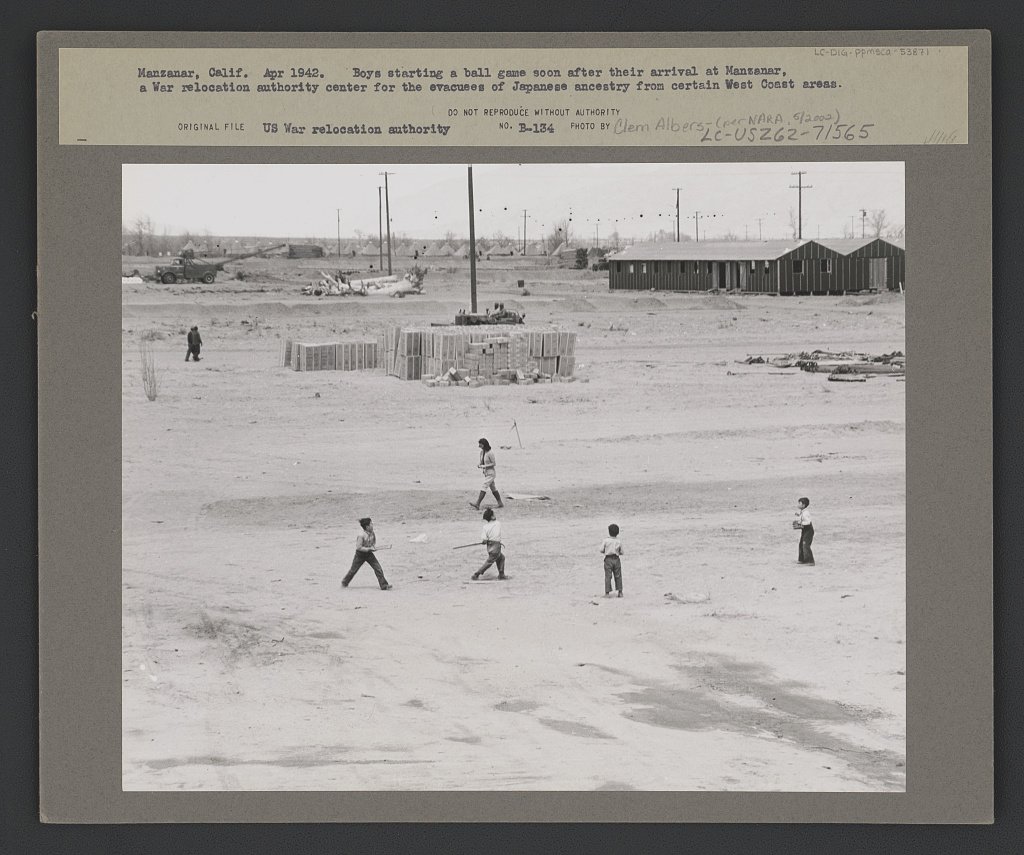
Boys starting a ball game soon after their arrival at Manzanar
Boys starting a ball game soon after their arrival on a sand-lot at Manzanar, Calif. April 1942 (Clem Albers)